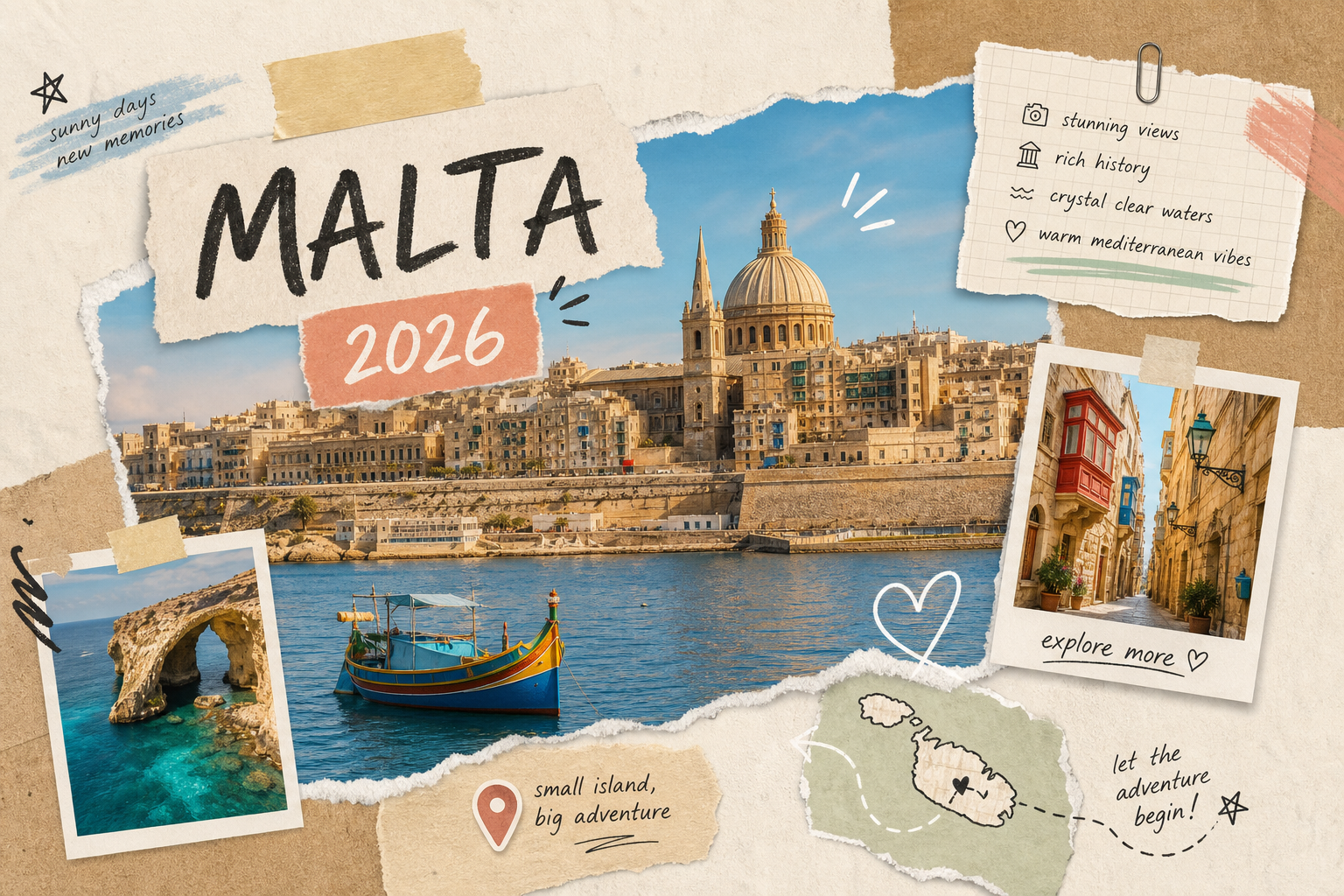
Where to Stay in Malta: Best Areas & Neighborhoods (2026)
Where to Stay in Malta: Best Areas & Neighborhoods Guide
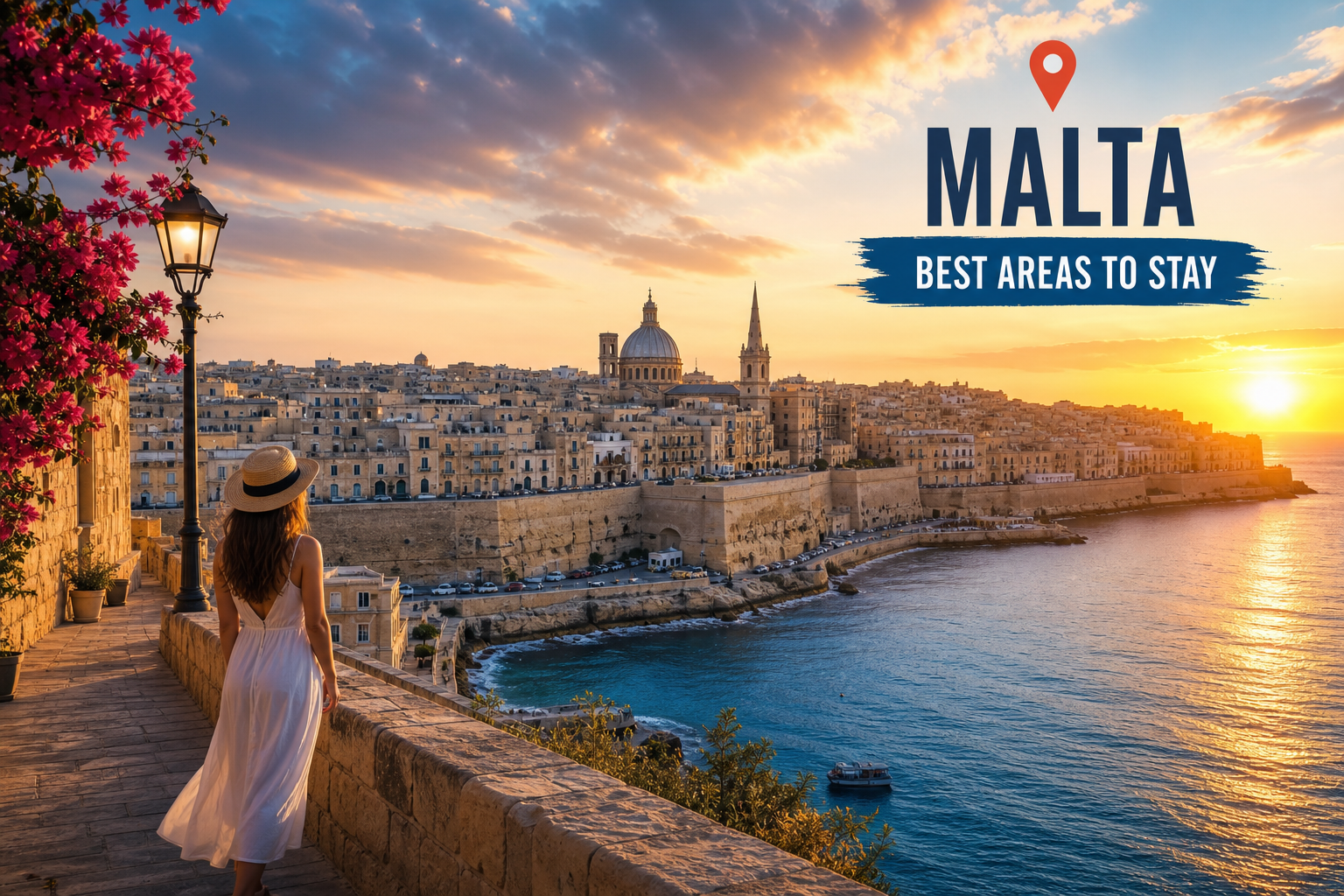
Where to stay in Malta is one of the first decisions that shapes your whole trip, and it's more consequential than the island's size suggests. Malta is compact, roughly 27 km end-to-end, and under typical traffic conditions you can drive the full length of it in under an hour (though peak-hour congestion can stretch that). Pick the wrong base, though, and you'll spend your trip waiting on buses instead of actually seeing the place. The good news is that each major area has a very clear character, and once you know what kind of traveller you are, the right neighbourhood practically picks itself.
This Malta accommodation guide covers every area worth considering, from the walled streets of Valletta to the slow-paced hills of Gozo. For each one, you'll find honest notes on atmosphere, approximate hotel price ranges, and who it actually suits. Use the transport section at the end to stress-test your choice against your planned itinerary.
How to match your travel style to the right area
Before comparing hotels or scrolling through listings, ask yourself: what does your ideal day on this island actually look like? Malta's best areas to stay each serve a distinct type of traveller, and getting this right shapes everything else.
History lovers and culture-seekers belong in Valletta or the Three Cities. Couples who want seafront dining and easy access to everything do best in Sliema. Young travellers chasing nightlife head straight to St. Julian's. Families with kids gravitate to Mellieha for the beaches. Anyone wanting to disconnect entirely should be looking at Gozo.
The island's compact size is both an advantage and a small trap. A bus from Sliema to Valletta takes under 30 minutes, and St. Julian's to Valletta runs around 25, 35 minutes. This leads some people to assume the base doesn't matter much. It does. Where you sleep shapes what you walk out into each morning, and that sets the tone of your whole trip.
Where to stay in Malta: area-by-area breakdown
Valletta: staying inside history
Staying inside Malta's UNESCO-listed capital feels unlike anywhere else on the island. The streets are narrow, golden-limestone, and genuinely ancient. You wake up to church bells rather than traffic. Most cultural sites, from St. John's Co-Cathedral to the Upper Barrakka Gardens, are walkable from most hotels in the city, given how compact Valletta is. The area suits couples, solo travellers, and culture-focused visitors who want to feel fully immersed in the destination.
The trade-off is limited beach access. You'll need a bus or the Sliema ferry to reach the water. The nearest sandy options are a bus ride north; the ferry crossing to Sliema itself takes under 10 minutes. If beach time is central to your trip, Valletta works better as a secondary base than a primary one.
Accommodation here skews boutique and upscale. The Rosselli, housed inside a 16th-century palazzo with a rooftop pool, sits at the luxury end, with nightly rates for comparable Valletta luxury properties often exceeding €200 in peak season and sometimes reaching €350. Mid-range options, including historic palazzo hotels, land around €100, €200 per night. Budget travellers will find pickings thin: hostels and guesthouses exist but are limited. If you're choosing based on cultural immersion rather than cost, Valletta is the first area to look at. For independent recommendations and curated lists, see the Plum Guide's where to stay in Malta. For budget-conscious travellers, nearby Floriana offers lower nightly rates with easy walking access to the capital.
Sliema and St. Julian's: the lively waterfront strip
Sliema is where many first-time visitors to Malta end up, and it earns that reputation. It has a long seafront promenade, strong transport links to Valletta via a quick 8-minute passenger ferry, a solid restaurant scene, and a wide range of accommodation. Mid-range hotels run approximately €80, €160 per night depending on season and room type, making it more accessible than Valletta for most budgets. The natural rocky shoreline along the promenade offers swimming spots, though sandy beaches require a bus ride north.
St. Julian's is where Malta's nightlife concentrates, specifically in the Paceville district. Bars, clubs, and casinos run late into the night, and the noise is real, many traveller reviews describe thumping bass audible well outside the club zone itself. If you're a light sleeper or travelling with young children, avoid hotels near Paceville. Away from that strip, though, St. Julian's is noticeably quieter. The area as a whole has some of Malta's most polished luxury properties: the Hyatt Regency sits here, and Portomaso Marina gives the broader neighbourhood an upscale waterfront feel. Nightly rates at the luxury end run approximately €200, €400 in peak season; mid-range options sit around €100, €180.
The two areas share a border and are linked by a 25-minute seafront walk. If you need route options and transit timings between the two, check the Rome2rio route details between Saint Julian's and Sliema. Sliema suits couples, mid-range travellers, and anyone prioritising easy city access. St. Julian's suits younger travellers, partygoers, and those looking for a waterfront luxury hotel. Both are strong all-round bases for exploring the main island.
Mellieha and the north coast: families, beaches, and slower days
Mellieha Bay is Malta's largest sandy beach, with shallow, calm water that makes it one of the safest swimming spots on the island. The town sits on a hilltop above it, offering panoramic views and a noticeably quieter atmosphere than the urban south. For families, this area delivers: local facilities are solid, 4, 5 star resort options sit within easy reach of the beach, and the natural wetland reserve at Ghadira is right on the doorstep. The db Seabank Resort and Spa is a consistently well-reviewed family pick, with direct access to Ghadira Bay and a dedicated kids' club. You can browse current Mellieha beach hotels when comparing family-friendly options.
The Gozo ferry terminal at Cirkewwa is only about 15 minutes away, which makes day trips to Gozo straightforward. If you're planning a trip that combines mainland Malta with a day or two on Gozo, Mellieha is the most logistically convenient base on the main island.
St. Paul's Bay, including Buġibba and Qawra, sits just south of Mellieha and operates as the north's more affordable, family-oriented hub. It's busier and more built-up than Mellieha town, but the promenade, restaurant range, and mix of mid-range to budget hotels make it practical. Approximate nightly rates for solid mid-range accommodation here run €70, €140, though these vary by season and room type.
Gozo: a completely different pace
Deciding where to stay in Malta sometimes means reconsidering the main island entirely. Gozo is a separate island, reached by a 20, 25 minute ferry crossing from Cirkewwa. It has dramatic landscapes, rugged coastlines, ancient sites like the Ġgantija temples, and a pace of life that feels far removed from tourist infrastructure. It suits couples looking for a romantic escape, travellers who prefer farmhouse or villa accommodation over hotels, and anyone prioritising hiking, diving, or simply switching off. Ramla Bay, Gozo's best sandy beach, is one of the most beautiful spots in the Maltese archipelago.
Nightlife on Gozo is minimal. That's exactly the point. Villas and farmhouses are the most popular accommodation format, with nightly rates for quality self-catering options ranging from €90, €200 depending on size and season. If you're basing yourself on Gozo, reaching Valletta or Sliema for a day trip involves real planning, budget a full morning or evening for the round trip. For most visitors, Gozo works better as a two- to three-night escape within a longer Malta itinerary than as a sole base for the whole trip.
Getting around Malta from your base
Malta's bus network covers the island well and is affordable throughout. A single journey costs €2, and a 7-day Tallinja Explore card at around €21 covers unlimited travel across the network, including ferry connections. The Sliema, Valletta passenger ferry runs every 30 minutes from around 06:45, costs €1.50 for a single ticket, and takes under 10 minutes. It's the fastest and most enjoyable way to cross the harbour, and it makes Sliema feel extremely well-connected to the capital, see the Valletta ferry schedule for exact departure times.
From Malta International Airport, the X3 bus (formerly referred to as TD3) runs direct to Sliema and St. Julian's, departing every 30 minutes and taking approximately 30, 45 minutes; the X4 (formerly TD4) connects the airport directly to Valletta in around 20, 30 minutes, also at €2. A taxi or Bolt rideshare to Sliema or St. Julian's typically runs €20, 25 and takes 20, 30 minutes. For travellers heading straight to Gozo on arrival, a transfer to Cirkewwa takes 45, 60 minutes from the airport, so factor that in when booking first-night accommodation. For full details on bus options from the airport, check the Malta airport bus transfers page.
- Airport to Valletta: X4 bus, €2, around 20, 30 minutes; taxi €15, 20
- Airport to Sliema or St. Julian's: X3 bus, €2, around 30, 45 minutes, departing every 30 minutes; taxi €20, 25
- Sliema to Valletta: ferry, €1.50, under 10 minutes, every 30 minutes; bus 13/14/16, €2, around 20, 30 minutes
- St. Julian's to Valletta: bus 13 or 14, €2, around 25, 35 minutes
- Sliema or St. Julian's to Cirkewwa (Gozo ferry): bus X2, €2, around 1h15, 1h45
Which area should you actually book, where to stay in Malta?
The decision is simpler than it looks once you know what you're optimising for. For culture, walking, and total immersion in history, Valletta delivers. For balance, accessibility, and a lively seafront without the noise, Sliema is hard to beat. For nightlife or a waterfront luxury hotel, St. Julian's is the one. For beaches and family-friendly facilities, head north to Mellieha. For total escape and a pace that's worlds away from the main island, Gozo.
None of these are bad choices when matched to the right traveller. Use the transport times above to sense-check your pick against your actual plans, and you'll arrive in Malta knowing exactly where to land and what to expect when you get there.
Frequently asked questions: where to stay in Malta
Is Valletta or Sliema better for first-time visitors?
Both work well, but they suit different priorities. Valletta is better if culture and atmosphere are your focus; Sliema is better if you want easy transport links, a wider range of mid-range hotels, and quick ferry access to Valletta without actually staying inside the walls.
Where to stay in Malta for families?
Mellieha is the top pick. Malta's largest sandy beach is here, resort-style family hotels like db Seabank are nearby, and the area is quieter than the urban south. St. Paul's Bay is a more affordable alternative with similar convenience.
Is Gozo worth staying on, or better as a day trip?
Gozo is worth at least two to three nights if you want to experience its slower pace properly, a day trip from the main island is rushed. That said, most visitors do best combining a few nights on Gozo with a longer base on Malta's main island.
What's the cheapest area to stay in Malta?
St. Paul's Bay and Buġibba offer the most affordable mid-range hotels on the main island. Floriana, just outside Valletta's gates, is another budget-friendly option with easy walking access to the capital.
Do I need a car to stay in Malta?
Not for most itineraries. The bus network covers the island well, the Sliema, Valletta ferry is fast and cheap, and airport buses serve all the main tourist areas. A car becomes useful for exploring Gozo or reaching more remote beaches, but it's not essential for a standard Malta stay.
Should You Stay in Malta Without a Car?
Yes — you can visit Malta without a car if you choose the right base. Most first-time visitors staying in Valletta, Sliema, Gżira or St Julian's get around perfectly well without renting one.
What public transport looks like
Malta has a bus network (run by Tallinja) that covers the entire island. Single tickets cost €1.50–€2.00, and a 7-day unlimited pass is around €21. All the major tourist destinations — Valletta, Mdina, Marsaxlokk, Mellieħa, the Blue Grotto, the Gozo ferry — are reachable by bus.
For ferries: there's a regular passenger ferry between Sliema and Valletta (about €2.00 each way, takes 10 minutes). A separate ferry connects Valletta with the Three Cities across the Grand Harbour. The main cross-channel ferry to Gozo runs from Ċirkewwa in the north.
For taxis: Bolt works well across the island and is considerably cheaper than traditional taxis. Many travellers find that using Bolt for awkward journeys (early mornings, late nights, the odd awkward route) means they don't need a car at all.
The honest frustrations
Buses can be slow, especially in summer traffic. In July and August, some popular routes are packed. Journey times are often much longer than Google Maps suggests — a 20-minute route on the map can easily take 40 minutes during peak hours. This isn't a dealbreaker, but build it into your planning.
Who should consider renting a car
A car makes more sense if:
- You're staying somewhere more remote (a village, a rural part of the north)
- You're travelling as a family with young children and lots of luggage
- You want to cover a lot of different parts of the island in a short time
- You're planning a deep exploration of Gozo (where buses are limited)
Note that Malta drives on the left, roads near Valletta get congested, parking is tricky in some areas, and lanes can be narrow.
The simple rule of thumb
If you stay in Valletta, Sliema, Gżira or St Julian's, you don't need a car. If you stay in the northern resorts, Mellieħa or Gozo and you want to explore a lot, a car helps considerably.
Car vs Public Transport – How Your Choice of Base Changes Things
Here's the practical summary:
Best areas if you will NOT rent a car:
- Valletta (best transport hub on the island)
- Sliema & Gżira (ferry + buses + Bolt cover almost everything)
- Parts of St Julian's (workable with buses and Bolt)
Areas where a car starts to make sense:
- Bugibba, Qawra, St Paul's Bay (longer distances, evening bus gaps)
- Mellieħa and the far north (great base for beaches + Gozo, but trips to the south become long)
- Gozo (limited bus network, spread-out sights)
Typical bus experience
Buses are cheap and cover most tourist routes, but they can be slow. In summer, popular routes can be crowded and infrequent. The Valletta terminus is the hub, so some journeys involve going back through Valletta even if the map looks like a direct route. Plan journey times generously — 1.5x to 2x the Google Maps estimate in peak hours is a reasonable buffer.
When Bolt is the smart middle ground
Many visitors find that basing themselves in Sliema or Gżira (without a car) and using Bolt for 5–8 specific journeys across the trip works out significantly cheaper than a week's car rental plus parking. Bolt is widely available, prices are reasonable, and it removes the stress of driving in unfamiliar urban traffic. It's worth installing the app before you arrive.
How to Choose Your Area in 3 Simple Questions
1. Do you care more about history and walkability, or beaches and resort pools?
History and walkability → Valletta or Sliema/Gżira. Beaches and resort feel → northern resorts (Mellieħa, Bugibba) or St Julian's with a hotel pool.
2. Are you happy using buses and ferries, or do you want maximum flexibility?
Happy with public transport → Valletta, Sliema, Gżira, St Julian's. Want flexibility and don't mind driving → any area works; consider Mellieħa if beaches and Gozo matter.
3. Do you prefer nightlife and buzz, or quieter evenings?
Nightlife and social evenings → St Julian's (or Sliema as a quieter version). Quiet evenings, early mornings, slower pace → Valletta, Gżira, Mellieħa or Gozo.
The quick if/then map:
- History + no car + first visit → Valletta
- Seafront + no car + first visit → Sliema or Gżira
- Nightlife + some flexibility → St Julian's
- Beaches + families + longer stay → Mellieħa
- Cheap resort holiday, don't mind slow buses → Bugibba / St Paul's Bay
- Slow travel, 7+ days, rural feel → Gozo as a second base