Malta Weather by Month: When to Go for Sun, Sea & Fewer Crowds (2026)
If you've been researching the weather in Malta, you already know the island has a reputation for sunshine. What this guide gives you is the full picture: actual month-by-month conditions, sea temperatures, wind patterns, and a straight read on which season suits which type of traveler. Malta keeps pulling people back, the food helps, the history helps, but the weather does most of the heavy lifting. It's the kind of climate that makes you look up flights again in January while staring at grey skies back home.
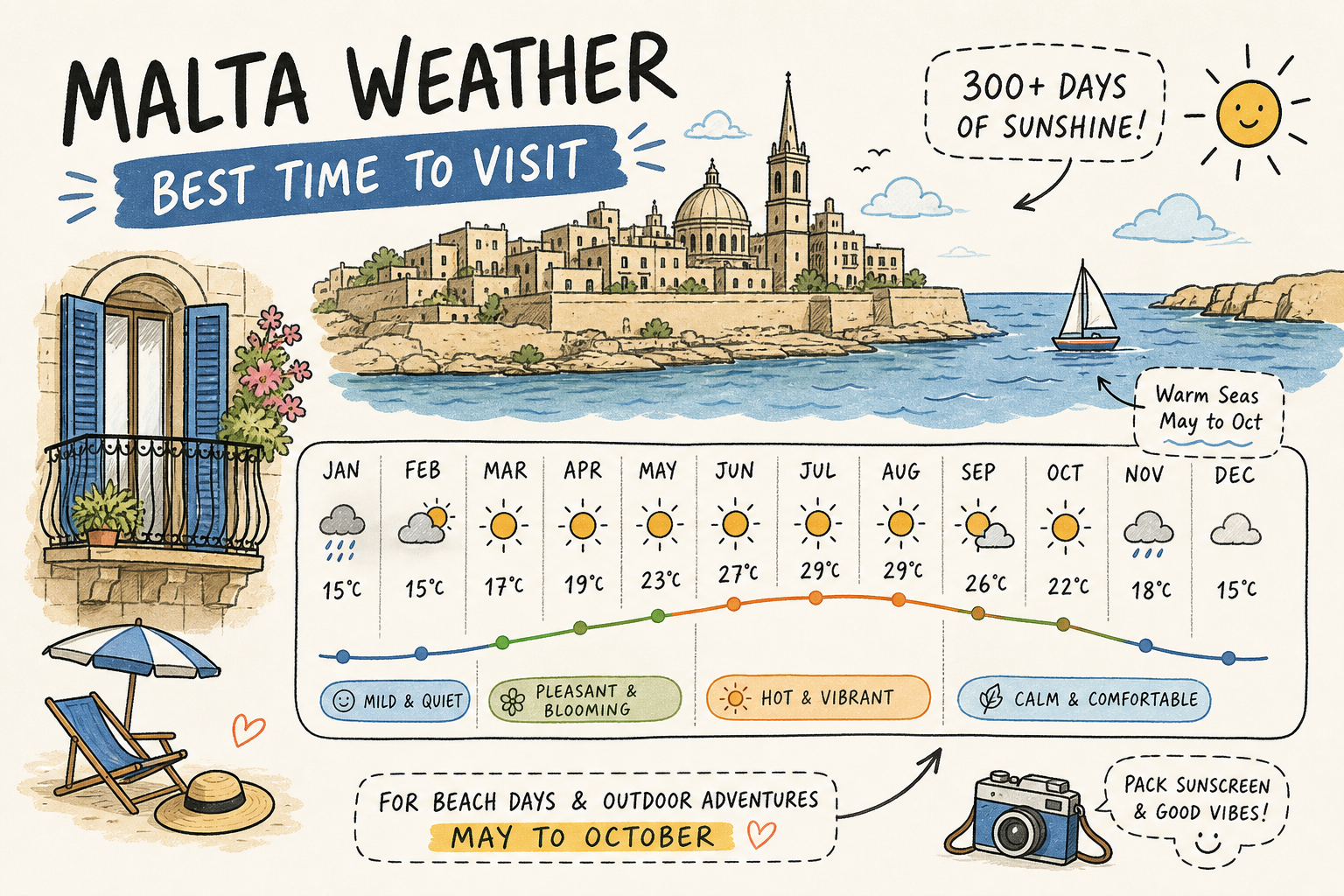
Malta averages around 3,000 sunshine hours a year, which puts it ahead of almost every other destination in Europe. But sunshine hours alone don't tell the full story. Every season here has a genuine use case, and knowing which one fits your plans makes the difference between a great trip and a frustrating one.
Right now, in early May 2026, Valletta is sitting at around 16°C with partly cloudy skies, ENE winds at 12 mph, and no active weather warnings from the Malta Met Office. Sea temperatures are 16, 18°C and climbing. The next two weeks look dry and increasingly warm, reaching 20, 21°C by mid-May. That context matters, but so does the bigger picture across all twelve months.
What the weather in Malta actually looks like across the year
The Mediterranean baseline every traveler should know
Malta sits deep in the central Mediterranean, and its climate behaves accordingly: hot, dry summers and mild, wetter winters. The annual temperature range runs from around 15°C in January up to 32°C in August, with the island spending most of the year somewhere comfortable in between. Rainfall totals roughly 550mm annually, and the vast majority of that falls between November and January. July is essentially rain-free, averaging zero rain days. (See an overview of average weather in Malta year-round.)
That seasonal split has real implications for planning. Summer delivers guaranteed dry days but serious heat. Winter brings the rain but stays mild by northern European standards. Spring and autumn are where the best balance lives, and the numbers back that up.
Sunshine hours, wind, and what "mild winter" actually means
Even in December and January, Malta gets around 5, 6 daily sunshine hours, that still beats a typical northern European summer. The flip side is the Gregale, a fierce northeasterly wind that peaks in autumn and winter, capable of generating significant coastal swells and, in extreme cases, hurricane-force gusts. It's the reason north and northwest-facing beaches get rougher from October onward. Forecasts across Valletta, Sliema, and Gozo track broadly the same patterns, with Gozo running 1, 2°C cooler and slightly more humid due to its rural terrain. For the most current conditions, the Malta Met Office publishes live alerts, a 7-day forecast, and hourly updates for all major areas including Valletta and Gozo.
Weather in Malta during winter: December, January, and February
Temperatures, rainfall, and what the island feels like
December through February is Malta's wettest stretch: 10, 13 rain days per month, daytime highs around 15, 17°C, and evenings that drop to 10, 11°C. That's not cold in any absolute sense, but it's not beach weather. Think coat and layers, occasional sunny spells between rain systems, and dramatically fewer tourists. January 2026 saw around 235,000 arrivals compared to over 400,000 in July. The island runs at a different pace in winter, and plenty of people find that more appealing than the summer version.
Sea temperatures and who winter suits best
Sea temperatures sit at 15, 16°C in winter, which rules out casual swimming for most visitors. Wetsuit-equipped divers still find good visibility and uncrowded dive sites. Winter is the natural fit for cultural travelers: walking Valletta without queuing, exploring Mdina on a quiet Tuesday, visiting the megalithic temples at Tarxien or Ħaġar Qim with the place almost to yourself. Budget travelers get the best rates of the year in winter, and people seriously considering a relocation find it the most honest season to assess daily life on the island.
Spring weather in Malta: March, April, and May
How quickly things warm up from March onward
Spring is genuinely underrated on Malta's weather calendar. March opens at 16, 18°C, April climbs to around 19, 20°C, and by May the island sits at a comfortable 23, 24°C with only 3, 4 rain days on average. Sunshine hours increase from 7 to 10 per day across those three months. The landscape goes briefly green before summer dries it back out. Wind drops compared to winter, and walking, cycling, and sightseeing stop being things you do despite the weather and become things the weather actively encourages.
Sea conditions and the early swimming window
Sea temperatures reach 18, 19°C by late May, which is the edge of comfortable for most swimmers without a wetsuit. Swell settles down after March, and east-facing bays become reliable for calm, clear water. Spring draws hikers, photographers, and travelers who want the full Malta experience without the July crowds or the midday heat. The Valletta cultural calendar fills up from April: the terraces are open, events are running, and you can still get a restaurant table without a reservation. Right now in early May, that's exactly where conditions stand.
Summer months: June, July, and August
Peak heat, UV, and what 32°C actually feels like on an island
June opens at 27, 29°C. July and August regularly hit 30, 32°C, with UV levels that will burn fair skin in under 20 minutes at midday. Rainfall is effectively zero in July. The popular beaches at Golden Bay and Mellieħa fill up fast, accommodation prices hit their ceiling, and the island processes over 400,000 tourists a month at peak. None of that is a reason to avoid summer, it is a reason to go in with open eyes. This is unambiguously the best window for beach time if heat doesn't bother you and you book accommodation early.
Sea temperatures and what swimmers and divers get
The sea reaches 25, 27°C in July and August, warm by any standard. Those temperatures put Malta among the warmest swimming destinations in the Mediterranean during this window. Snorkeling, open water swimming, and diving all hit their best conditions here. June and early July offer nearly identical sea temperatures with meaningfully fewer crowds than peak August, making them the smarter pick for anyone who wants the water without queuing for a parking spot at Gnejna Bay.
Autumn months: September, October, and November
Why September and October are the smartest months to book
September is the sweet spot. Temperatures ease from 28, 29°C down to around 24, 25°C through October. The sea holds at 25, 26°C through September and stays genuinely swimmable at 21, 23°C into November. Rain days creep back in, 4 in September, 9, 10 in October, but showers are typically short and the evenings become some of the best of the year. Crowds thin noticeably after mid-September, prices drop from summer peaks, and restaurant wait times fall off sharply. October remains one of the most consistently comfortable months on the climate calendar.
Autumn sea conditions and what to watch for
The Gregale wind returns in October and November, pushing wave heights up on north and northwest-facing coasts. East-coast bays and sheltered spots like Marsaskala and St. Peter's Pool stay calmer and remain usable well into the season. Divers and serious swimmers still have a solid 6, 8 week window in early autumn before conditions make wetsuits necessary. November signals the real transition: more rain, cooler evenings at 14°C, but still 6 daily sunshine hours and enough warmth for outdoor sightseeing without the summer sweat.
Matching the weather in Malta to your travel style
Beach and watersports travelers
July and August deliver the warmest sea and guaranteed sun, but June and September offer near-identical conditions with lower prices and far more manageable visitor numbers. For anyone prioritizing water activities, the window from June through early October gives the best combination of sea temperature and calm conditions. Booking a spot at Golden Bay or Gnejna before 9 AM in August is not a joke, plan accordingly or target shoulder months instead.
Cultural sightseeing and slow travel
March through May and October through November are the clear winners here. Comfortable walking temperatures, fully open attractions, and a pace that lets you actually look at things rather than survive them make these months ideal for Valletta, Gozo, and the ancient temples. Winter works too for cultural immersion, especially if you want the most honest version of Malta's daily life rather than its tourist-season mode. By the shoulder months, you get the weather in Malta at its most balanced: warm enough to be outside all day, cool enough to walk without stopping every ten minutes.
Relocating or planning an extended stay
Malta's climate makes long-term living appealing across all seasons, not just in the summer brochure version. But each season comes with practical realities: winter means fewer services and slower pace, summer means traffic and noise levels that surprise first-time long-term visitors, and spring and autumn offer the most livable balance. Month-specific advice tailored to your situation matters far more than general guidance when you're planning something bigger than a holiday.
The bottom line on when to go
The weather in Malta is genuinely good across most of the year, which is part of why the decision feels harder than it should. In practice, the season-to-traveler match is straightforward: summer delivers peak beach conditions with the crowds and prices to match; spring and autumn offer the best balance of warmth, sea temperature, value, and space; winter suits cultural travelers, budget visitors, and anyone taking a serious look at the island as a long-term base.
No warnings are currently active from the Malta Met Office, conditions are improving week by week, and the next 14 days look dry and warm. If you're traveling in early May right now, you're already in one of the better windows of the year. The sea is cool but rising, the light is exceptional, and the island isn't overrun yet. You can also compare forecasts against the UK Met Office forecast for additional perspective.
If you're still weighing up timing, or thinking about making Malta your base for something longer than a week, getting tailored advice on your specific situation, whether that's a two-week trip or a full relocation, is worth doing before you book. A dedicated Malta travel and relocation planning service takes the guesswork out of timing, logistics, and what each season actually means for day-to-day life on the island.
Frequently asked questions about Malta's weather
When is the sea warmest in Malta?
Malta's sea temperatures peak in July and August at 25, 27°C. The water stays warm enough for comfortable swimming, typically above 23°C, from late June through mid-October. For up-to-date local sea temperature readings see current Malta water temperatures.
Is winter in Malta rainy?
By Mediterranean standards, yes. December through February averages 10, 13 rain days per month. That said, daytime temperatures stay around 15, 17°C and the island still gets 5, 6 daily sunshine hours, making it mild by northern European standards even in its wettest months.
What is the best month to visit Malta for good weather?
October and May consistently rank as the most balanced months: warm enough for the sea and outdoor activities, dry enough to avoid disruption, and uncrowded enough to enjoy the island properly. Both sit in the shoulder season sweet spot.
Where can I check the Malta weather forecast before I travel?
The Malta Met Office provides live alerts, a Malta 7-day forecast, hourly weather updates, and a Malta weather radar covering the islands. Check current conditions for Valletta and Gozo directly on their site before departure, or view a detailed Valletta forecast on AccuWeather.