Record Tourism Growth: Malta's Numbers Soar — but Spending Tells a Different Story
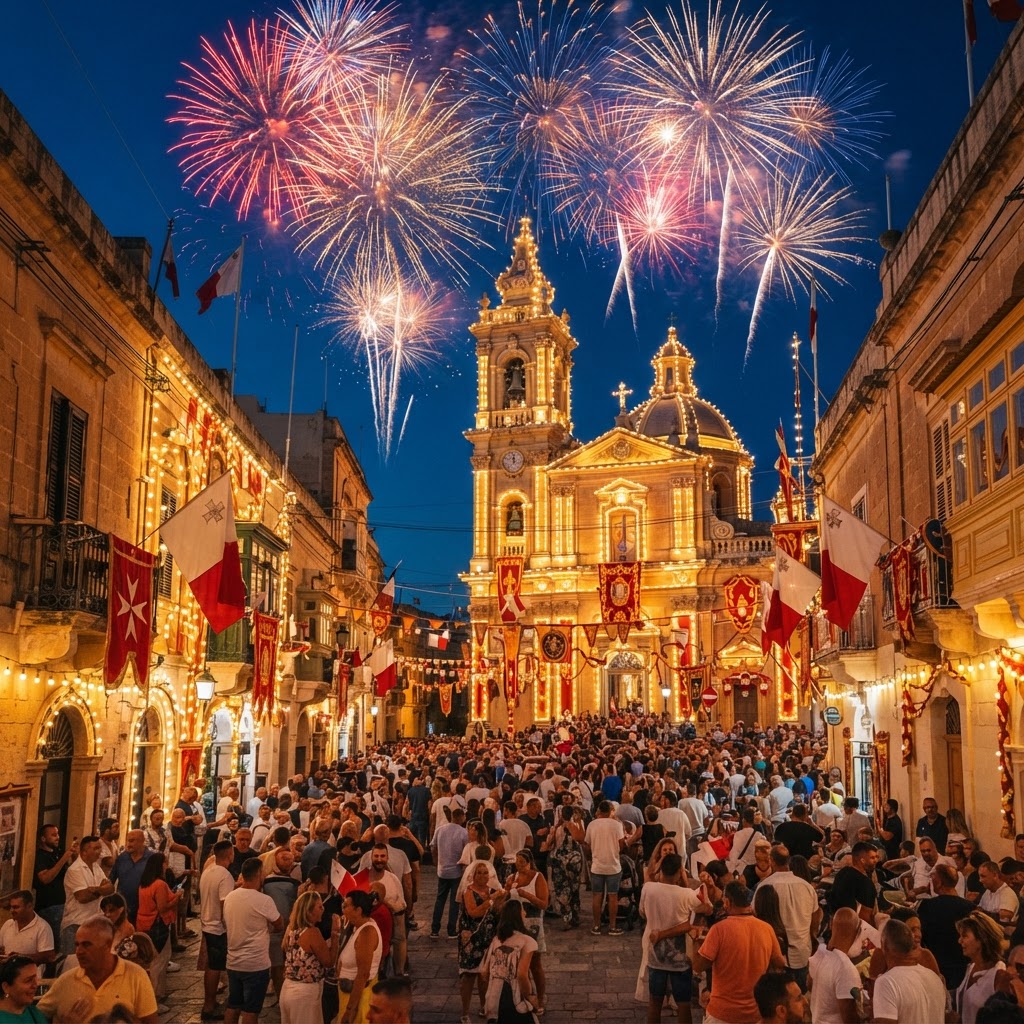
Malta's tourism engine is firing on all cylinders. According to the latest National Statistics Office (NSO) data, the islands welcomed 489,494 visitors in July 2026 alone — a staggering 20.8% increase compared to the same month in 2025. For the first seven months of the year, total inbound tourists reached 2,621,319, up 18.6% year-on-year, signalling a post-pandemic travel boom that shows no signs of slowing.

A Summer Surge
July's performance was particularly impressive. With nearly half a million arrivals, the month accounted for a significant chunk of the year's total traffic. The NSO reports that total nights spent by tourists in July reached 3.2 million, while tourist expenditure for the month climbed to €538.4 million, a 19.1% rise.
The surge was driven largely by leisure travellers — 465,182 visitors came for holiday purposes, compared to just 13,031 for business. Gozo and Comino also benefited, with 54.9% of all tourists visiting the smaller islands during the January–July period.
The Spending Paradox
But beneath the headline-grabbing arrival figures lies a more nuanced reality: visitors are spending less per trip. Over the first seven months of 2026, average expenditure per tourist dropped from €912 in 2025 to €890 — a decline of about 2.4%.
This trend reflects a broader shift in travel behaviour. While total tourism revenue still grew — reaching €2.33 billion between January and July, up 15.8% — it lagged behind the 18.6% rise in arrivals. In other words, Malta is attracting more tourists, but each one is contributing slightly less to the economy.
Shorter Stays, Lower Spend

One key driver of the spending dip is shorter average stays. Data shows that the typical visit has contracted from 6.84 nights to 6.52 nights, reducing opportunities for accommodation, dining and activity spending. At the same time, the proliferation of low-cost carriers — particularly subsidised Ryanair flights — has made Malta more accessible to budget-conscious travellers who may prioritise volume of trips over length or luxury.
Interestingly, spending per night actually increased slightly in July, rising 3.4% to €168.70, suggesting that while stays are shorter, daily expenditure remains robust.
What This Means for Malta's Economy
The implications are twofold. On one hand, record arrivals validate Malta's positioning as a high-demand Mediterranean destination, bolstering employment in hospitality, transport and retail. On the other, the per-visitor spending decline raises questions about yield optimisation — how to ensure tourism growth translates into sustainable economic gains rather than just crowded streets and packed flights.
Industry observers note that Malta's tourism strategy may need to pivot from pure volume to value-focused growth, encouraging longer stays, higher-spending segments and off-season visits to balance infrastructure pressures.
Looking Ahead
With 2025 already marking Malta's first four-million-visitor year, the trajectory for 2026 points toward another record-breaking season. But as the NSO data makes clear, the real challenge lies not in attracting more tourists — it's in ensuring they stay longer, spend more, and leave wanting to return.
Reality Check: Deloitte's Q2 2026 Hotel Survey
On 18 September 2026, the Malta Hotels and Restaurants Association (MHRA) hosted a pivotal briefing where Deloitte unveiled its Q2 2026 Hotel Performance Survey. The findings painted a picture of an industry riding a wave of record arrivals — but facing mounting pressure on profitability, pricing and long-term sustainability.
Strong Headline Growth
The numbers are undeniably impressive. In Q2 2026 alone, Malta welcomed 1.3 million tourists, a 19.2% increase over the same period in 2025. Guest nights rose by 9% to 7.3 million, while total tourism expenditure climbed to €1.21 billion, up from €1.06 billion the previous year.
Even adjusted for inflation, real spending grew by 12.5%, underscoring the sector's resilience amid global economic uncertainty.
Profitability Under Pressure

But beneath the surface, hoteliers are sounding the alarm. The survey revealed that 63% of hotels see the rapid growth in accommodation supply as a major challenge, while around half cited intensifying price competition. Most critically, 46% reported that their costs are rising faster than revenues, squeezing margins despite higher occupancy.
David Delicata, Deloitte Malta's Hospitality Leader, warned that as new rooms enter the market — from boutique hotels to large-scale developments — price wars could erode profitability unless the industry shifts strategy.
Shorter Stays, Lower Spend
Another red flag: visitors are staying less time and spending less per trip. The average length of stay has contracted to 5.5 nights, down from six nights in 2025. Consequently, average expenditure per tourist fell from €949 to €913 (or €936 to €882 when adjusted for inflation).
Deloitte's analysis drove the point home with a striking calculation: a mere €10 increase in daily spend per visitor during the first half of 2026 could have generated an extra €100 million in revenue for the sector.
A Call to Shift from Volume to Value
The survey has ignited a debate across Malta's tourism ecosystem. Industry leaders are increasingly arguing that chasing ever-higher arrival numbers is no longer a viable strategy. Instead, the focus must shift to attracting higher-value visitors who stay longer, spend more and travel off-peak.
Key recommendations emerging from the data include:
- Investing in premium experiences: From curated cultural itineraries to gastronomy tours and wellness retreats.
- Upgrading infrastructure: Ensuring transport, public spaces and services match the expectations of discerning travellers.
- Diversifying source markets: Reducing reliance on short-haul, budget-driven segments in favour of mid- to long-haul, higher-spending demographics.
Occupancy and Rate Trends

The survey also highlighted divergent performance across hotel categories. Three-star hotels saw occupancy surge from 84.5% to 90.4%, while five-star properties experienced a slight dip to 78.1%. Four-star hotels faced the steepest pressure, with occupancy falling 2.2 percentage points to around 87%.
Room rates, however, continued to climb across the board — from €229 to €241 for five-star, €125 to €137 for four-star, and €92 to €94.5 for three-star — suggesting that pricing power remains, at least for now.
New Regulations and the Road Ahead
The sector is also operating under a new set of Tourism Accommodation Regulations that came into force in June 2026. These regulations, which were a major topic of discussion throughout the year, continue to shape the market by capping new hotel projects at 200 rooms and requiring a minimum three-star rating. Furthermore, from 27 September 2026, stricter EU rules on green marketing claims have applied, requiring tourism businesses to substantiate any environmental claims they make in their advertising.
September also saw intense preparation for the World Travel & Tourism Council (WTTC) Global Summit, scheduled to take place in Valletta from 7–9 October 2026. The MTA joined the WTTC as a Destination Partner in advance of the summit, a move designed to strengthen Malta's engagement with the global travel industry.
Deloitte's Q2 2026 survey is both a celebration of Malta's tourism success and a sobering reality check. The islands have proven they can attract visitors in droves. The next challenge is ensuring that growth translates into sustainable profits, better wages and a resilient industry — not just crowded streets and thinning margins.
Data sources: National Statistics Office (NSO) Malta, Inbound Tourism July 2026; Deloitte Malta / MHRA Q2 2026 Hotel Performance Survey. For more on visiting Malta, see our cruise schedule, events guide, and practical visitor info. Photos: Pexels.