Best Time to Visit Malta: 2026 Seasonal Weather Guide
Best Time of Year to Visit Malta: A Season-by-Season Guide
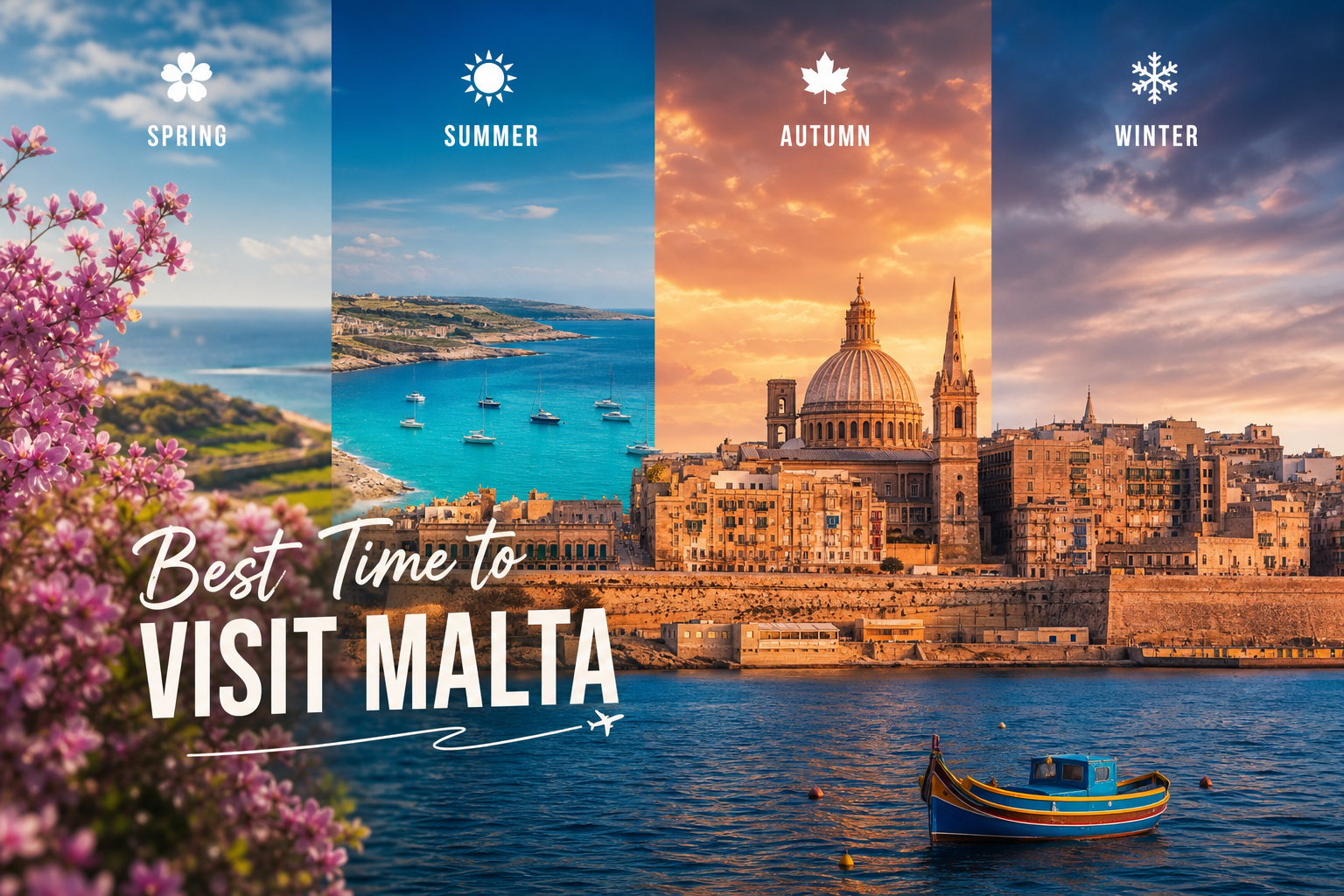
Most people assume July or August is the obvious answer when deciding when to go to Malta. Sun, sea, warmth, it makes sense on paper. But the best time of year to visit Malta is less about picking the hottest month and more about knowing what you actually want from the trip. Malta's weather by month tells a more nuanced story than the brochures suggest, and that story changes everything about how you plan.
This guide covers the full calendar: temperatures, sea conditions, festival highlights, crowd levels, and how prices shift across 2026. Malta is compact, and its Mediterranean climate means no month is truly unworkable. What changes is the experience waiting for you when you arrive. Find the window that fits your priorities, not the one the travel industry pushes hardest.
Winter in Malta (December to February): quiet, affordable and more authentic than you'd expect
Winter in Malta has a reputation it doesn't deserve. Temperatures average 13 to 16°C, rainfall peaks in December but trails off by February, and you get around 10 hours of daylight. That's jacket weather, not miserable weather. It's mild enough to walk Valletta's streets comfortably and cool enough to actually enjoy them without sweating through your shirt by 10am. Visitor numbers fall to roughly 235,000 to 249,000 in January and February (Malta Tourism Authority, 2026), compared to over 429,000 in peak August, which means shorter queues, easier restaurant bookings, and a city that moves at a human pace.
December through February brings highs of 15 to 17°C and lows around 11 to 13°C. Rainfall sits at roughly 80 to 90mm in December, tapering noticeably by February. The sea temperature holds at around 16°C, which rules out casual swimming but suits dry-suit divers well. For anyone whose trip revolves around history, architecture, and unhurried exploration, winter is genuinely underrated, and for those asking when is the best time of year to visit Malta on a limited budget, this is the clearest answer the calendar offers.
The cultural calendar has more texture than people expect. December holds the Feast of the Immaculate Conception (8 December), Republic Day (13 December), and Christmas Day. February brings the Feast of Saint Paul's Shipwreck (10 February), with processions through Valletta that are worth building a day around. These aren't performances for tourists; they're lived traditions in a country where faith and public life still overlap.
Flight prices and hotel rates follow the low-season curve downward, making January and February among the most affordable entry points of the year. One practical note: the Gozo Channel ferry runs hourly in winter rather than more frequently during peak season (check the Gozo ferry winter timetable for current schedules before you travel), so if a Gozo day trip is on your list, factor that into your timing.
Spring (March to May): the best time of year to visit Malta for shoulder-season value
Spring is Malta's most underrated travel window. Temperatures climb steadily from around 17°C in March to 24°C by May. Rainfall drops below 20mm by May, daylight extends to 13 or 14 hours, and the sea warms from 16°C to 18, 20°C. For fuller details on seasonal sea changes see the regional sea temperatures for Malta. The island feels open and accessible in a way that August simply doesn't, and for many travelers, this combination makes spring the best time of year to visit Malta for culture-focused trips.
March and April carry real cultural weight. Freedom Day falls on 31 March, the Feast of Saint Joseph on 19 March, and Good Friday in 2026 lands on 3 April. The Good Friday processions through Malta's historic towns are among the most visually striking events on the island. Costumed figures carry statues of Christ through narrow stone streets while solemn crowds line the route, it tends to stay with you long after you've left. April's sea temperature of 16°C is still cold for most swimmers, but that's a minor trade-off given everything else the month offers.
May deserves serious attention as a standalone recommendation. Air temperatures reach 24°C, the sea hits 18 to 20°C, and Malta best months to visit conversations regularly land here for good reason: crowds are still a fraction of summer size and prices haven't spiked yet. Workers' Day adds a minor public holiday on 1 May. May is the Malta shoulder season at its clearest: warm enough to swim, cool enough to walk for hours, and light enough on crowds to make Valletta and Mdina feel like yours.
Summer peak (June to August): hot, busy and worth understanding before you book
Summer is Malta's peak season for obvious reasons. Temperatures reach 31 to 32°C, the sea hits 24 to 26°C, and daylight stretches to 14 hours. For more on Malta's average climate across the year, consult the island's average weather data. This is also when Malta's village festas are in full swing and the cultural calendar is at its most vivid. But arriving without a clear sense of what July and August feel like at ground level is how you end up frustrated by heat and queues.
Sea conditions are at their best from June through August. June sea temperatures reach 21 to 23°C; by August they peak at 26°C, the warmest water of the year. August offers the most comfortable conditions for swimmers and snorkelers who prefer to go without a wetsuit, while July's 24°C water may still prompt some divers to reach for a shorty or light suit. By August, Malta peak season crowds are at their most intense, tourist arrivals exceed 429,000 in a single month (Malta Tourism Authority, 2024), and that number translates into tangible pressure on accommodation, restaurants, and popular sites.
The festival calendar makes summer worth the trade-offs if you plan well. L-Imnarja on 29 June is one of Malta's oldest festivals: traditional singing, fireworks, animal exhibitions, and food at Buskett Gardens, with celebrations beginning the evening before. Santa Marija on 15 August is Malta's biggest festa season, with processions, fireworks, and late-night celebrations running island-wide. These are genuine cultural events, not curated performances for visitors.
Book accommodation three to four months ahead minimum for Valletta, Sliema, or St Julian's in July and August. Hotel rates run significantly higher than shoulder season during peak summer weeks. Midweek stays and accommodation in quieter towns like Marsaxlokk or Mdina offer real relief from the busiest coastal strips.
Early autumn (September to October): warmest water, fewer people and arguably the best value
September is the sleeper pick when the question of the best time of year to visit Malta comes up among experienced travelers. Sea temperatures peak at 25°C, air temperatures sit around 28°C with noticeably less humidity than August, and crowds thin visibly after the school-holiday exodus. The light in September has a quality that summer loses under its own intensity.
Victory Day on 8 September brings the Grand Harbour Regatta: historic rowing races set against one of the most dramatic harbours in the Mediterranean. Independence Day on 21 September adds another layer. Tourist arrivals in October 2025 were up 17.3% year-on-year (Malta Tourism Authority, 2025), signaling this window is growing in popularity, but it remains far quieter than peak summer. The island is more itself in September than in August.
October extends the warm season without the summer premium. Sea temperatures stay at 23°C, air highs sit around 25°C, and rainfall starts creeping back to around 80 to 85mm. It's still warm enough for swimming and full days outdoors. Prices drop noticeably from their summer peak, making October a strong value window for anyone who missed the September sweet spot. Malta travel by month doesn't get much more efficient than this combination of warmth, access, and price.
Malta's festival calendar and what it means for your planning
Malta has 14 public holidays annually and over 100 village festas spread across the year. Understanding how they interact with your travel dates changes the experience entirely. Whether you want to be inside a celebration or prefer quieter streets, the calendar matters; see a full listing of public holidays in Malta to plan around closures and events.
Village festas honor parish patron saints with fireworks, band marches, decorated streets, and food stalls. They run heaviest from June through September, with each festa spanning several days. If your accommodation sits in a participating village, expect noise and celebration well into the night. Plan for it rather than around it; these events are highlights, not disruptions.
The highest-impact dates for visitors are Good Friday (widespread closures, solemn atmosphere), L-Imnarja on 29 June, Santa Marija on 15 August, and Victory Day on 8 September. Some shops, banks, and services close on public holidays. The Gozo ferry sees heavier demand during long weekends, so early morning crossings are worth prioritizing if you're day-tripping to the island.
Matching the right month to what you actually want from your trip
There's no single universal answer when you're deciding when to go to Malta. There's a best window for your priorities. The calendar is only useful once you know what you're optimizing for.
For beach and sea swimming, target June through October. August and September offer the warmest water at 25 to 26°C, with September providing the better crowd balance. January through April will disappoint anyone whose trip centers on swimming; the sea simply isn't warm enough yet.
For history, culture, and sightseeing without overheating, March, April, and May are the clearest months. Walking Valletta, Mdina, and the Three Cities in 20°C weather is a different experience from doing it in 32°C humidity. The Easter cultural calendar adds real depth, and the sites are accessible rather than overwhelmed. October works well too, with lingering warmth and noticeably shorter queues.
For traveling on a budget, January and February consistently deliver the lowest flight prices and hotel rates, with November also offering reduced pricing outside of peak holiday periods (though November fares can vary more by year and booking window). Winter in Malta is mild, not punishing. If budget matters more than beach time, this is where the value sits, and you'll likely have more of the island to yourself than at any other point in the year.
So when should you actually go?
Malta rewards knowing what you want before you book. There are four distinct windows worth considering. Winter delivers budget and quiet. Spring offers culture and shoulder-season value. Summer brings beaches, festas, and the full intensity of the Mediterranean. September and October give you the warmth of summer with room to breathe.
What this guide can't tell you is which of those things matters most to you. That's the real question underneath the calendar. The best time of year to visit Malta isn't written on a chart; it's found when you match the island's rhythms to your own. Pick your window intentionally, and the trip tends to exceed expectations. Follow the crowd to August because it seems like the obvious answer, and you might spend a week wondering why everyone makes such a fuss.
Malta is small enough that you'll cover a lot of ground regardless of when you arrive. The pace changes, the price changes, and the feeling of the place changes with the season. Choose accordingly.