Ultimate Guide to Malta: Everything You Need to Know
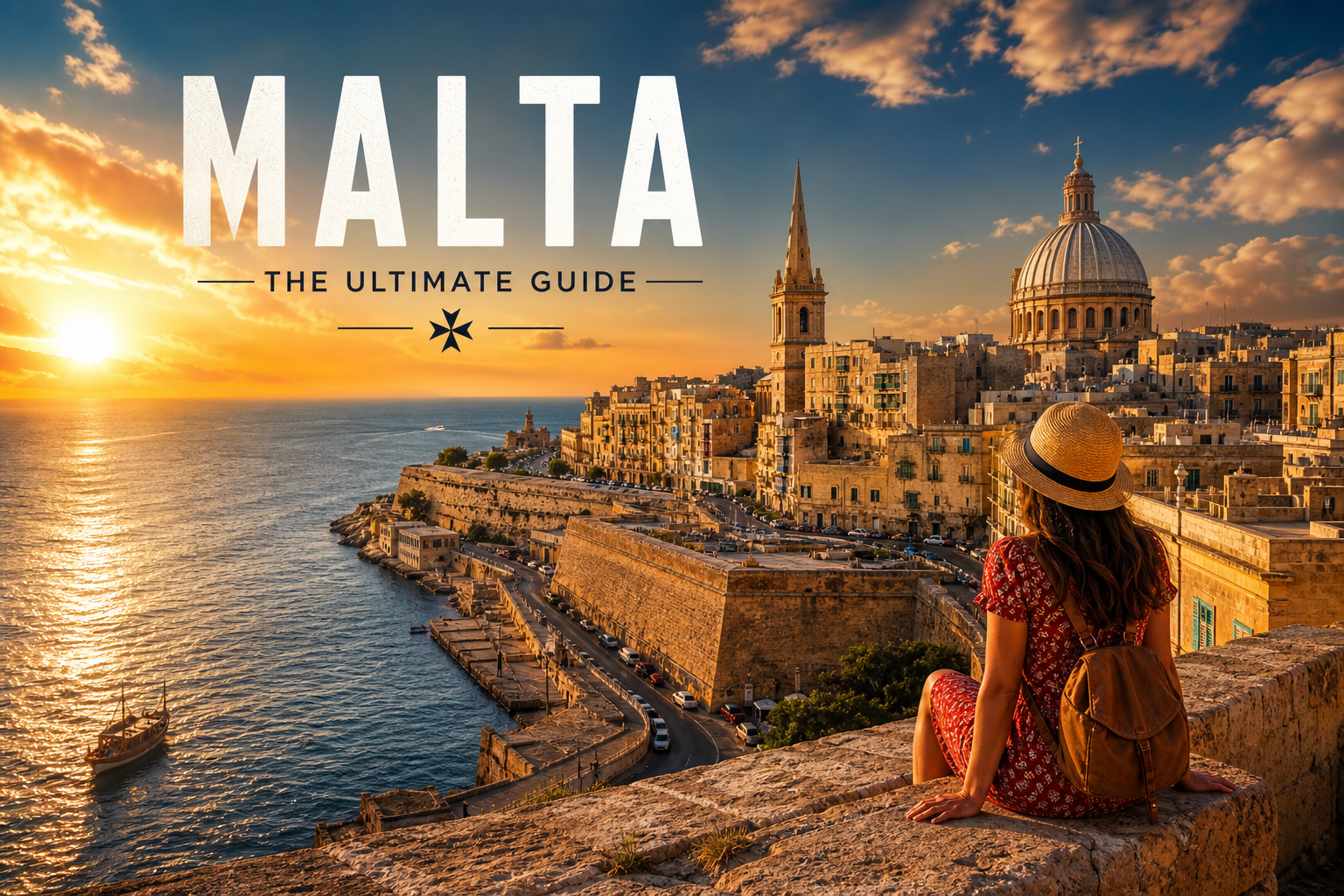
Most travelers know Malta the way they know a word in a language they never fully learned: vaguely, from a distance, never quite sure what to do with it. It sits at the center of the Mediterranean, three hundred and sixteen square kilometers of sun-bleached limestone, and gets skipped over while people book flights to Santorini or the Amalfi Coast. That overlooked status is, as you'll see, the whole point.
Eight thousand years of civilization packed into a space roughly the size of a mid-sized city. Phoenicians, Romans, Arabs, Crusaders, Napoleon and the British all left something behind here, and unlike most places that claim layered history, the layers are still visible. You walk through them. You swim next to them. You eat in restaurants built inside them.
Three inhabited islands form the archipelago: Malta (the main island), Gozo (quieter, greener, slower), and Comino (essentially a single beach with a famous lagoon). All three are EU territory, English is an official language, and the whole place is within roughly a three-hour flight of many major Western and Central European cities. This guide covers everything you need to plan your visit, from entry requirements and daily costs to the best itinerary by trip length. Whether you're researching Malta facts or tracking Malta tourism in 2026, it's all here.
Why the Islands Keep Getting Overlooked (And Why That's Your Advantage)
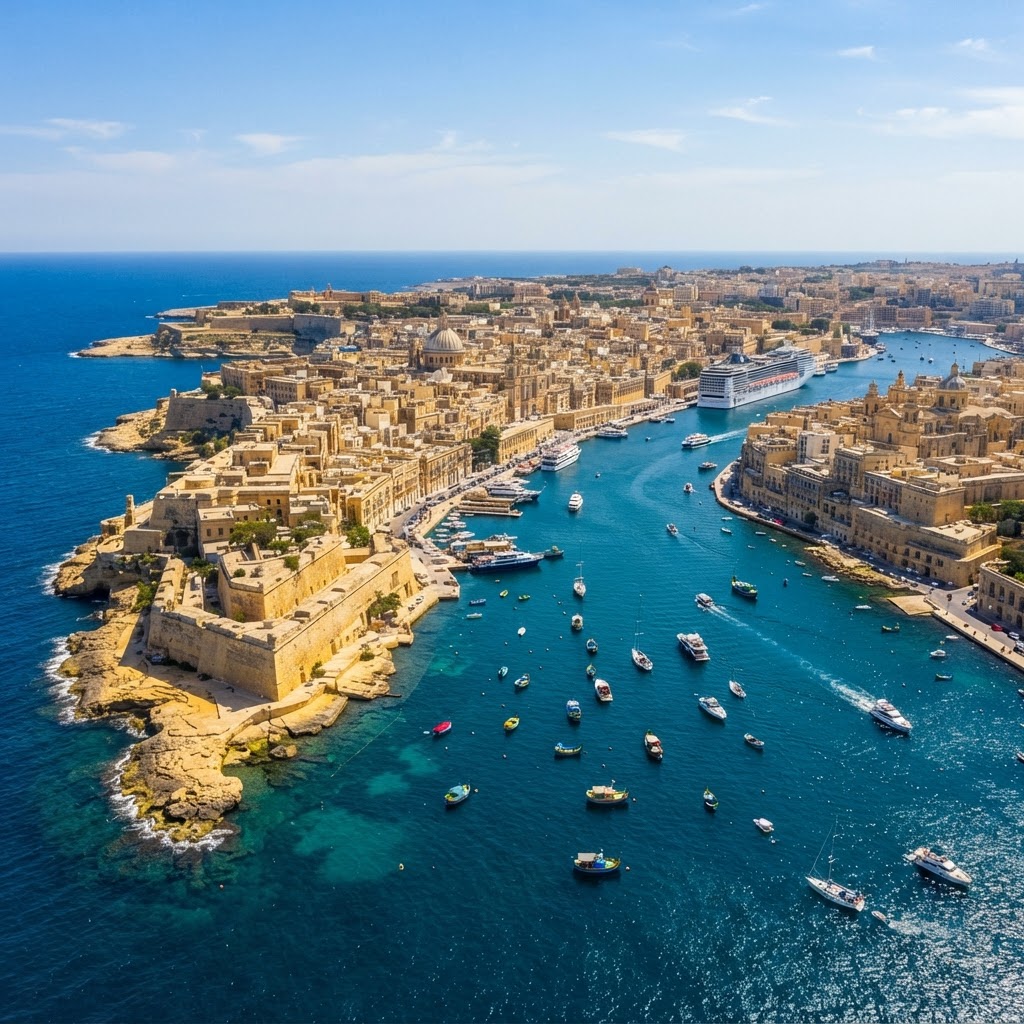
Centrally located in the Mediterranean, the archipelago sits approximately 90km south of Sicily and roughly 290km north of Libya. That position made it one of the most strategically contested pieces of land in European history, and it shows in every fortified harbor, every limestone rampart, every church built on top of a mosque built on top of a temple. The geography didn't just shape the island's history; it made the island a prize worth fighting over for three millennia.
Size is the thing that misleads first-time visitors. Most drives across the main island take under an hour. But the density of what's packed into that drive is extraordinary. Valletta, the capital, is a UNESCO World Heritage Site. The Neolithic temples predate Stonehenge and the Egyptian pyramids. The coastline is heavily fortified with historic harbors and ramparts carved into natural anchorages that empires built their strategies around.
The traveler's advantage is simple: crowds go to Dubrovnik and the Greek islands. The archipelago stays relatively under the radar, especially outside the peak months of July and August. You get world-class history, genuinely beautiful water, and a food culture that doesn't get nearly enough attention, without the infrastructure of mass tourism pressing in on every side. That ratio won't hold forever, but it holds now.
A Layered History You Can Still Walk Through
From Neolithic Builders to the Knights of St. John
Start with the temples, because nothing else quite reframes the destination the way they do. Ħaġar Qim and Mnajdra date from 3700 to 3200 BCE, making them older than Stonehenge and the Great Pyramid of Giza. They are among the oldest freestanding stone structures on earth, still largely intact on the southern coast, and the scale of the stones is genuinely staggering when you're standing in front of them rather than reading about them.
Move through the timeline and the layers accumulate quickly: Phoenician traders, Roman colonization, Arab rule from 870 to 1127 CE (which gave the islands the foundation of their language), Norman conquest, and then the arrival of the Knights Hospitaller in 1530, who turned the main island into the most fortified Christian outpost in the Mediterranean. The Knights' defining moment came in 1565, during the Great Siege of Malta, one of the most dramatic military standoffs of the 16th century. The city they built in response, Valletta, was constructed from scratch in 1566 and now holds UNESCO World Heritage status.
How Maltese Culture Carries All of It Forward
The Maltese language is one of the most unusual linguistic artifacts in the world. It's the only Semitic language written in the Latin alphabet and an official EU language, built on an Arabic foundation layered with Sicilian, Italian, French, and English influences over nine centuries. Linguists estimate that around 50 to 60 percent of its vocabulary derives from Semitic Arabic roots, with the remainder arriving through centuries of European contact. It survived every colonial chapter without being replaced, which says something about the tenacity of Maltese identity.
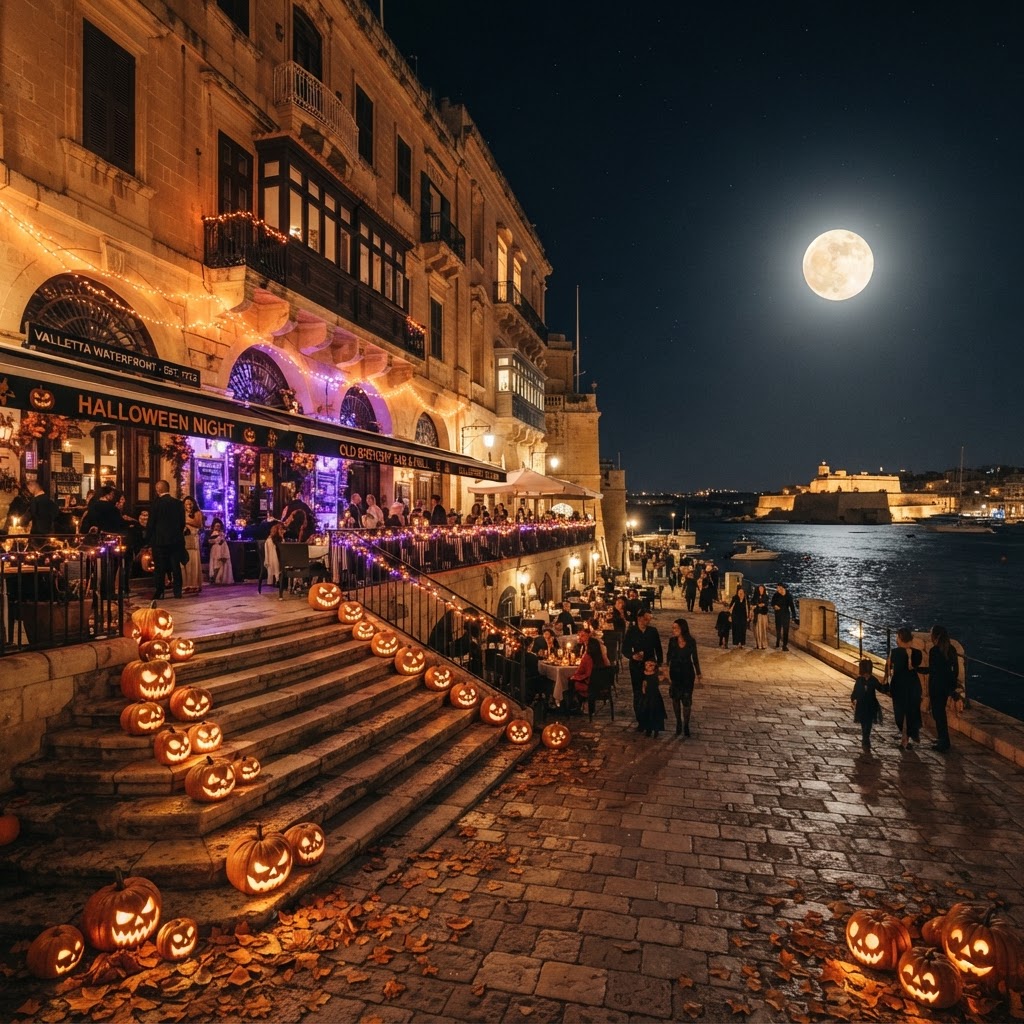
That identity is intensely local in ways that larger destinations have largely lost. Village festas, religious festivals honoring patron saints, dominate the social calendar from late spring through early autumn, with 67 parishes each staging their own multi-day celebration of fireworks, brass bands, street decorations, and processions. Catholicism runs deep, and a fierce pride in craft, food, and community distinguishes the culture from the generic "Mediterranean" shorthand that travel writing tends to reach for.
Must-See Attractions and How to Plan Your Days
Valletta and Mdina: Two Cities, Two Eras
Valletta is compact, roughly 1km by 600m, and fully walkable in a day. The essentials are St. George's Square, Republic Street, the Upper Barrakka Gardens (which give you unobstructed views over the Grand Harbour, which Napoleon himself reportedly called one of the finest in the world), and St. John's Co-Cathedral, which houses Caravaggio's The Beheading of Saint John the Baptist, widely regarded as a major work of the artist's later career. The city rewards slow walking; almost every street ends in a view.
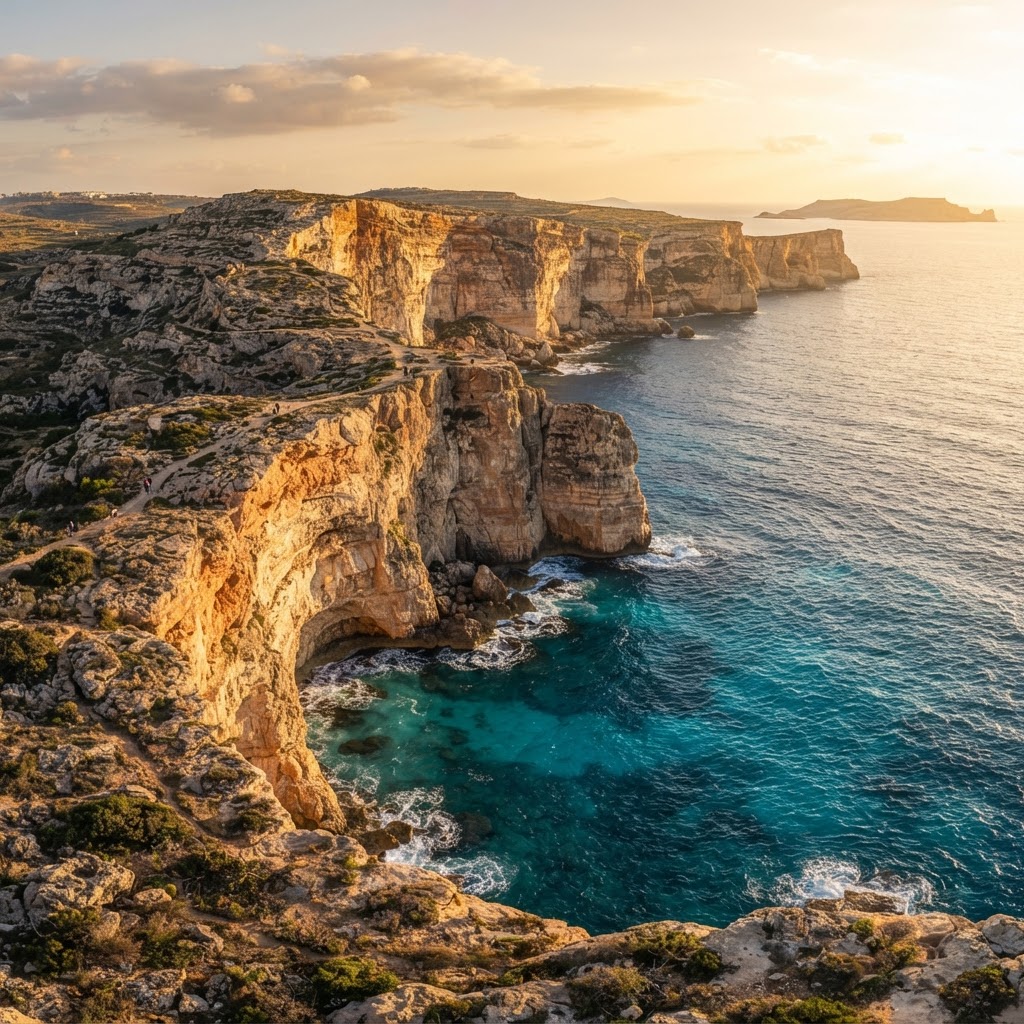
Mdina, the old medieval capital in the interior, is called the "Silent City" for a specific reason. Cars are largely banned, the limestone streets are narrow and quiet, and the atmosphere is genuinely unlike anywhere else on the island. It pairs naturally with an afternoon at the nearby Dingli Cliffs for coastal walking above the sea.
Natural Wonders: From the Blue Lagoon to Ħaġar Qim
The Blue Lagoon on Comino is the archipelago's most photographed natural attraction, and the water color is the kind that looks edited until you're in it. Get there before 9am or in the late afternoon to avoid the peak ferry crowds; a half-day is sufficient. The Blue Grotto on the southeastern coast offers sea cave boat tours through turquoise chambers, and St. Peter's Pool nearby is a natural limestone swimming platform with cliff-jumping options for those who want them.
Ħaġar Qim deserves more attention than it typically gets on standard itineraries. The site sits above sea level with views toward Filfla island, the stones are enormous, and the age of the place reorients your sense of human history in a way that few sites anywhere manage.
A Practical Itinerary Framework: 3 to 7 Days
Three days covers Valletta fully, a Blue Lagoon day trip, and the Blue Grotto with Marsaxlokk fishing village. Five days adds Mdina, the Dingli Cliffs, and St. Peter's Pool. Seven days opens up a full day on Gozo, Ramla Bay, the Victoria Citadel, the coastal paths, and time for the Ħaġar Qim temples. Gozo warrants at least one overnight stay if your schedule allows. The island runs at a slower rhythm, and its beaches are noticeably less crowded than the main island.
When to Go: Weather and Crowds
The Honest Month-by-Month Picture
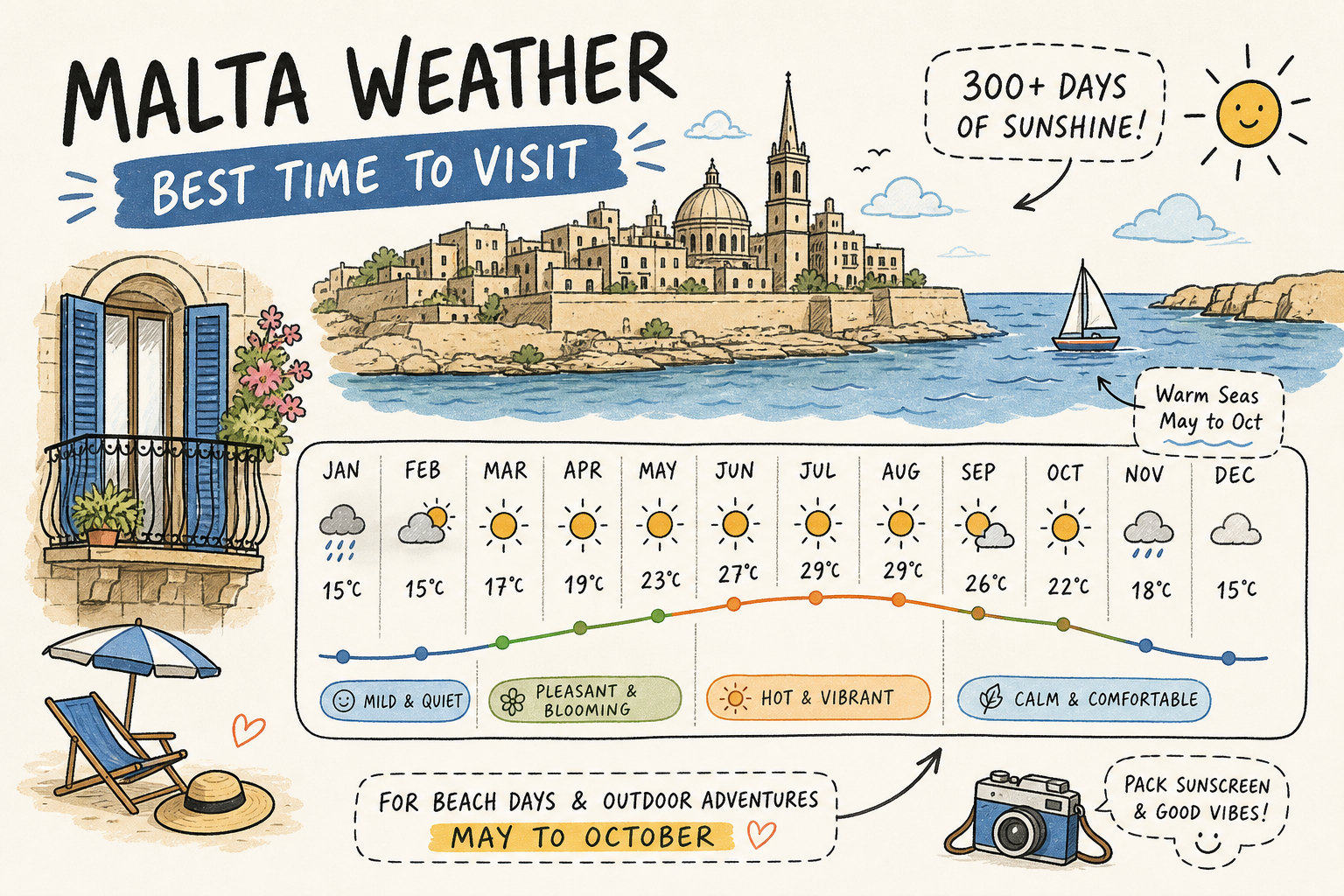
The archipelago has a classic Mediterranean climate: hot dry summers, mild rainy winters, and two shoulder seasons that are genuinely pleasant. Annual rainfall sits around 550mm and falls almost entirely between October and March. Summers are reliably clear: July averages 31°C with roughly 12 hours of sunshine per day and nearly zero rainfall. August matches it for heat and adds a degree of humidity that some travelers find heavy.
Spring (April and May) and autumn (September and October) offer the best balance for most visitors. Temperatures sit between 20 and 28°C, crowds are manageable, and the landscape is at its most photogenic. These months are the strongest choice for anyone combining sightseeing with outdoor activity, particularly coastal hiking along the Dingli Cliffs or the paths above Gozo's shoreline.
Matching Your Visit to Your Travel Style
Beach-focused trips belong in mid-June through mid-September, when the sea stays above 22°C and the weather is unequivocal. History and culture travel fits March to May or October to November, when sites are cooler and less crowded. Budget-conscious travelers get the most value from November to February, with accommodation rates 20 to 30 percent lower than summer peaks, at the cost of occasional rain and cooler evenings. None of these tradeoffs are severe; a mild climate means there's no genuinely bad month to visit.
Entry Requirements and Getting Around
The 2026 ETIAS Update and What It Means for Your Trip
The islands are part of the Schengen Area. EU and EEA citizens travel freely with a national ID. Citizens of over 50 visa-exempt countries, including the US, UK, and Australia, can enter for up to 90 days within any 180-day period without a visa. Your passport must have been issued within the last 10 years and carry at least three months' validity beyond your planned departure from the Schengen zone (check with your nearest embassy or the official EU entry pages, as some sources advise six months).
The key 2026 update is ETIAS (European Travel Information and Authorisation System), expected to become mandatory for visa-exempt non-EU travelers later this year. It's an online pre-travel authorization linked electronically to your passport, not a visa, and covers multiple short trips across 30 Schengen countries. Alongside this, the EU Entry/Exit System (EES) became operational in April 2026, collecting biometric data from non-EU nationals at the border. Allow extra time at passport control on your first entry. Check the official ETIAS website for the confirmed launch date before booking. For Malta-specific ETIAS guidance, see the Malta ETIAS information. For country-specific travel advisories and practical tips, consult the UK Foreign Travel Advice for Malta.
Getting Around Without a Car
Malta's public bus network, run by Malta Public Transport, connects all major towns and tourist sites. A single journey costs €1.50 to €2; a weekly Explorer card runs €21 (verify current fares on the Malta Public Transport site, as seasonal variations apply). Buses are the most cost-effective way to move around and cover nearly everywhere on the main island.
For Gozo, a regular car ferry runs from Ċirkewwa in the north to Mġarr on Gozo; the crossing takes about 25 minutes and runs 24 hours a day. A faster passenger-only service from Valletta takes around 45 minutes. Ferries to Comino run seasonally from both Ċirkewwa and Mġarr harbour. Car rental is practical for rural exploration and costs €15 to €20 per day, useful if you want to reach sites off the bus routes. One important note for visitors from continental Europe: the islands drive on the left.
Costs Across Three Travel Styles
The Real Numbers for Budget, Mid-Range, and Luxury Travelers
Budget travelers can manage comfortably on €35 to €65 per day. This covers a hostel dorm (€27 to €54 per night), cheap local meals (pastizzi, the national street food, costs around €1), and public transport. The destination is genuinely affordable if you eat where locals eat rather than in resort-area restaurants along the main tourist strips.
Mid-range travel runs €65 to €135 per day, covering a private room or mid-tier hotel, one sit-down meal per day, some paid attractions, and occasional ferry or taxi costs. The MaltaPass (available in 3, 4, 6, and 7-day versions, with prices starting around €49, check the official MaltaPass page for current 2026 pricing) covers entry to numerous Heritage Malta museums, Captain Morgan ferry crossings, and hop-on-hop-off buses. Calculate it against individual ticket prices before you buy. Luxury travelers should budget €150 to €360 or more per day, which opens up five-star hotels in Valletta and St. Julian's, fine dining, private boat charters, and guided archaeological tours.
Three Practical Ways to Reduce Costs Without Cutting Experiences
- Travel in April, May, or October when accommodation runs 20 to 30 percent cheaper than peak summer rates.
- Eat where locals eat: village bakeries, small family restaurants away from Valletta's Republic Street, and markets like Marsaxlokk on Sunday mornings.
- Use the public bus system rather than taxis for inter-town travel; it covers almost everywhere, runs frequently, and costs a fraction of the alternatives.
Frequently Asked Questions
Do I need a visa to visit Malta?
Citizens of EU and EEA countries do not need a visa. Travelers from over 50 visa-exempt countries, including the US, UK, Canada, and Australia, can visit for up to 90 days within any 180-day period without a visa. Other nationalities should check with the nearest Maltese embassy or consulate before travel.
What is the ETIAS 2026 status?
ETIAS is expected to launch for mandatory use later in 2026. It applies to visa-exempt non-EU travelers and requires a simple online application before departure. Check the official ETIAS portal for the confirmed go-live date.
What are some key Malta facts?
The archipelago covers 316 square kilometers, has a population of around 520,000, and holds some of the oldest freestanding stone structures on earth. Maltese is the only Semitic language written in the Latin alphabet and an official EU language. The islands have been inhabited continuously for around 8,000 years.
When is the best time to visit?
April, May, September, and October offer the best balance of warm weather, manageable crowds, and lower prices. July and August are the hottest and busiest months.
The Place That Reveals Itself Slowly
This is the kind of destination that doesn't make its case loudly. The surface impression, a small island, warm sea, fairly affordable, gives way to something much stranger and richer once you start walking its streets and reading its stones. The history is genuinely world-class, the food criminally underrated, and the costs reasonable. And the crowds have not yet arrived in the way they've arrived in Dubrovnik or the Greek islands.
Whether you're planning a one-week trip or exploring what it would mean to stay longer, use this guide however it's useful, itinerary, entry requirements, budget, and come back as your plans solidify. The best travel decisions look unconventional on paper and unforgettable in practice. The Maltese islands qualify.