Malta Travel 2026: Everything You Need to Know
Malta Travel 2026: Everything You Need to Know
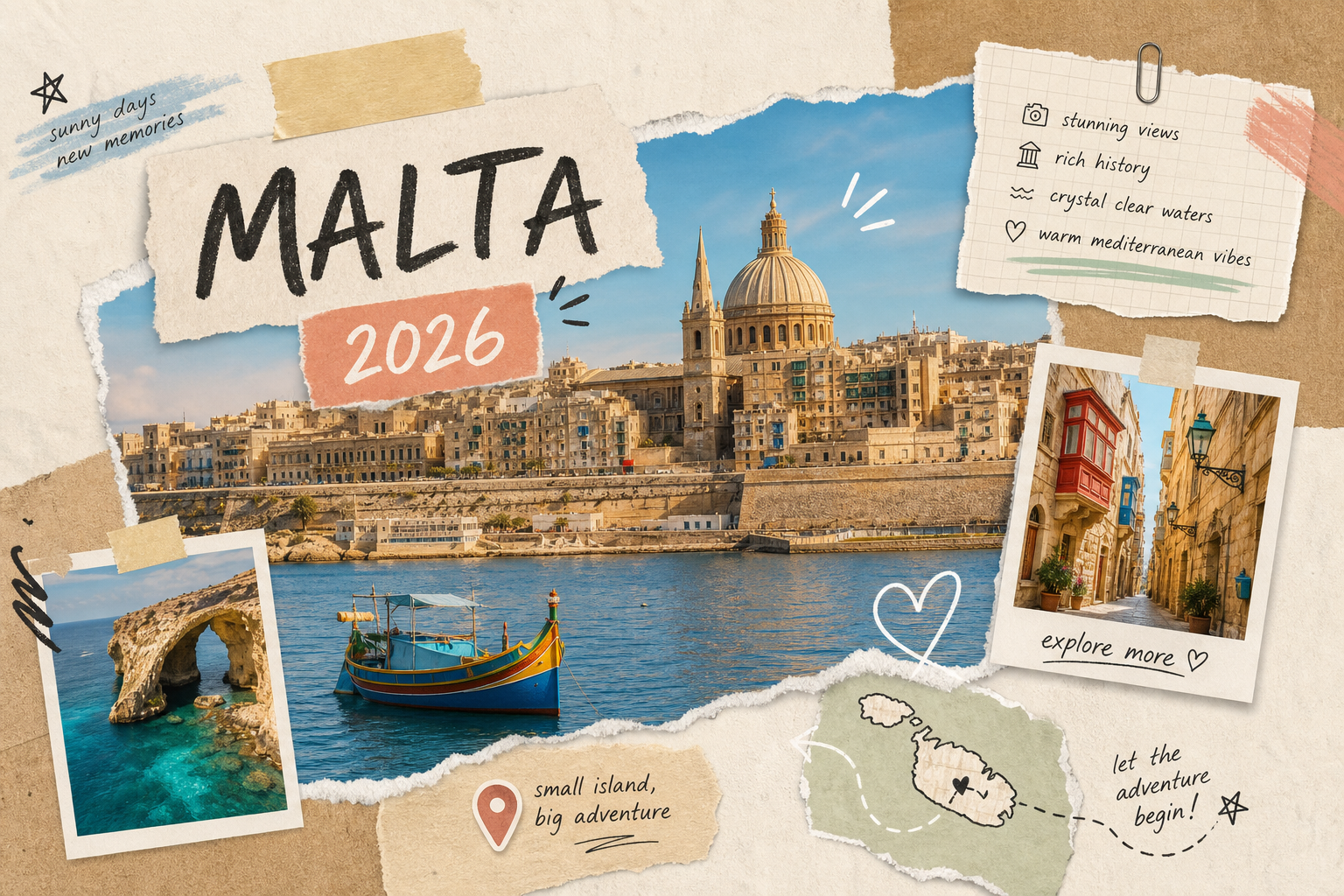
Malta travel in 2026 offers a rare combination: the smallest country in the European Union, yet one that packs multiple UNESCO World Heritage sites, crystalline sea, and millennia of layered history into a remarkably compact archipelago. Three islands, several thousand years of continuous human habitation, and water temperatures that stay swimmable into November. The case for visiting this year is straightforward. Whether you're booking a boat tour or navigating Valletta's Baroque alleys on foot, this malta travel guide covers everything you actually need: entry rules, the best seasons, realistic itineraries, ferry logistics, and honest daily budgets. No filler, no vague suggestions, just the practical details that make the difference between a good trip and a great one.
When to visit Malta: picking the right season
The short answer is April, May or September, October. Shoulder season wins for most travelers, and the reasons go beyond "it's less crowded." The combination of mild temperatures, low rainfall, and a meaningful reduction in cruise ship traffic changes the experience of visiting key sites in a way that's hard to overstate.
Spring (April, May): the sweet spot for most travelers
April delivers highs around 19°C, 8, 9 hours of daily sun, and just 15, 26 mm of rain across the entire month. The landscape is green and blooming, the historic sites are accessible without queuing in 30°C heat, and the outdoor walks through Mdina or along the cliffs at Dingli are genuinely comfortable. By May, temperatures reach 23°C, beaches become viable, and rainfall drops to around 9, 12 mm for the month. This is the window where you get the full Malta experience without the trade-offs of summer.
Summer (June, August): best for beaches, hard on patience
June through August is peak beach season, and the water is worth it. Sea temperatures peak around 28°C, festivals run almost every weekend, and the nightlife in Paceville and St. Julian's is at its loudest. The honest trade-off is that Valletta and Comino get genuinely overwhelming in July and August, with peak cruise days bringing more than 14,000 passengers into a capital city of under 7,000 residents, and temperatures peaking at 31°C in August. If you go in summer, visit St. John's Co-Cathedral before 9am, skip Comino on days when cruise ships are in port, and build a siesta into your afternoon.
Autumn and winter: underrated and underused
September is arguably the best month on the calendar: 28°C highs, a sea temperature of 24°C that persists into October, and the departure of the bulk of summer tourists. October brings some showers, but they're typically brief, and the hiking conditions on both Malta and Gozo are excellent. Winter (November, February) is a genuine option for budget travelers and culture-focused itineraries, with 3-star hotels dropping to their lowest rates and major sites significantly less crowded than at any other time of year.
Malta travel entry requirements and safety in 2026
Malta is a Schengen Area member, which means the same rules that apply across France, Germany, and Spain apply here. Get this sorted before you book flights, not after.
ETIAS: what's coming and who it affects
ETIAS, the EU's electronic travel authorization system, is scheduled to launch in Q4 2026 for visa-exempt travelers from over 50 countries, including the US, UK, Canada, and Australia. As of May 2026, it is not yet operational and applications are not yet being accepted. Any site currently claiming to process ETIAS applications is fraudulent. Use only europa.eu/etias when the system goes live. Once active, ETIAS will cost €7, link electronically to your passport, and cover multiple entries for three years or until passport expiry. The 90-days-in-180-days rule across the entire Schengen Area still applies regardless of how many countries you visit. For the latest timeline and context see the ETIAS launch update, and for country-specific guidance consult the Malta ETIAS information.
Passport rules and border processing
Your passport must be valid for at least three months beyond your planned departure from the Schengen Area and issued within the last 10 years. The EU's new Entry/Exit System (EES) completed its rollout in April 2026, meaning biometrics, fingerprints and a photo, are now collected on first entry for non-EU travelers. Expect slightly longer queues at border control, especially at peak arrival times. Building an extra 30 minutes into airport transfers on your first day is a sensible precaution given current processing estimates.
Safety on the ground
Malta is rated Level 1 by the US State Department: "exercise normal precautions." The UK, Canada, and Australia rate it at equivalent low-risk levels. Real-world risks are minor, petty theft in crowded areas like the Valletta waterfront and Marsaxlokk market, slow buses on certain routes, and the nightlife district of Paceville late at night. Outside those specific contexts, Malta ranks among Europe's safest destinations, and solo travelers consistently report feeling secure across all the main tourist areas.
Malta's essential experiences
Malta rewards travelers who go beyond the obvious, and the best version of any Malta trip combines time on land with at least one proper day on the water.
Valletta: more than a capital city
St. John's Co-Cathedral is non-negotiable. Caravaggio's The Beheading of Saint John the Baptist alone justifies the admission price; the gilded Baroque interior makes it one of the most striking spaces in Europe. Book tickets in advance online, walk-up queues in peak season are real. From there, the Grand Master's Palace and the Upper Barrakka Gardens (free to enter) give you the best views of the Grand Harbour in the city. The Is-Suq Tal-Belt food market on Merchant Street is the ideal lunch stop before an afternoon on Republic Street.
Mdina and Gozo: the quieter side of Malta
Mdina, the "Silent City," sits on a hilltop 20, 30 minutes by bus from Valletta and deserves at minimum a half-day. The medieval walled streets are almost entirely free of traffic and tourist infrastructure, which makes it feel genuinely different from the rest of the island. Pair a Mdina visit with a Gozo extension for the best of Malta's historical depth. The Ġgantija Temples on Gozo date to around 3600 BC, predating Stonehenge by centuries, and Victoria's citadel offers panoramic views of the entire island. Gozo is calmer, greener, and slower than the main island, most travelers who spend a night there wish they'd booked two.
The Blue Lagoon and why a boat tour changes everything
The Blue Lagoon on Comino is one of the most visually striking spots in the Mediterranean, but the experience depends entirely on how you arrive. A scheduled ferry drops you into a crowd on a small beach with limited space and no context. A dedicated boat tour changes the picture entirely: you get access to the sea caves along Comino's coastline, time in the quieter coves before the day-trippers arrive, and the flexibility to swim at a pace that isn't dictated by a ferry timetable. The Blue Lagoon is worth doing once. Arrive by boat, not by shuttle ferry, and you'll understand why.
Itinerary options: 1 day, 3 days, and 7 days
The honest reality of Malta is that you can see the highlights in a long weekend, but the island rewards a full week if you have it. Here's how to sequence each option without wasting time.
One day: the Valletta essentials
Start at St. John's Co-Cathedral at 9am (pre-book tickets), walk to the Grand Master's Palace, and break for lunch at Is-Suq Tal-Belt. Spend the afternoon on Republic Street and finish at the Upper Barrakka Gardens before dinner at Rampila or Legligin. This is a fully walkable day, no car, no bus, no logistics required. It covers the absolute best of Valletta in a single circuit.
Three days: adding the islands
Day 1 follows the Valletta circuit above. Day 2 heads to Mdina by bus (30 minutes from Valletta, roughly €2.50 for a single summer fare) for the walled city, St. Paul's Cathedral, and the views from Fontanella Tea Garden. Day 3 is the island day: take the Gozo Fast Ferry from Valletta to Mġarr (45 minutes, €6 single or €13 return) and connect to Comino for the Blue Lagoon. The small boat from Mġarr to Comino runs roughly €10, 12 return and is cash only, so bring notes. Booking ahead in summer is strongly recommended.
Seven days: the full circuit
Days 1, 3 follow the pattern above, based in Valletta or Sliema. Days 4, 6 are based in Gozo: take the Gozo Channel ferry from Ċirkewwa (€4.65 single passenger, 25-minute crossing, runs 24/7), rent a car on arrival for around €30, 45 per day, and use those three days to cover the Ġgantija Temples, Victoria's citadel, Gozo's beaches, and the Blue Lagoon from the water. Day 7 takes the ferry back to Malta for a final half-day in Sliema or Valletta before departure. Renting a car specifically for the Gozo portion is worth it, the island is small but the best spots aren't on bus routes.
Getting around: buses, ferries, and when to hire a car
Malta's public transport is cheap, comprehensive, and imperfect. The right transport mix depends on your itinerary and your tolerance for scheduling uncertainty.
Malta's bus network: what the Tallinja card actually costs
Single tickets cost €2 in winter and €2.50 in summer, bought from the driver. For anyone staying five or more days and using buses heavily, the 7-day Explore Card at €25 for adults covers unlimited travel on all routes and is the clear best value. The 12-journey shareable card at €19 works well for shorter stays or couples sharing journeys. Download the Tallinja app for real-time tracking, it makes a meaningful difference when buses are running late, which happens on less-served routes. For official pricing and offers see the Tallinja fares and offers.
Inter-island ferries: Gozo and Comino logistics
The Gozo Channel ferry from Ċirkewwa to Mġarr runs 24 hours a day with departures roughly every 45 minutes during the day. Passenger fare is €4.65 single. For a faster and more scenic option, the Gozo Fast Ferry from Valletta takes 45 minutes and costs €6 single or €13 return (check operator websites for current seasonal fares). For Comino, seasonal boats run from Mġarr for approximately €10, 12 return, cash only. In July and August, Comino boats fill by mid-morning, arrive early or book in advance where possible. Check current timetables and cross-island routes on Ferryhopper's Gozo ferry schedules.
Car hire: worth it or not?
On Malta's main island, a car is optional. Buses cover Valletta, Mdina, and most beaches, and parking in Valletta is a legitimate nightmare. On Gozo, a car changes the trip entirely. Economy options run €25, 45 per day, and weekly rates are typically 20, 30% lower. One practical warning: if you want to take a car on the Gozo Channel ferry in summer, book the vehicle slot well in advance. Walk-on passenger spots are always available, but vehicle space fills up fast in peak weeks.
What a Malta trip realistically costs in 2026
Malta is not cheap by Eastern European standards, but it delivers significantly better value than Spain or Italy for comparable quality accommodation and food. Here's the honest daily breakdown per person.
-
Budget: €60, 80/day, hostel dorm (€20, 25), public bus pass, self-catering or pastizzi lunches, one paid attraction per day.
-
Mid-range: €120, 180/day, 3-star hotel (€70, 100), restaurant meals, a mix of buses and Bolt taxis, guided tours.
-
Comfortable: €200+/day, boutique hotel, private transport, boat excursions, fine dining by the Grand Harbour.
Three experiences are worth spending more on regardless of your overall budget: a guided Valletta walking tour (the history context that self-guided maps can't replicate), admission to St. John's Co-Cathedral (genuinely irreplaceable), and a proper Blue Lagoon boat tour rather than the cheapest shared ferry. These three choices define the quality of most Malta trips.
On the cost-cutting side, the Explore Card over taxis can save €10, 20 per day on typical Malta itineraries. Malta holidays in shoulder season, April, May or September, October, can bring accommodation prices down by around 20, 30% compared to peak summer, based on typical market patterns for the region. And Mdina itself costs nothing to walk: the walled city is free, the views are free, and an afternoon there is one of the best-value experiences on the island.
Ready to plan your malta travel in 2026?
Malta in 2026 is one of Europe's most accessible, historically layered, and visually striking destinations, and the logistics are simpler than most people expect. The key decisions are clear: go in shoulder season unless beaches are your primary motivation, get your passport validity and ETIAS status sorted before you book flights, and prioritize Valletta, Mdina, and at least one full day on the water.
That day on the water is where the trip becomes memorable rather than just good. The Blue Lagoon from the deck of a proper boat, with time in the caves and the quiet coves, is a different experience entirely from the ferry-and-crowd version. Browse available boat tours, check the seasonal calendar against your travel dates, and consult a guide to the best time to visit Malta, book early if you're visiting between June and September.
Malta travel planning is the straightforward part. The harder part is leaving.