3–7 Days in Malta: Flexible First-Timer Itinerary
Search for Malta itineraries online and you'll find dozens of them — many either crammed with six locations per day or vague enough to be useless when you're actually standing at a bus stop trying to plan your afternoon. This guide takes a different approach: one realistic 7-day itinerary as the foundation, with clear instructions for trimming it to 5 days or 3 days depending on how long you have. The goal is a balanced first trip that covers the genuine highlights without leaving you exhausted by Day 3. You will not see everything in Malta on one trip — and that's fine.
Quick Overview – What You'll See in 3, 5 and 7 Days
In 3 days: Valletta, Mdina and Rabat, plus one choice: either a Gozo day trip or a south coast day (Blue Grotto + Marsaxlokk). Pick the one that matters most to you.
In 5 days: Valletta, the Three Cities, Mdina and Rabat, a south coast day (Marsaxlokk and Blue Grotto), and either Gozo or a Comino/Blue Lagoon boat day.
In 7 days (full plan): Valletta, Three Cities, Mdina and Rabat with Dingli Cliffs, south coast day, a full Gozo day, a Comino and Blue Lagoon boat day, plus a relaxed northern beaches day to finish.
Think of the 7-day version as the complete menu. For shorter trips, you're choosing which courses to keep and which to skip — not trying to rush through all of them.
Where to Base Yourself for This Itinerary
For a first trip using this itinerary, base yourself in Valletta, Sliema, Gżira or central St Julian's. These areas give you the best access to bus routes, the Sliema–Valletta ferry, and organised boat tours. Most days in this plan work efficiently from any of these bases.
If you're renting a car, staying further north — in the Mellieħa area, for example — is perfectly manageable and puts you closer to the Gozo ferry and northern beaches. Just be aware that driving into Valletta and Sliema involves traffic and limited parking.
For those who want to split their trip, spending 1–2 nights in Gozo adds a genuinely different experience. That said, keeping a single base on the main island is simpler for most first-timers and avoids the logistical overhead of moving accommodation mid-trip.
7-Day Malta Itinerary (Ideal First Trip)
Day 1 – Arrival & Valletta
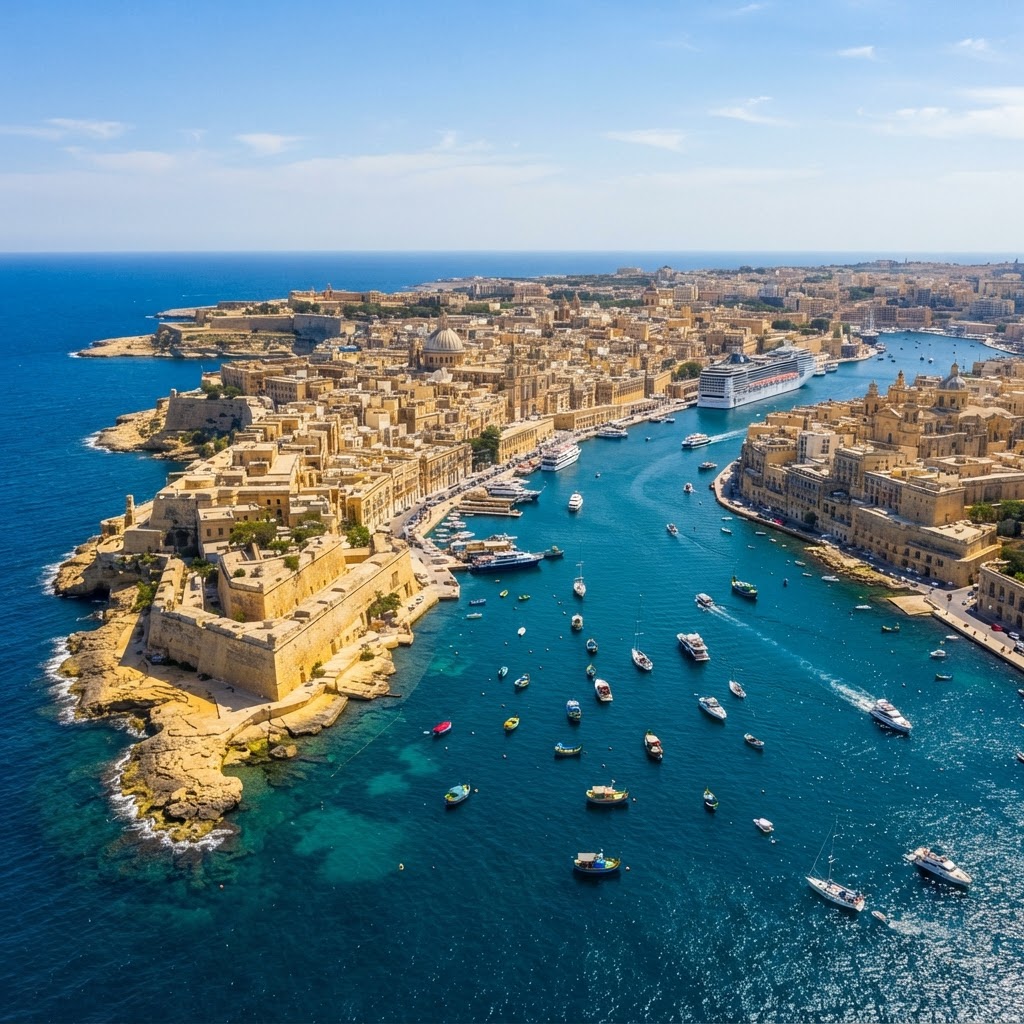
Arrive, check in, and don't try to do too much. If you land in the morning or at midday, spend the afternoon in Valletta: walk through City Gate, stroll along Republic Street, and visit St John's Co-Cathedral if it's open (book tickets in advance — it sells out). Make your way to the Upper Barrakka Gardens for the first look at the Grand Harbour, and stop at the Lower Barrakka Gardens on the way back down.
Valletta rewards slow walking. Don't rush it — you have tomorrow morning to continue. For the evening, find a restaurant with a harbour view and decompress. The city is small and completely walkable.
Day 2 – Three Cities & More Valletta
Use any morning time to catch Valletta sights you missed on Day 1 — the National Museum of Archaeology, Fort St Elmo, or a quieter look at some of the side streets.
In the afternoon, take the passenger ferry from Valletta's waterfront to Birgu (Vittoriosa) — it takes about five minutes and is one of the best-value experiences in Malta. Explore the Three Cities: the Birgu waterfront and Fort St Angelo, the Inquisitor's Palace, and the narrow streets of Senglea if you have the energy. The views back across the Grand Harbour towards Valletta are spectacular.
Head back by ferry or bus for dinner. The Three Cities are quiet in the evenings, so you'll want to be back in Valletta or Sliema for food options.
Day 3 – Mdina, Rabat & Dingli Cliffs
Start reasonably early — Mdina before the tour buses arrive is a different experience. The Silent City is genuinely extraordinary: tight medieval streets, cathedral, bastions, and views across the whole island. Allow two to three hours to explore properly without rushing.
Have lunch in Rabat, the town that spreads around Mdina's walls. Grab pastizzi from a local café, and consider a visit to the St Paul's Catacombs if ancient history interests you — they're easy, underrated, and not too long.
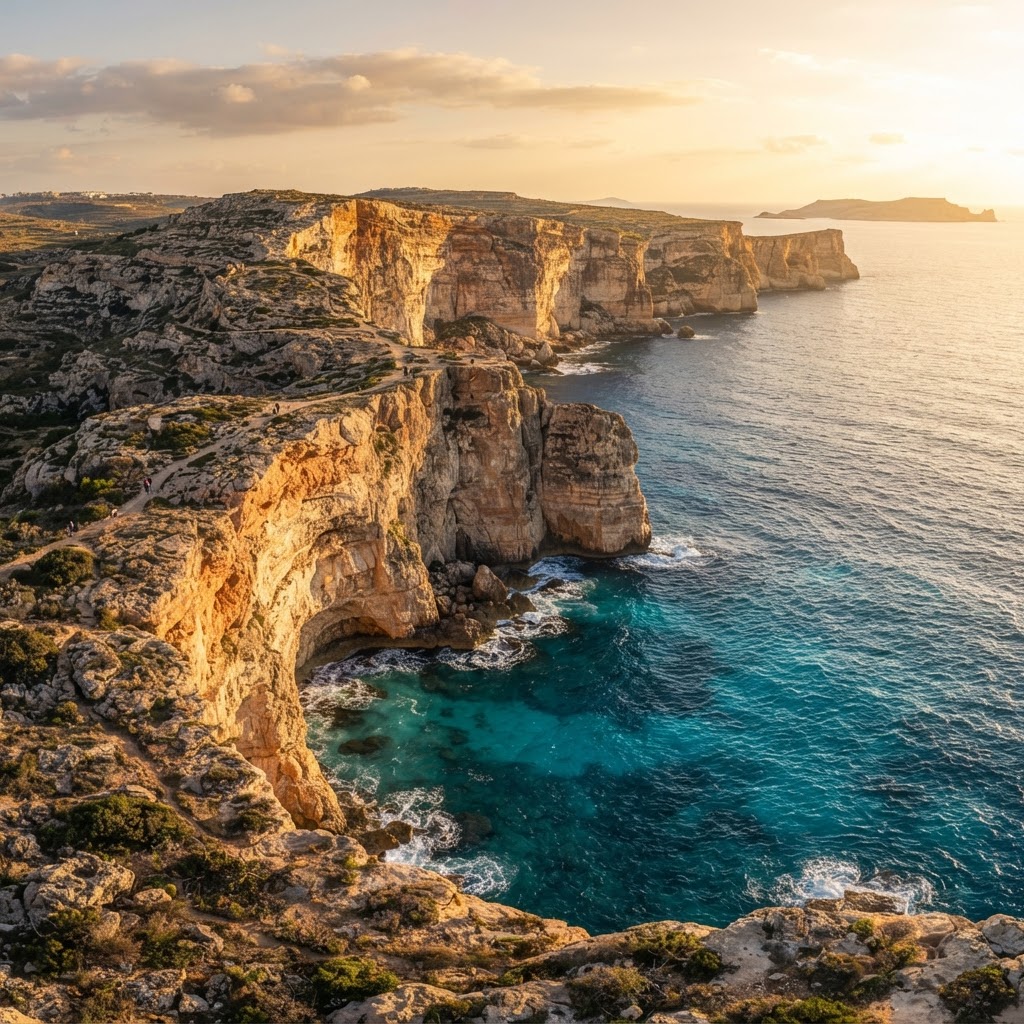
In the late afternoon, drive or taxi to Dingli Cliffs for sunset views over the sea. This is one of Malta's most dramatic landscapes — the highest point on the island, with cliffs dropping straight to the Mediterranean. It's best reached by car or taxi; the bus route is indirect. If you're without a car and sunset timing doesn't work, this can be skipped or moved to another day.
Day 4 – South Coast: Marsaxlokk & Blue Grotto
Head south. Start at the Blue Grotto — the viewpoint alone is worth the visit, and a boat trip through the sea caves (when conditions allow) is short, cheap, and memorable. Boats depart from the small jetty near Wied iż-Żurrieq. Note that trips depend on sea conditions; if it's choppy, the boats don't run.
Drive or bus to Marsaxlokk for a late morning or lunchtime visit. The fishing village is famous for its colourful luzzu boats and Sunday fish market (the market is biggest on Sundays, but the village is pleasant any day). Have lunch at one of the waterfront restaurants — fresh fish, reasonable prices, good atmosphere.
If you have a car and the energy, St Peter's Pool is a short drive from Marsaxlokk: a natural rock swimming area that's beautiful in calm weather. It's not accessible by bus and can be slippery, so it suits active travellers with the right footwear and conditions.
Day 5 – Gozo Day Trip
Start early. The Gozo ferry runs from Ċirkewwa in the north of Malta to Mġarr in Gozo, takes about 25 minutes, and runs frequently. If you're using public transport, take a bus from Valletta to Ċirkewwa (allow 1.5–2 hours from central Malta).
In Gozo, focus on a realistic selection rather than trying to cross the whole island:
- Victoria (Rabat): The capital, with the Citadel offering excellent panoramic views and a small museum. Easy to walk and genuinely atmospheric.
- Ramla Bay: Gozo's most beautiful beach — wide, sandy, and backed by hills. Worth an hour or two in the afternoon.
- One scenic extra: The salt pans at Xwejni near Marsalforn, or a drive past Ta' Pinu Basilica, or the clifftop views at Tal-Mixta Cave near Ramla.
One day gives you a genuine taste of Gozo without feeling frantic. If you want more — and many people do — the option to spend a night on Gozo is worth considering. The pace is noticeably different from the main island.
Day 6 – Comino & the Blue Lagoon
Comino's Blue Lagoon is, depending on the time of year, either one of the most beautiful things you'll see on this trip or an extremely crowded boat-park. The water colour is genuinely extraordinary. In peak summer (July–August), it gets very busy by mid-morning. If you go, choose a reputable operator and consider ones that visit Crystal Lagoon as well, which is quieter.
This is a full-day boat excursion from Sliema, St Julian's, or Mellieħa. You'll spend several hours in and around the lagoon swimming, snorkelling, and sitting in the sun. Bring shade, water, and sun protection. It is worth doing at least once; just arrive with realistic expectations about the crowd levels in high season.
In shoulder season (May–June, September–October), the Blue Lagoon is significantly less packed and the experience is considerably more pleasant.
Day 7 – Northern Beaches & a Slow Finish
Keep Day 7 light. By this point in the trip, you've covered a lot — don't load up this day with more historical sites.
Choose one beach based on where you're staying and what you feel like:
- Ghajn Tuffieha (Rainbow Beach): A beautiful, less-developed beach reached by a long staircase. Worth it for the scenery.
- Golden Bay: The large, accessible sandy beach next to Ghajn Tuffieha. Easier to reach, good facilities.
- Ghadira Bay (Mellieħa Bay): Malta's largest sandy beach — shallow, family-friendly, easy to access.
If you want one more view, the Red Tower near Mellieħa offers a quick stop and good northern coast panoramas. Keep it optional.
Spend the afternoon reading, swimming, or having a long lunch. If you have a flight the next day, this pacing gives you an easy, relaxed final evening.
How to Turn This into a 5-Day Malta Itinerary
For 5 days, the goal is to keep everything that's genuinely irreplaceable and drop what can be saved for a return trip.
What to keep:
- Valletta and the Three Cities
- Mdina and Rabat
- South coast (Marsaxlokk and Blue Grotto)
- One island day: Gozo or Comino — not both
5-day sample plan:
- Day 1: Arrive + Valletta (City Gate, Co-Cathedral, Barrakka Gardens)
- Day 2: Three Cities (ferry from Valletta) + any remaining Valletta sights
- Day 3: Mdina and Rabat + Dingli Cliffs if energy allows
- Day 4: South coast — Blue Grotto + Marsaxlokk
- Day 5: Gozo day trip OR Comino/Blue Lagoon boat day
What gets dropped from the 7-day version: The northern beaches day and one of the two island days. These are the natural cuts — they're great but not irreplaceable on a first trip. Gozo is the stronger choice for most people if forced to pick one; Comino is beautiful but can be replaced by a different swim day.
How to Turn This into a 3-Day Malta Itinerary
3 days in Malta is a taster. You won't see everything, and you shouldn't try. Pick one of two approaches depending on your priorities:
Option A – History and Highlights
- Day 1: Valletta — full day. Co-Cathedral, Barrakka Gardens, evening dinner with harbour views.
- Day 2: Mdina and Rabat in the morning; Dingli Cliffs in the late afternoon if possible.
- Day 3: South coast — Blue Grotto and Marsaxlokk. Or swap this for a half-day Gozo tour if that matters more.
Option B – Islands and Sea
- Day 1: Valletta — half to full day depending on arrival time.
- Day 2: Gozo day trip — Citadel, Ramla Bay, one extra stop.
- Day 3: Comino and Blue Lagoon boat trip, or a south coast boat option.
With 3 days, the Three Cities often get dropped unless you're very efficient on Day 1. That's okay. A short visit to the ferry and the view across the Grand Harbour from Valletta still gives you the sense of the harbour without the full Three Cities exploration.
The honest advice: come back for longer. Three days is enough to fall in love with the place.
Do You Need a Car for This Itinerary?
Short answer: no, but it helps on specific days.
The core of this itinerary — Valletta, Three Cities, Gozo, Comino, Marsaxlokk — is all doable by bus, ferry and organised boat trip. The slightly awkward days are Mdina combined with Dingli Cliffs, and the Blue Grotto combined with Marsaxlokk. Those combinations are easier with a car; by bus they require more planning and patience.
For many first-timers, the practical sweet spot is: no car for most of the trip, with a rental car or taxi for one or two specific days (Mdina–Dingli, or the south coast loop). This avoids the stress of driving in Valletta and parking in busy areas, while giving flexibility for the days where buses are genuinely inconvenient.
The Getting Around Malta guide on MaltaGuide.online covers transport options, Tallinja cards and taxi apps in full detail.
How to Adapt the Itinerary in Summer vs Winter
Summer (June–September): Heat is the main variable. Temperatures regularly reach 32–36°C, and walking around Mdina's exposed streets or Valletta's hills at 2pm is genuinely uncomfortable. Adjust by doing outdoor and walking-heavy sightseeing in the morning and late afternoon; use the middle of the day for a swim, a long lunch, or an air-conditioned museum.
Boat days and beach days are excellent in summer but can be crowded. The Blue Lagoon in particular is at peak capacity in July and August. Go with realistic expectations.
Winter and shoulder season (October–May): Much more comfortable for walking. Valletta, Mdina and the Three Cities are genuinely lovely in winter light with far fewer crowds. Temperatures are mild enough for comfortable outdoor exploring most days.
Swimming is possible in May, September and October for most people; less appealing in the cooler months for many. Some boat trips and Blue Lagoon operators run reduced schedules or don't run at all in winter — check before you go.
Opening times for some sites and restaurants can also vary, especially out of season. Always check in advance for the specific month you're visiting.
Common Itinerary Mistakes People Make (According to Reddit)
Trying to do too much in one day. Combining Blue Grotto, Marsaxlokk, Mdina, Dingli, and a swim in one day is a recipe for not enjoying any of them properly. Pick two or three things per day and give them breathing room.
Doing Gozo and Comino in a single rushed day. Some operators offer combined Gozo–Comino day tours. You'll see both, briefly, from a boat, and feel like you haven't really experienced either. Give Gozo its own day; it deserves it.
Treating Valletta as a half-day. The capital is small but dense. Rushing through it in two hours means missing the side streets, the museums, the views, and the atmosphere that make it one of Europe's most underrated capitals. Give it a full day.
Not building in buffer time. Buses in Malta run late. Ferry queues happen. It's hot. If every day is scheduled to the minute, one delay derails everything. Build in slack — a longer lunch, an open afternoon — and use it without guilt.
Skipping rest. Malta in summer is physically demanding. If you push yourself for 7 consecutive full-day itinerary days, you'll be exhausted by Day 5. The slow Day 7 beach day in this plan exists for a reason. Use it.
Final Thoughts – Build Your Own Malta Plan from This Framework
Treat this itinerary as a framework, not a checklist. Start with the 7-day version, identify the 3 or 4 things you're most excited about, and build your trip around those rather than trying to squeeze in everything.
If history is your priority, give more time to Valletta, Mdina and the Three Cities. If sea and islands matter most, prioritise Gozo, Comino and a beach or two. If you only have 3 days, pick a lane and commit to it — you can't do justice to everything in a short trip, and trying to will mean doing nothing well.
For more help planning, the First-Time Visitor Guide, Where to Stay in Malta and Getting Around Malta on MaltaGuide.online cover the decisions that shape how this itinerary actually feels on the ground.