Malta Highlights: The Must-See Moments of This Island Nation
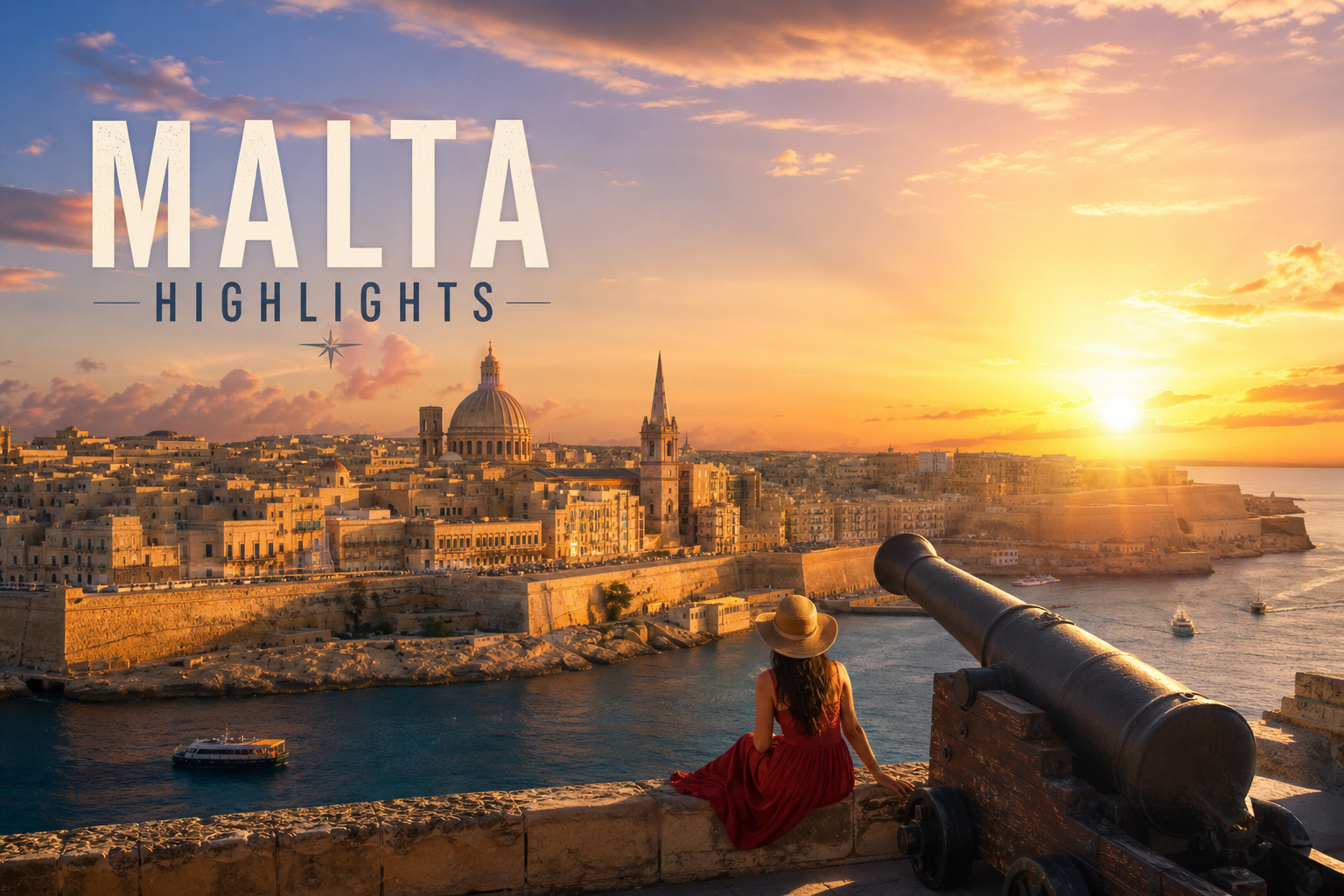
Malta highlights include Valletta's baroque streets, prehistoric temples older than Stonehenge, and fishing villages the tour buses routinely skip, and yet most visitors leave feeling they barely scratched the surface. For one of Europe's smaller countries, it holds a remarkable amount.
The island doesn't reveal itself quickly. It rewards slowness. Allow extra time to linger in Valletta, Mdina, and the southern fishing villages, and the place opens up in ways a tight itinerary never permits. A Sunday morning at Marsaxlokk watching fishermen sort their catch, or an unplanned turn down a narrow lane in Mdina that leads nowhere in particular, those end up being the moments you talk about for years. Not the cathedral selfie. The cathedral itself, yes, but the way it felt to stand inside it without a crowd at your back.
This guide walks through the things to do in Malta that are worth shaping your trip around, from Valletta's baroque streets to the Blue Lagoon's improbable water and the fishing villages that rarely make the brochure covers. Whether you have one day or seven, you'll leave here knowing what to prioritize, how to get there, and how to sidestep the situations that turn beautiful places into something you just endure.
Malta highlights that deserve more than a quick look
The most visited sights in Malta share one quality: they reward context and time. These are the anchors your trip should be built around, not rushed through.
Valletta: a capital city you can walk in an afternoon
Valletta is one of Europe's smallest capitals, and it carries serious cultural weight. St. John's Co-Cathedral alone justifies the trip. The interior is one of the most ornate Baroque spaces on the continent, and Caravaggio's painting inside still stops people mid-step. The Grandmaster's Palace, Upper Barrakka Gardens, and Fort St. Elmo are all within comfortable walking distance, making Valletta the one part of Malta that holds up even on a tight schedule.
The cathedral charges €15 for adults and fills up quickly after mid-morning. Arrive at opening (9:00 AM on weekdays) and you'll have the space almost to yourself. Book online in advance; tickets are date-specific, and the queue to buy them on the day adds time you don't need to spend.
Mdina: the silent city that earns its name
Mdina sits on a hilltop at the center of the island, enclosed by ancient limestone walls, and it feels genuinely different from anything else here. The medieval streets are narrow, honey-colored, and mostly car-free. St. Paul's Cathedral anchors the center, and the views from the bastions stretch across the whole island on a clear day.
Walking across to Rabat immediately next door adds the Roman-era catacombs without adding much time or distance. The combination of Mdina and Rabat is half a day well spent, and the bus from Valletta takes about 20 minutes.
Marsaxlokk: where Malta's soul shows up on Sunday
The fishing village of Marsaxlokk in the south is one of those places that doesn't demand your attention; it earns it. The harbor is lined with traditional luzzu boats in bold primary colors, and the Sunday market brings locals and travelers together in a way that feels authentic rather than staged. Fresh fish, dried herbs, lace, salt air: this is the Malta that doesn't appear on the brochure covers but stays with you longest.
Bus routes 81 and 85 run from Valletta directly to Marsaxlokk in around 35 minutes. A taxi covers the same 20 km in about 40 minutes. Either way, go on a Sunday and go early.
What most visitors overlook
Beyond the headline sights, Malta has a quieter layer that rewards curiosity. These are the places that tend to come up when people reflect on what they actually remember.
The Three Cities: a harbor view from the other side
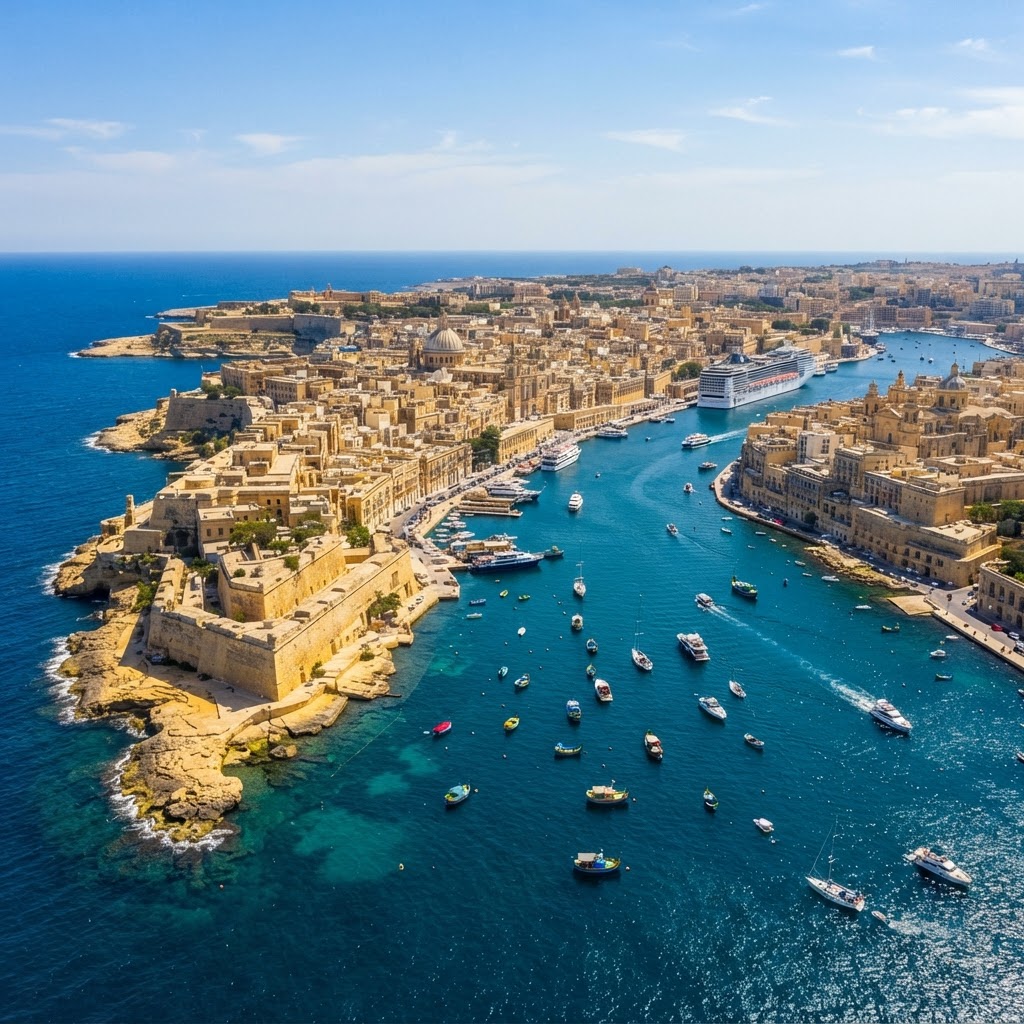
Valletta gets all the attention. But Vittoriosa, Senglea, and Cospicua, collectively known as the Three Cities, sit directly across the Grand Harbour and offer some of the best views of Valletta's skyline you'll find anywhere. A short ferry from Valletta's lower waterfront takes 5 to 10 minutes, and the fortifications, narrow streets, and quiet waterfront cafes feel nothing like the capital's foot traffic. The Three Cities make for one of Malta's most rewarding half-days, and one of its most overlooked.
Dingli Cliffs, the Blue Grotto, and Gozo and Comino attractions
Malta's west coast is where the landscape opens up. Dingli Cliffs rise to about 250 meters above the Mediterranean, and the views are best in late afternoon when the light turns golden. The Blue Grotto, further south, draws visitors for its sea cave boat trips (around €8 to €10 per person), though conditions depend on weather and sea state, so check locally before you go.
For those who want to go further, Gozo adds the prehistoric Ġgantija Temples, among the oldest freestanding structures on earth at over 5,500 years old, and the dramatic coastal landscape around Dwejra. Entry to Ġgantija is €10 for adults; walk-up access works fine outside peak summer weekends. Allow a full day for Gozo and treat it as a separate island, because that's what it is.
How to plan your time: 1, 3, and 7-day Malta itinerary ideas
The most common mistake in Malta is trying to do too much. The island is small but the roads are slow, the July and August heat is real, and the best experiences here don't come from sprinting. Here's how to think about your time.
One day: Valletta highlights and the essentials
Stay in Valletta. Walk from St. John's Co-Cathedral in the morning through the Grandmaster's Palace, stop for lunch at Is-Suq Tal-Belt market, then work your way to Upper Barrakka Gardens for the 4 PM cannon salute and harbor views. End at Fort St. Elmo before heading to the Valletta Waterfront for dinner. You'll cover Malta's core UNESCO highlights on foot without needing transport at all.
Three days: adding depth without rushing
Day one covers Valletta as above. Day two belongs to Sliema and St. Julian's: the promenade walk, Balluta Bay for a swim, and Portomaso Marina for a coffee. A 10-minute ferry connects back to Valletta in the evening. Day three is for Mdina and Rabat; take the 20-minute bus, spend a few hours inside the walls, cross to Rabat for the catacombs, and return by afternoon. Three days gives you the capital, the coastline, and the ancient interior without feeling like you rushed any of it.
Seven days: the full picture
Days one through three run as above. Day four: the Three Cities ferry from Valletta. Day five: Marsaxlokk, ideally on a Sunday for the market. Day six: Blue Grotto and Dingli Cliffs by rented car or arranged transport. Day seven: Gozo, reached by the Gozo Fast Ferry in 45 minutes from Valletta (€10 return), with the Ġgantija Temples and coastal walks filling the day comfortably.
The Blue Lagoon on Comino works as an add-on to a Gozo day. Ferries from Ċirkewwa reach Comino in about 17 minutes, running every 30 minutes in peak season. Go early. For route options and connections, see routes to the Blue Lagoon from Valletta.
Getting between spots without losing half your day
Malta's public buses are cheap (around €2 to €3 per ride) and cover most of the island. They're also slow. The bus from Valletta to Ċirkewwa for the Comino ferry takes around 90 minutes; to Marsaxlokk, about 35 to 40 minutes; to Mdina, about 20. If your time is limited, a taxi or day-hire car covers the same ground in roughly half the time for a modest cost difference that often makes sense.
For Valletta, Mdina, and the Three Cities, your feet and the public ferries are enough. For the south coast, the west, and Gozo, a rented car or pre-arranged transport saves real time. Day-trip boats from Sliema to Comino remove the bus-to-ferry combination entirely for a Blue Lagoon visit, worth considering if you're based on that side of the island. Valletta is car-free, so you park or drop at the city gates and walk; the harbor ferry to the Three Cities from Valletta's lower dock takes 5 to 10 minutes and is the most pleasant way to cross.
When to go and how to actually enjoy the popular places
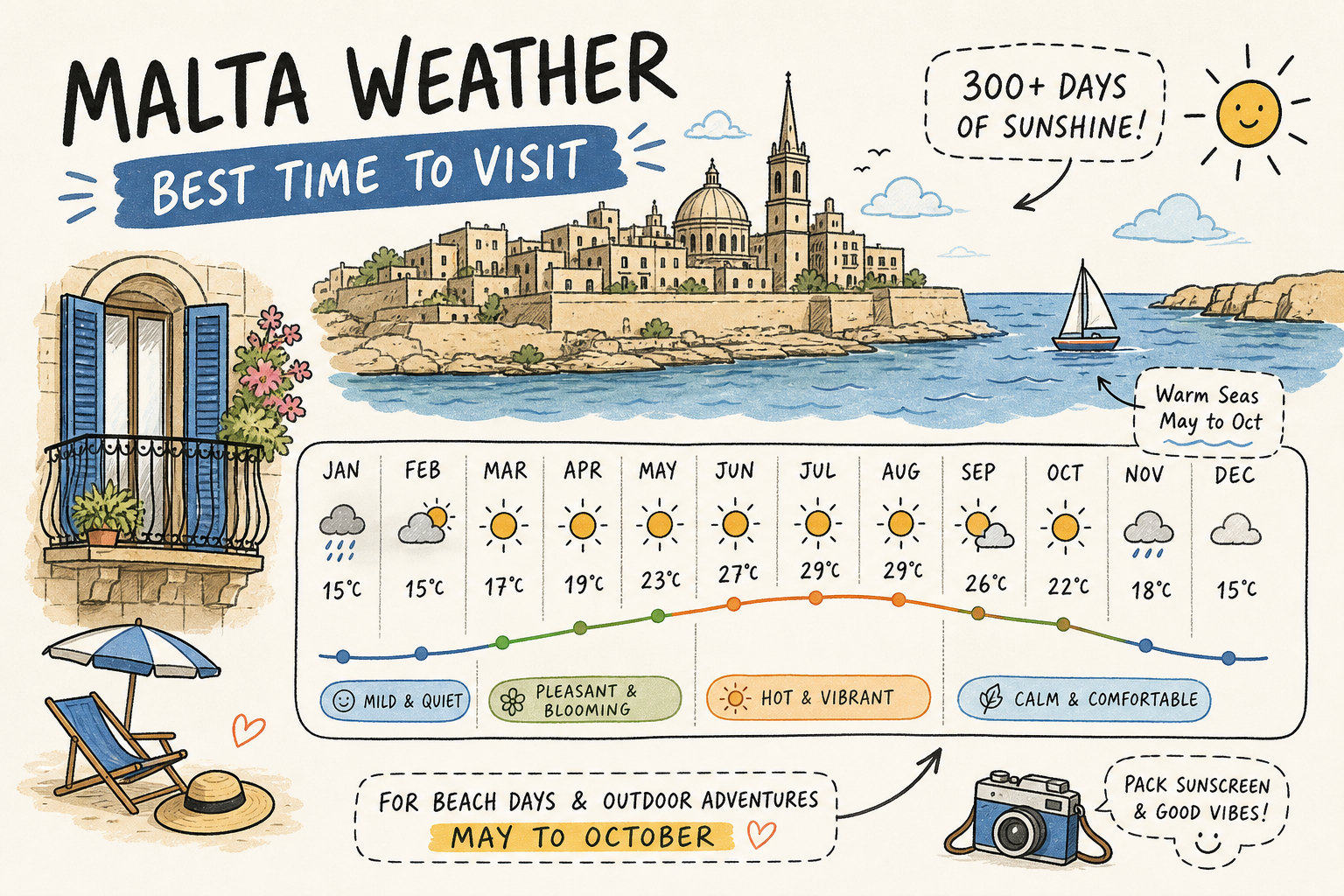
Malta in July and August is hot, crowded, and expensive. The Blue Lagoon on a summer weekend becomes so packed it loses its appeal entirely. The shoulder seasons, April through early June and September through October, offer warm weather, swimmable water, and a fraction of the crowd. In practice, September delivers the best combination of warm seas, clear skies, and streets calm enough to actually enjoy walking.
October runs a close second. Winter is mild by northern European standards, but some coastal sites get rough seas, and the Blue Lagoon is largely inaccessible from November through March. Spring from May onward brings 20 to 22°C temperatures and manageable queues at the main Malta must-see sights.
Booking what actually needs booking
St. John's Co-Cathedral: book online in advance to skip the entry queue. Tickets are date-specific and cost €15 for adults. The Ġgantija Temples on Gozo: walk-up access works fine for most visits, though booking a day or two ahead is sensible on peak summer weekends. The Blue Lagoon: book Comino ferry tickets ahead for summer visits, as operators like Gozo Fast Ferry sell out on busy days. For other sites, Mdina, the Three Cities, Marsaxlokk, walk-up entry is generally straightforward outside peak summer weekends; check official sites if you're visiting during high season or around public holidays.
The trip that actually fits you
Malta's size tricks people into underestimating it. Many major sites are within 20 to 45 minutes of each other, yet the depth of what's here takes real time to absorb. Baroque cities, prehistoric temples, fishing villages, medieval walled towns, and water around Comino and parts of Gozo that is genuinely among the clearest in the Mediterranean: none of it lands the way it should when you're rushing to the next stop.
The biggest difference between a good Malta trip and a great one is rarely about seeing more. It's about having the right context for what you're looking at and enough breathing room to let it settle. These Malta highlights aren't a checklist, they're an invitation to slow down. Prioritize the ones that match your pace, and the island will give you far more than a quick pass ever could.