First Time in Malta: Honest Guide Answering Reddit's Most Asked Questions
If you search "Malta travel advice" on Reddit or any travel forum, you'll quickly find hundreds of threads — and roughly half the replies will contradict the other half. Rent a car, don't bother with a car. Stay in Valletta, no stay in Sliema. Three days is enough, no you need two weeks.
This guide is built around the questions first-time visitors actually keep asking. No fluff, no brochure language. Just clear, honest answers so you can plan a trip you'll actually enjoy.
Quick Answer if You're in a Rush
- Best base for a first visit: Valletta (history + walkability) or Sliema/Gżira (central, flat, easy connections). Both work well without a car.
- How long to stay: 5 days is the sweet spot. 3 days is doable but rushed. 7 days lets you properly include Gozo and Comino.
- Do you need a car? Probably not if you're based in Valletta, Sliema or St Julian's. Buses cover most tourist spots. A car helps if you want to explore freely or stay somewhere more remote.
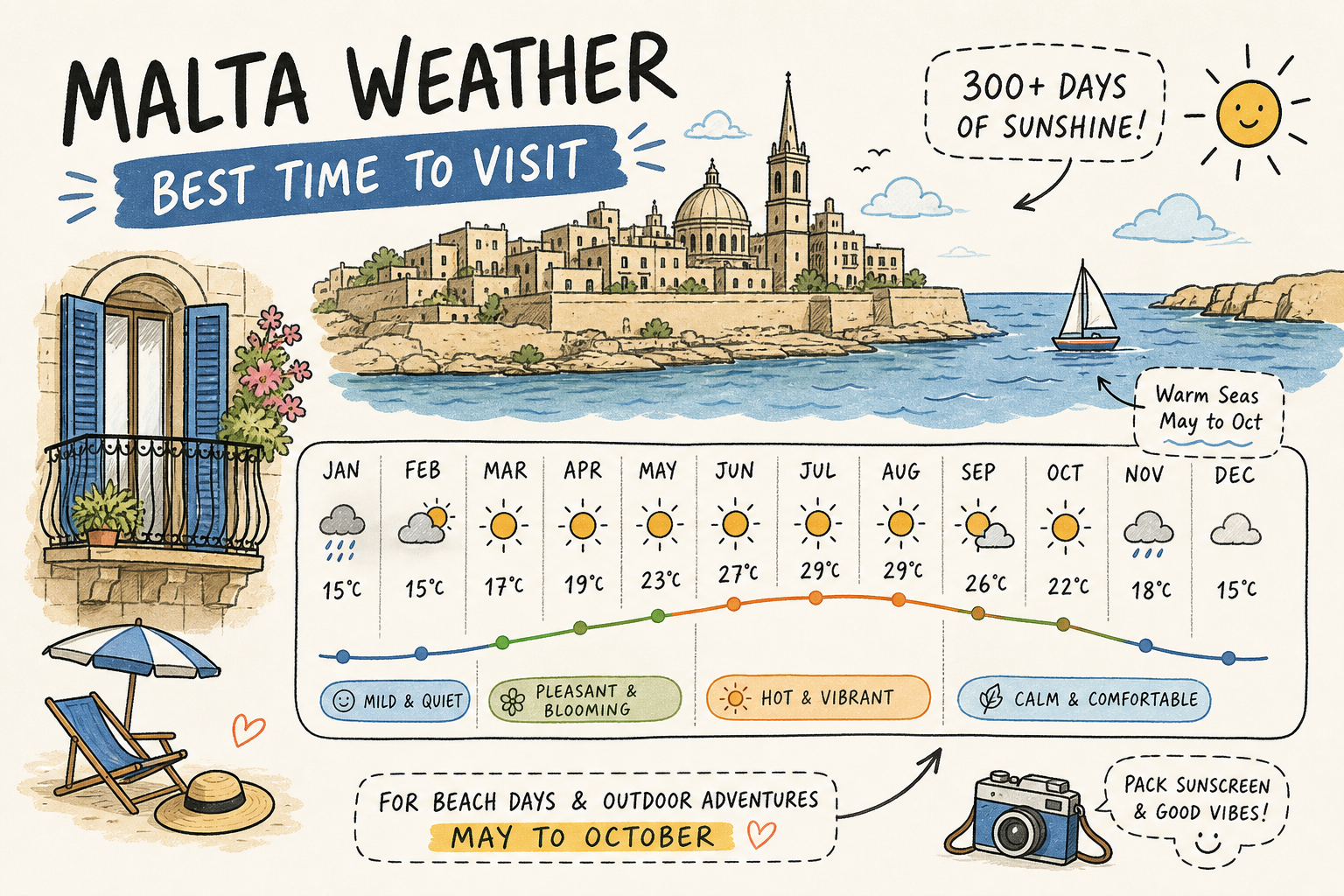
- Best time to visit: April–June and September–October. Summer is beautiful but genuinely hot — plan accordingly.
- Must-see highlights: Valletta, Mdina, Gozo (as a day trip), and the Blue Lagoon at Comino.
How Many Days Do You Really Need in Malta?
3 days: You can cover the big highlights on the main island — Valletta, Mdina, and maybe one afternoon at the beach or in the Three Cities. It's tight, but doable if that's all you've got. You won't fit in Gozo or Comino meaningfully.
5 days: This is the sweet spot for most first-timers. You get a comfortable pace through Malta's main attractions, plus a proper full-day trip to Gozo and a morning or afternoon at the Blue Lagoon. You won't feel like you're constantly rushing.
7 days: Ideal if you want to slow down, spend a night or two in Gozo, do some diving or walking, linger over meals, and actually feel like you've got a sense of the island.
The trap most first-timers fall into is trying to do everything in three days and ending up exhausted. Malta isn't huge, but the traffic and buses mean things take longer than a map suggests. Pick fewer places and enjoy them more.
Where to Stay in Malta for Your First Visit
Before worrying about hotels, choose your neighbourhood. For a first visit, you want somewhere with decent bus connections, easy access to food and the main sights, and enough going on that you don't feel isolated.
Valletta – Compact, Historic, Great for Walkers
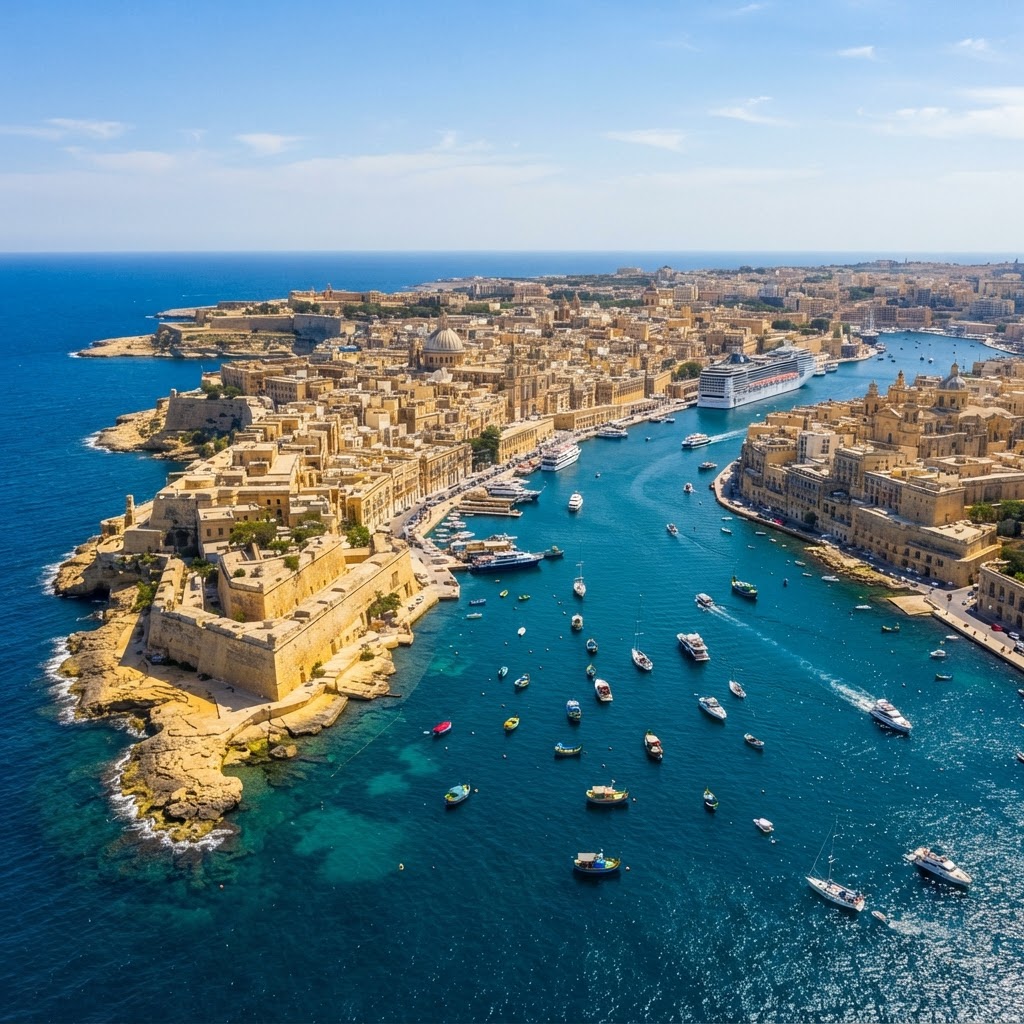
Valletta is Malta's tiny capital and one of the most densely historical cities in Europe. It's compact (you can walk from one end to the other in about 20 minutes), beautiful, and packed with good restaurants.
Who it's good for: Couples, solo travellers, history lovers, anyone who wants a base with genuine character.
Pros: Gorgeous streets, everything is walkable, excellent bus connections, brilliant food scene, Baroque architecture everywhere.
Cons: Hilly and cobbled, quietens down in the evenings, some accommodation is more expensive.
Without a car? Absolutely fine — arguably the best base if you're relying entirely on public transport.
Sliema & Gżira – Seafront, Easy Connections, Lots of Food Options
Sliema is Malta's most commercial and tourist-friendly town — think seafront promenade, shopping, cafés, and a direct ferry across to Valletta. Gżira, just next door, is a little more local and slightly cheaper.
Who it's good for: Families, friends groups, anyone who wants a modern, convenient base with easy connections.
Pros: Flat and easy to walk around, huge range of restaurants and cafés, direct ferry to Valletta, frequent buses.
Cons: Less historic charm — fairly built-up and commercial.
Without a car? Yes, very manageable.
St Julian's & Paceville – Nightlife and Bus Connections
St Julian's is the nightlife hub of Malta. It's busy, loud after dark, and well-connected by bus.
Who it's good for: Younger travellers, anyone who wants lively evenings.
Pros: Wide range of restaurants, lots going on at night, good bus connections.
Cons: Paceville can get very noisy late at night.
Without a car? Fine, but be prepared for crowded buses on weekend evenings.
Staying Further North – Bugibba and Mellieħa
Bugibba is a busy resort town in the north — affordable and convenient for northern beaches. Mellieħa is quieter and close to the Gozo ferry and Malta's best sandy beach.
Who it's good for: Families wanting easy beach access, divers, travellers planning to spend time in Gozo.
Pros: Closer to Mellieħa Bay, Gozo ferry, often cheaper.
Cons: Longer bus journeys to Valletta (45–60+ minutes).
Without a car? Possible, but more limiting.
Should You Stay in Gozo on Your First Visit?
For a first trip of 3–5 days, base yourself on the main island and visit Gozo as a day trip. Gozo requires a ferry and you need a car to explore it properly. On a 7+ day trip with time to slow down, a night or two in Gozo is wonderful.
Where to Stay: Short Summary
- Want history and convenience without a car? → Valletta
- Want a flat, modern base with great connections? → Sliema or Gżira
- Want nightlife? → St Julian's
- Lots of time near the Gozo ferry? → Mellieħa
- Peaceful rural escape on a longer trip? → Gozo
Do You Need a Car in Malta or Is Public Transport Enough?
The honest answer: it depends where you're staying and what you're planning to do.
When Buses and Ferries Are Enough
Malta's public bus network (run by Tallinja) covers the entire island and is cheap. A single journey costs €1.50 (or €2.00 in summer), and a 7-day unlimited pass costs around €21.
Buses connect all the main tourist spots: Valletta, Sliema, Mdina, Marsaxlokk, Mellieħa, the Blue Grotto, and the Gozo ferry terminal at Ċirkewwa.
The main frustrations: Buses can be slow due to traffic. In peak summer, popular routes can be packed. Journey times are often significantly longer than a map suggests.
When a Car Actually Helps
Renting a car is useful if:
- You're staying somewhere more remote
- You want to visit multiple places in a single day
- You're doing a deep exploration of Gozo
- You're travelling as a family with young children
Important caveats: Malta drives on the left. Traffic is heavy near Valletta. Parking is difficult in some towns. Roads can be narrow.
The If/Then Guide
- Staying in Valletta or Sliema, doing typical tourist sights? → Skip the car.
- Staying in Mellieħa, combining Gozo + Blue Grotto in one trip? → A car helps.
- 7 days wanting to explore remote bays freely? → A car gives you flexibility buses can't match.
- Three-day trip focused on Valletta and Mdina? → Definitely don't bother.
Best Time to Visit Malta
Spring (April – June)
Widely considered the best time for sightseeing. Temperatures are warm (20–28°C), the island is green, crowds haven't peaked yet, and you can comfortably walk around outdoors all day. The sea is still warming up in April, but by June it's perfectly swimmable.
Summer (July – August)
Beautiful blue sea, clear skies, long days. But genuinely, seriously hot — temperatures regularly hit 35°C+. Many locals retreat indoors between noon and 4pm. Do your sightseeing early (before 10am) or late afternoon. The Blue Lagoon gets very crowded in peak season.
Autumn (September – October)
Another excellent window. The sea is at its warmest, crowds thin out after mid-September, and temperatures are still comfortable (24–30°C).
Winter (November – March)
Milder than most of Europe (rarely below 10°C), quiet, significantly cheaper, some wind and rain. Carnival (usually February) and Holy Week (March/April) are worth timing a trip around.
Practical Tips
- Bring high SPF sunscreen — the Maltese sun is stronger than it feels
- A hat is not optional in summer
- Carry water everywhere
- Schedule outdoor activities for morning or late afternoon in July–August
Is Malta Safe for First-Time Visitors?
Yes, Malta is a safe country. Violent crime against tourists is rare. Exercise the same common sense you would in any busy tourist destination.
Petty theft is the main thing to watch — pickpocketing can occur in crowded areas, on busy buses, and at popular beaches.
Walking at night is generally fine in the main tourist areas. Paceville gets rowdy late at night but the usual bar-district awareness applies.
Local customs worth knowing:
- Dress modestly in churches — shoulders and knees covered. Valletta's Co-Cathedral enforces this strictly.
- Malta is a conservative Catholic country — public behaviour that might be fine elsewhere can attract disapproving looks in smaller villages.
- Keep noise down after midnight in residential areas.
What Are the Must-See Places for a First Trip?
Valletta and the Three Cities
St. John's Co-Cathedral is one of the most astonishing interiors in Europe — Baroque at its absolute extreme, home to Caravaggio's The Beheading of Saint John the Baptist. Not to be missed.
Upper Barrakka Gardens offers one of the best views of the Grand Harbour, with a daily cannon firing at noon and 4pm.
The Three Cities (Birgu, Senglea, Bormla) are older than Valletta and far quieter. Take the ferry from Valletta's waterfront.
Itinerary tip: Half a day in Valletta in the morning, afternoon ferry over to the Three Cities.
Mdina and Rabat
Mdina is a tiny, fortified medieval city on a hilltop — nicknamed the Silent City because cars are banned inside. Magical in the early morning or evening; at peak midday it gets crowded.
Rabat sits just outside Mdina's walls — St. Paul's Catacombs are genuinely impressive.
Itinerary tip: Combine Mdina and Rabat in one afternoon. Stay for sunset — the light over the island from Mdina's bastions is something you'll remember.
Gozo Highlights
Gozo feels noticeably different from Malta — slower, greener, quieter. The Cittadella in Victoria has panoramic views over the whole island. Ramla Bay is Gozo's best beach — red-gold sand and clear water.
Itinerary tip: Treat Gozo as a full day. Take the morning ferry, rent a car or join a guided tour, return on a late afternoon ferry.
Comino and the Blue Lagoon
The Blue Lagoon is as beautiful as the photographs suggest — turquoise water, exceptional snorkelling visibility. Very crowded in peak summer. Book boats early, arrive before 9am, or consider a sunset trip.
Easy Beach Options for First-Timers
Mellieħa Bay is Malta's largest sandy beach — most family-friendly. Golden Bay is smaller but beautiful. St. Peter's Pool near Marsaxlokk is a natural rock pool with incredibly clear water.
How Much Does a First Trip to Malta Cost?
Budget (€40–70/day): Hostel, self-catering or pastizzeriji, public buses, free attractions. A pastizz costs €0.30–0.50.
Mid-range (€80–150/day): Mid-range hotel, eating out most meals (€14–24 for a main course), mix of buses and taxis, paid attractions and a boat trip.
Comfortable (€150–250+/day): Boutique hotel, good restaurants, private tours, taxis.
Key costs:
- Single bus journey: €1.50–2.00
- 7-day bus pass: ~€21
- Coffee: €2.50–3.50
- St. John's Co-Cathedral: €15
- Ferry to Gozo (return): ~€4.65
- Blue Lagoon boat trip: €20–50
July–August accommodation is noticeably more expensive. Spring and autumn are better value.
Practical Tips First-Time Visitors Always Wish They Knew Earlier
- Footwear matters. Valletta, Mdina, the Three Cities — all cobbled and hilly. Comfortable shoes are not optional.
- Buses can be slow. A 20-minute map journey can take 40 minutes. Build this into your planning.
- Book boat trips in advance in summer. Blue Lagoon boats sell out.
- The pastizzeria is your friend. Cheap, delicious flaky pastries filled with ricotta or mushy peas. Breakfast for under €2.
- Language: English is an official language, spoken everywhere. Zero communication problems.
- Power sockets: UK-style three-pin plugs (Type G). Bring an adaptor if needed.
- Currency: Euro. Cards widely accepted; carry some cash for markets and street vendors.
- Churches: Shoulders and knees must be covered. Strictly enforced at Valletta's Co-Cathedral.
- Air conditioning: Many older buildings don't have AC. The heat in a packed midday bus in August is real.
- Water: Tap water is safe but tastes mineral-heavy. Bottled water is cheap from supermarkets.
Sample Malta Itinerary for First-Time Visitors
3-Day Malta Itinerary
Day 1 – Valletta: St. John's Co-Cathedral, walk the main streets, Upper Barrakka Gardens, cannon firing at noon. Afternoon ferry to the Three Cities. Evening dinner in Valletta or Sliema.
Day 2 – Mdina and Rabat: Bus to Mdina, explore the Silent City. Walk to Rabat for St. Paul's Catacombs. Optional Blue Grotto stop. Dinner at a waterfront restaurant.
Day 3 – Beach or Explore: Mellieħa Bay for a beach morning, or a boat trip to the Blue Lagoon (book ahead). Sunday visitors: Marsaxlokk fish market is excellent.
5-Day Malta Itinerary
Day 1 – Valletta: As above. Take your time — don't rush the cathedral.
Day 2 – Three Cities: Ferry to Birgu. Explore Fort St. Angelo and the quiet streets. Back to Valletta for lunch and an afternoon wander.
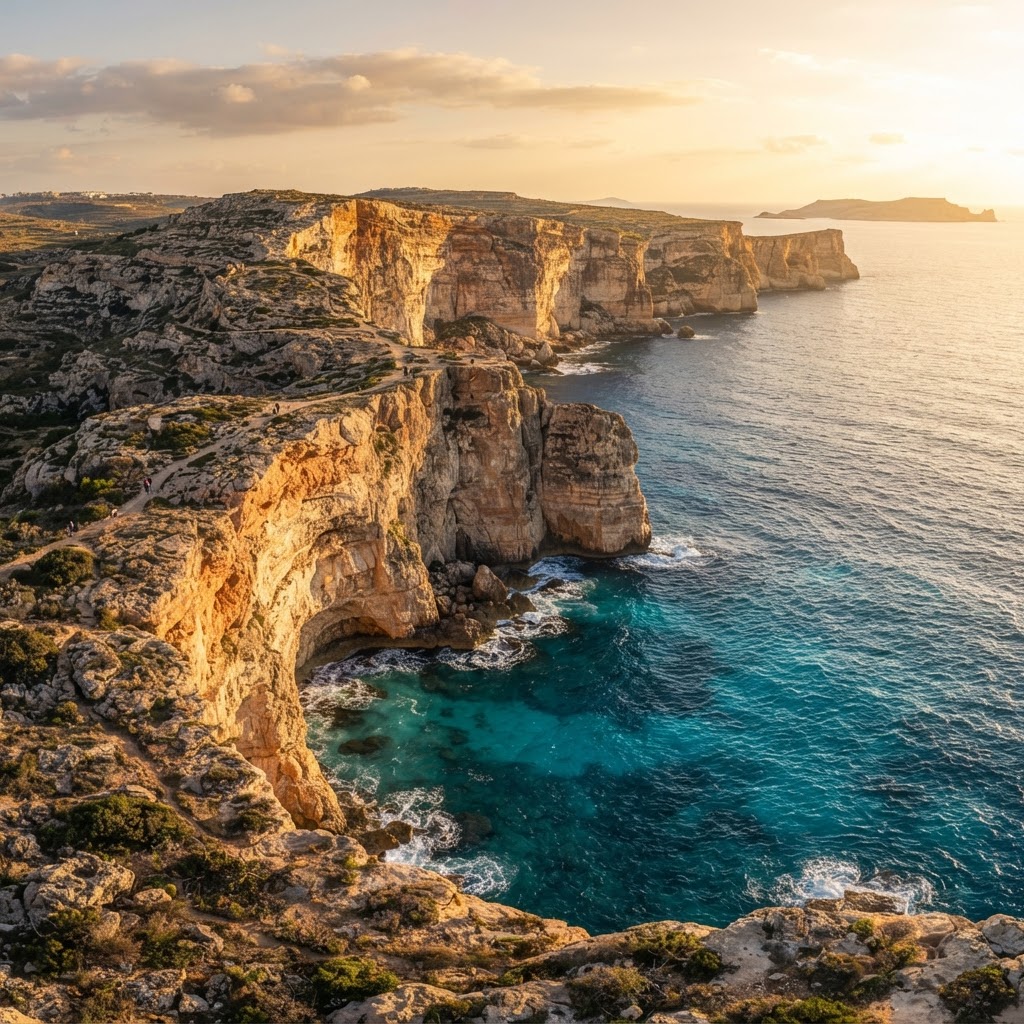
Day 3 – Mdina, Rabat and the West: Mdina early (before the coach tour crowds). Lunch in Rabat. Afternoon at Dingli Cliffs or the Blue Grotto.
Day 4 – Gozo Day Trip: Morning ferry from Ċirkewwa. Cittadella in Victoria, Ramla Bay, Xlendi. Late afternoon ferry back.
Day 5 – Comino and Blue Lagoon: Early boat to the Blue Lagoon. Back by early afternoon. Final afternoon on the Sliema or St Julian's promenade. Last dinner.
Final Thoughts for First-Time Visitors
Malta is a genuinely brilliant destination for a first trip — small enough to navigate comfortably, deep enough in history and character to keep you engaged for a week. The main thing that makes or breaks a first visit is usually not where you go, but how you pace yourself.
Choose a sensible base, respect the sun in summer, don't pack too much into each day, and leave room for the unexpected — a quiet restaurant you stumble across, a village feast you didn't know was happening, a boat trip where the water is the exact colour of a postcard.
For more detailed recommendations on specific attractions, tours, restaurants and events in Malta, explore MaltaGuide.online — we keep everything up to date and genuinely useful.
Enjoy Malta. Most people do.