Malta Cruises: Big Ship vs. Private — Which Is Better?
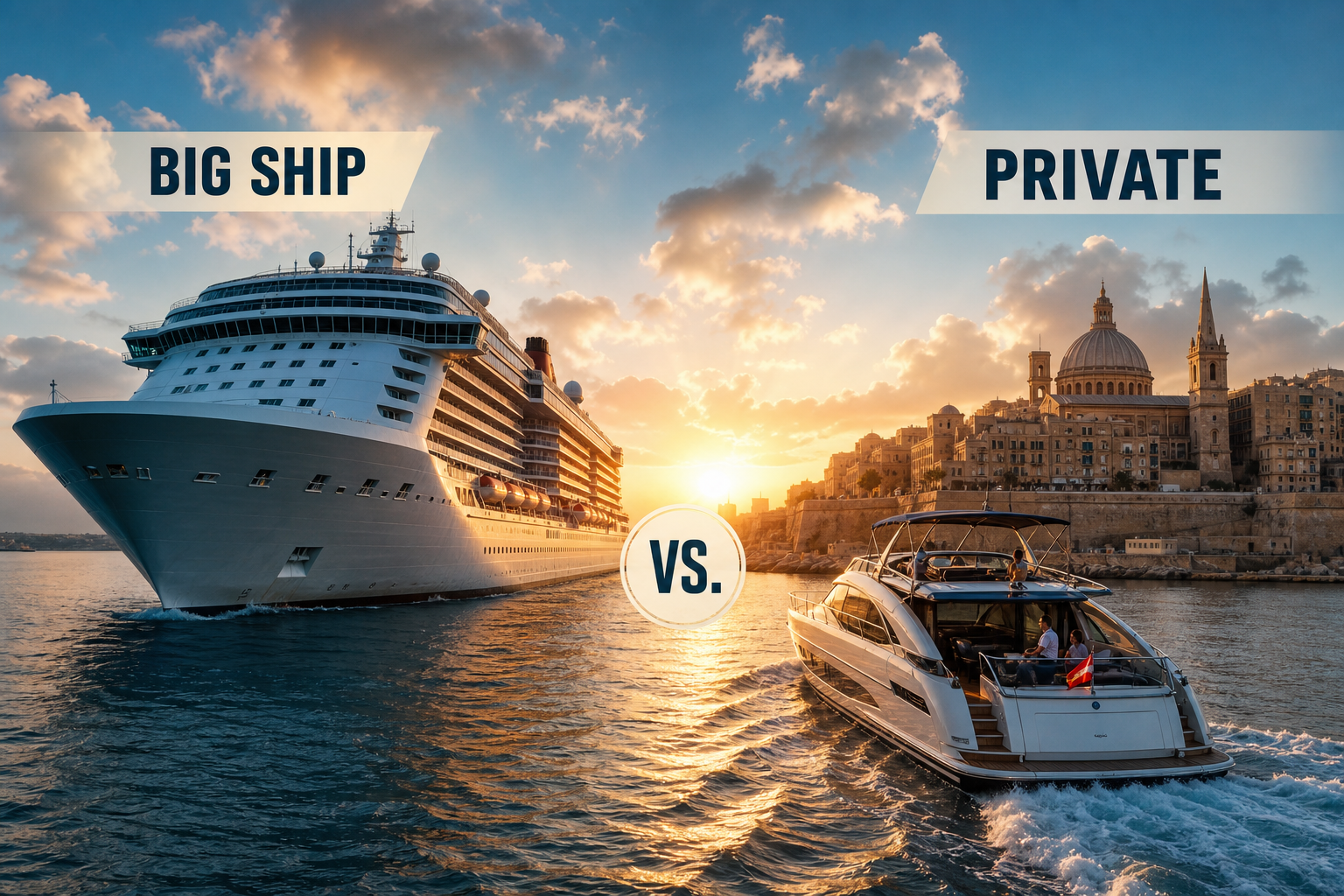
You've decided to see Malta by sea, and what you're really choosing between are two completely different products. Malta cruises on a 3,000-passenger ship call at Valletta for a few hours on the way to Barcelona, tick the island off the port list, and sail again before sunset. A private or small-group sailing treats Malta as the entire point of the trip, not stop four of seven. Most travellers default to the big ship because it's familiar and packaged. For most destinations, that's a reasonable call. For Malta specifically, it's usually the wrong one.
Malta's Valletta Cruise Port recorded 357 ship calls in 2024, handling around 940,000 passengers across its seven Grand Harbour berths. That's a lot of people sharing a small island for a few hours. Understanding what you actually get from each type of malta cruises experience, and what you give up, is the only way to make an honest decision about how to see this place in 2026.
This article breaks down the big ship port call experience with real numbers, explains where private and small-group Malta sailings outperform on every practical measure, covers the specific experiences that define the island at its best, and gives you the timing and pricing information you need to book the right trip.
What a big cruise ship Malta stopover actually gives you
Port call durations vary by itinerary, but many Valletta stops run somewhere between six and ten hours depending on the cruise line and route. Ships dock directly at Pinto Wharf, which sounds convenient, and no tendering is required. The Grand Harbour handles seven berths and regularly sees multiple vessels simultaneously, which means you're sharing Valletta with several thousand fellow passengers from the moment the gangway drops. Factor in disembarkation queues and re-boarding time, and the practical hours available on the island shrink considerably.
Most passengers on big ships book through the cruise line: a coach to Mdina, a walk through Valletta, a photo stop at the Blue Grotto, and back to the ship by 4pm. Independent operators typically charge noticeably less for the same routes, a concrete comparison worth checking before you commit to any cruise-line package, and the organised format suits large groups rather than individual exploration. St. John's Co-Cathedral and the Upper Barrakka Gardens become noticeably congested during peak ship arrival windows, typically mid-morning, when multiple vessels unload at once.
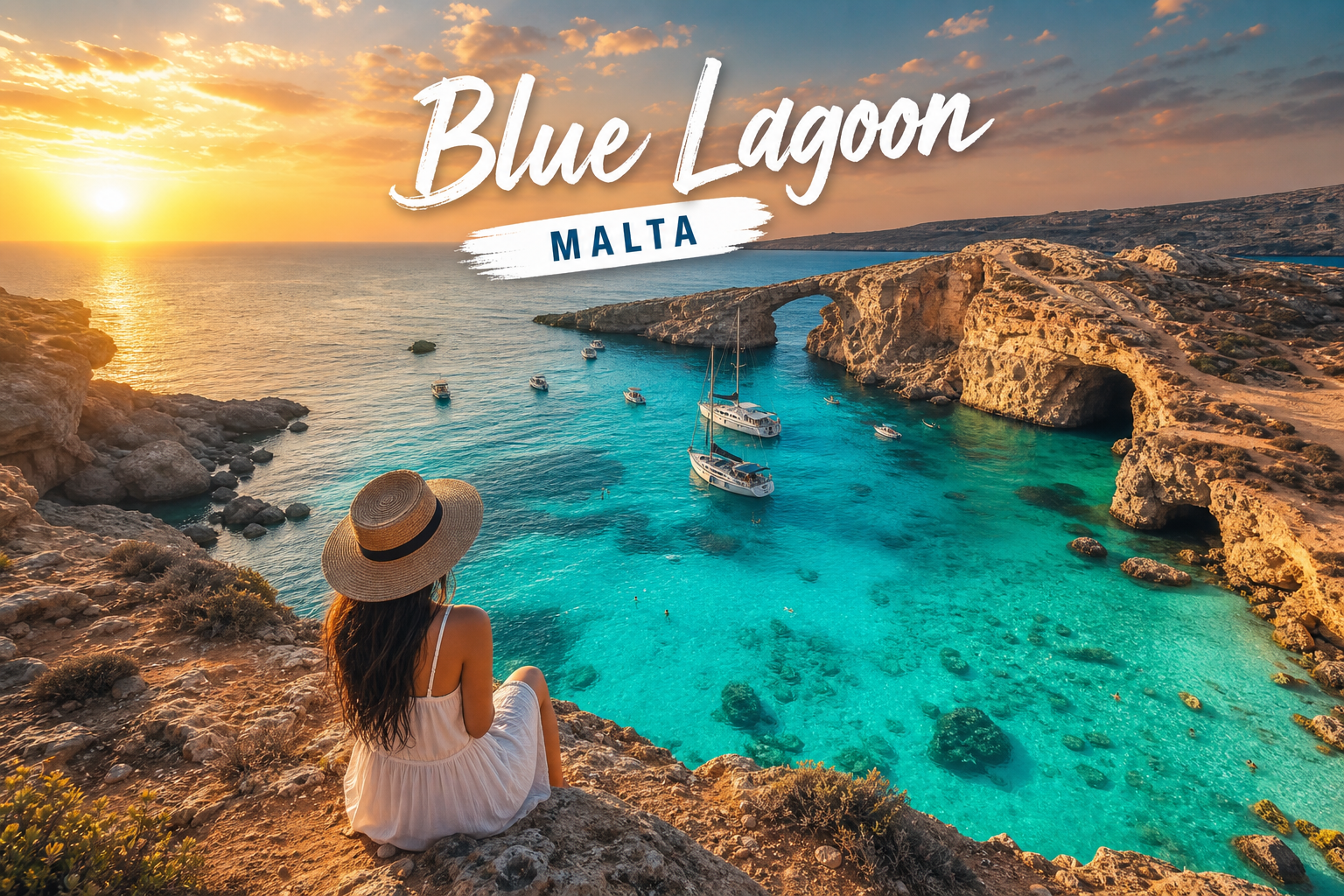
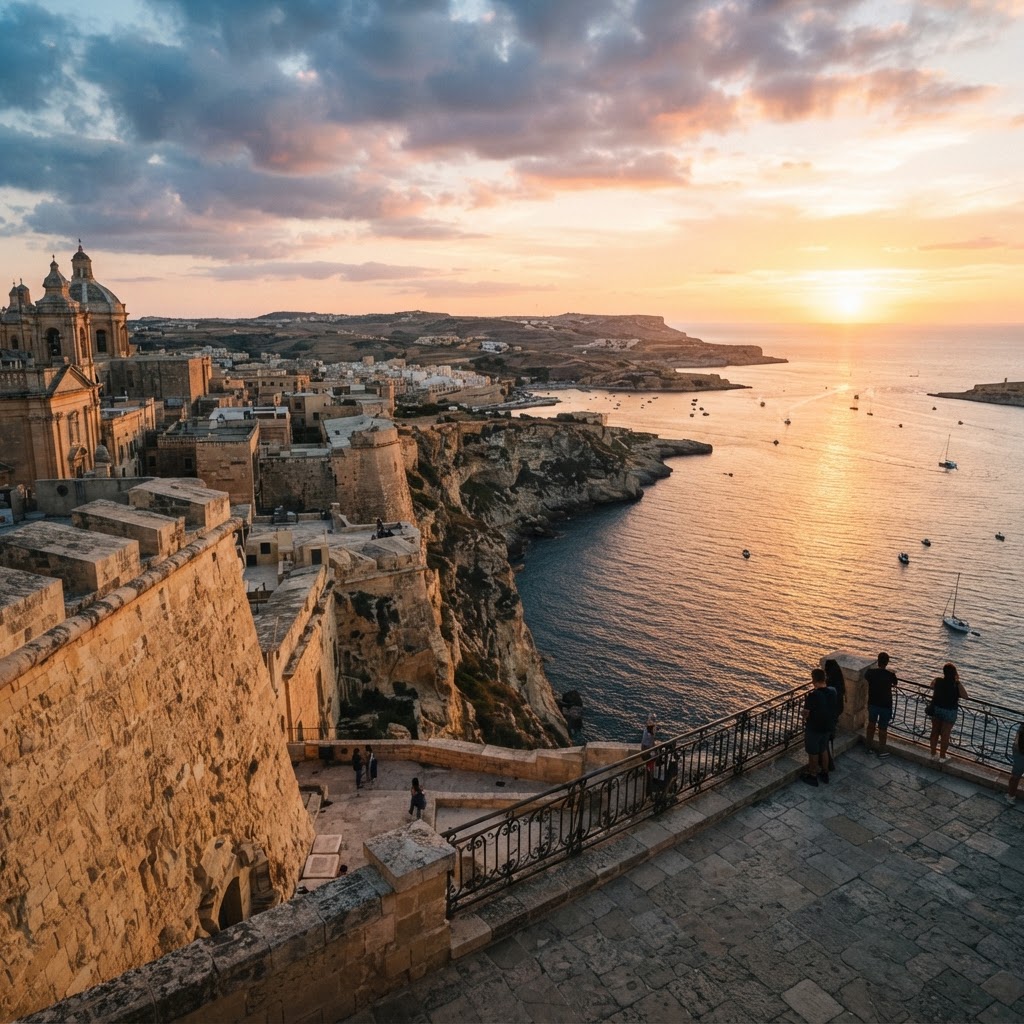
Here's what gets cut from the itinerary every time. Gozo is a full-day destination; it simply doesn't fit a single-port stopover. The Blue Lagoon on Comino rewards an early start to avoid the ferry crowds, and daytime port calls that begin mid-morning often miss that window entirely. Watching the sun drop behind Valletta's limestone walls from the water, one of the most striking scenes in the Mediterranean, is an experience that typically falls outside the timeframe of most day calls.
Why private and small-group Malta cruises deliver something fundamentally different
On a private or small-group Malta sailing, the island is the destination, not an eight-hour obligation. You anchor where the conditions are best, not where the port schedule permits. Smaller-boat itineraries can place you at the Blue Lagoon before the tourist ferries depart from Ċirkewwa, logistically impossible from a large vessel docking mid-morning.
The access gap is physical as much as it is logistical. Small-group boats reach sea caves, cliffs, and swimming coves between Malta, Comino, and Gozo that no large vessel can navigate. Operators running private charters can take you through the Inland Sea, a narrow channel cut through the cliff face on Gozo's northwest coast. They can anchor off uninhabited stretches of coastline, reach Comino's Crystal Lagoon caves via narrow swim-throughs, and position you at Lover's Cave on Comino's rocky coastline. None of these appear on any big ship shore excursion list, because none of them are reachable from a coach.
The local knowledge advantage compounds on top of the physical access. A crew on a small vessel knows which cove stays sheltered in a northeast wind and where the light hits the water best before 8am. Operators who design malta cruises specifically around the island's character, rather than treating it as port four of a Mediterranean sweep, offer a product that's structurally different from anything a large cruise line can deliver. This is the gap that drives travellers who've done both toward the private route: the difference between seeing Malta and actually being there.
The specific Malta experiences worth planning your whole trip around
The Blue Grotto's sea caves refract extraordinary light before 9am. The colours inside the caves shift dramatically as the sun rises higher, and private departures from the south coast can time arrival precisely to catch the effect at its peak. By mid-morning, when group tours typically arrive, the quality of the light has already changed. Approaching Valletta through the Grand Harbour by small boat, passing Fort St. Elmo and the Three Cities with nothing between you and the fortifications, is a completely different experience from arriving by coach through the main gate. Marsaxlokk's colourful fishing fleet and early morning market sit about 20 minutes by sea from Valletta, an easy private morning stop that fits no standard shore excursion format.
Gozo consistently appears on visitor top-ten lists for Malta day trips, but the ferry crossing plus full-day touring makes it impossible to fit into any big ship port call. Private multi-day Malta sailing holidays that include a Gozo overnight give you access to the Inland Sea, Wied il-Mieħel, and the island's dramatic interior cliffs without any time pressure. The Blue Lagoon rewards an early start; any itinerary arriving after mid-morning in summer is sailing into a floating car park of tourist boats, based on consistent operator guidance about when congestion typically peaks.
The cultural moments that work best from the water are also the ones that get cut on a port call schedule. The Saluting Battery fires daily at noon from the Upper Barrakka Gardens; watching it from a small deck anchored in the Grand Harbour is the kind of scene that doesn't belong in a coach tour. The Three Cities, Vittoriosa, Senglea, and Cospicua, are best appreciated by boat, gliding past fortifications that have stood since the Knights of St. John. Many big ship passengers catch only a glimpse of them through a window on the coach transfer.
Malta cruises: timing and pricing before you book
September and early October are the clear sweet spot for mediterranean cruises to Malta. Sea temperatures sit at 21 to 23°C, conditions are calm, the peak summer crowds have thinned, and prices across both big ship and private options ease back from their August peaks. Spring sailings in April and May offer competitive pricing and comfortable temperatures for cultural exploration, though the sea runs cooler at 17 to 20°C, fine for a swim but less inviting for extended time in the water. July and August deliver the warmest seas but also the busiest anchorages and the highest prices across every category. For a concise overview on seasonality and peak months, see this guide to the best time to visit Malta.
Big ship fares for Mediterranean sailings from UK departure ports, primarily Southampton, start around $739 per person for a 10-night cruise on a mainstream line. Longer luxury sailings with lines like Cunard or Regent can reach $15,000 per person or more for 40-plus night itineraries. Cruise and stay Malta packages, combining the cruise fare with pre- or post-trip hotel nights in Valletta, typically add 10 to 30 percent over cruise-only pricing and are widely available through UK operators for autumn 2026. No-fly sailings from Southampton remain the most straightforward option for UK travellers, with multiple lines running direct Mediterranean routes that include Valletta.
Private charter pricing is more competitive than most travellers assume. A four-hour private boat charter around Malta and Comino runs roughly €275 to €460 for the whole boat, meaning a couple or small family pays around €70 to €115 per person for an exclusive experience. Full-day charters covering Malta, Comino, and Gozo range from €545 to €1,095 per boat. Multi-day liveaboard options exist at comparable rates per day. For travellers flying directly into Malta International Airport and joining a private sailing from Valletta, the transition from arrival to water takes a matter of hours. Book private charters 8 to 12 weeks ahead for July and August; four to six weeks is generally sufficient for shoulder-season sailings.
Choosing between Malta cruises and private sailings in 2026
A large cruise ship is the right choice in one specific scenario: Malta is one of six or seven ports on a broader Mediterranean sweep, and the island is a welcome bonus rather than the focus. Longer no-fly sailings from Southampton of 30 to 45 nights offer real value when you want the full sweep and Malta functions as a strong addition to the route. In that case, skip the ship's shore excursion package. Valletta on foot is easy from the pier; Mdina is 25 minutes by taxi; the Blue Grotto boat trip from the south coast can be arranged directly with a local operator for a fraction of the ship's package price. For practical details about docking, embarkation, and local logistics, consult a detailed Valletta port guide before you travel to get a feel for the difference.
If Malta is your primary destination, or if you're choosing between a focused Malta week and a scattered Mediterranean tour, the small-group or private route wins on every measure that matters: depth of access, flexibility, and the ability to reach the places that actually define what the island looks like. This is what operators specialising in intimate malta cruises and sailing experiences are built for: itineraries shaped around the island's best moments, local skippers who know which cove stays calm in an afternoon breeze, and no clock ticking toward a gangway deadline.
Before booking any sailing, ask the right questions. For a big ship: how many hours are you actually in port, and is Valletta listed as a full-day stop or a half-day call? For a private or small-group cruise: is the itinerary fixed or can you shape it, and does the operator have genuine local knowledge of Gozo and Comino? For a cruise and stay package: does the hotel stay come before or after the sailing, and is Valletta included so you can see the city at a pace the port call never allows?
The honest conclusion on Malta cruises in 2026
A big ship Malta stopover and a private Malta sailing are not competing versions of the same experience. One gives you Malta in a day, processed through a coach window and a shore excursion schedule. The other gives you Malta as it actually is: the early morning light inside a sea cave, a slow afternoon anchored off Gozo's coastline, the Grand Harbour at noon with the Saluting Battery firing overhead.
If your 2026 trip has room for the real thing, September is the month to aim for. The sea is warm, the crowds have pulled back, and the island looks the way it should. For the right group size, private malta cruises are more price-competitive than most people realise until they run the numbers. The gap between what a large ship port call delivers and what a private sailing delivers is wide enough to define the entire trip.
Planning a Mediterranean cruise to Malta in 2026 and want to see the island rather than skim it? Explore private and small-group sailing options now, before the best September slots fill. The experience is substantially different from a big-ship stopover, and for couples or small groups, the price gap is smaller than most people expect.