Is Malta Safe to Visit in 2026? Honest Traveler's Guide
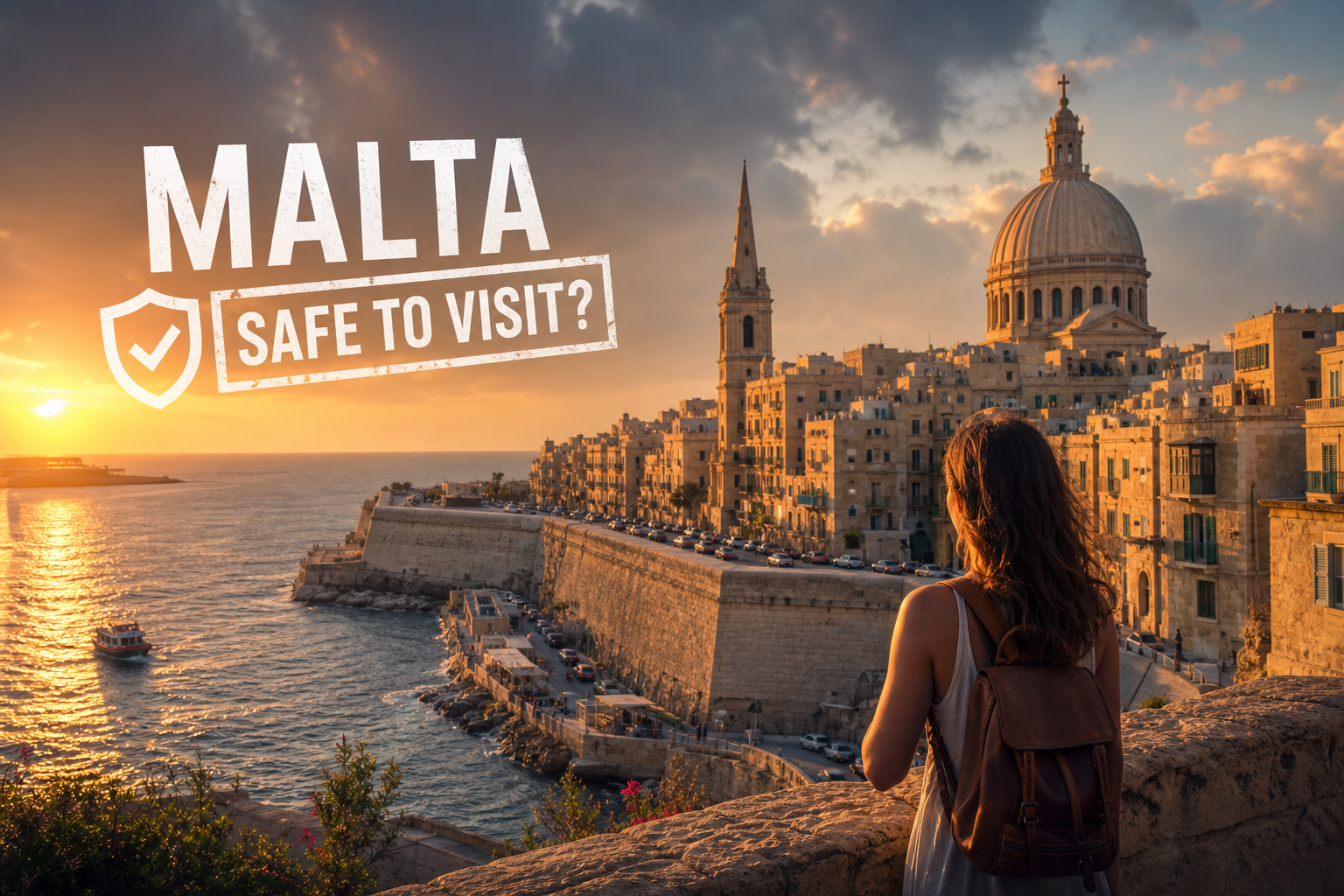
Is Malta safe to visit in 2026? The short answer is yes, Malta is one of the safest countries in Europe, and that's not a marketing line or a travel blogger's reassurance: it's what the data shows. The CrimeMalta Observatory recorded 30 crimes per 1,000 residents in 2024, down from 45 in 2004, and 2025 estimates put the rate lower still at around 27 per 1,000. The UK Foreign, Commonwealth and Development Office updated its travel advice in April 2026 with zero travel restrictions and no incidents on Maltese soil. If you searched for honest Malta safety information expecting bad news, this is the honest answer: there isn't much.
That said, "safe" and "risk-free" are different things. Tourists in Malta do run into trouble, mostly predictable trouble in predictable places. Petty theft is rising, specific scams cost visitors real money, and Malta's roads are genuinely more dangerous than most travelers anticipate. This guide covers all of it, drawn from actual crime statistics and advisory data rather than gut feeling or TripAdvisor reviews.
Is Malta Safe to Visit? What the crime data actually shows
The headline stat most travelers never see
Malta's 2024 crime rate of 30 per 1,000 residents places it comfortably in the top 10 safest countries on the World Justice Project index. To put that in context: the island is not just safe "for a Mediterranean destination", it is genuinely low-crime by global standards. The long-term trend is compelling too. From 45 crimes per 1,000 in 2004, the rate has fallen by roughly a third over two decades, and 2025 data from Newsbook suggests a further drop to around 27 per 1,000, described as a record low. Homicide clearance has sat at 100% since 2018, a remarkable statistic for any country. For recent reporting on the overall decline in crime rates, see the local coverage of the crime rate in Malta going down again, and the finer-grained 2024 figures reported in local press summarising the 16,662 crimes recorded in 2024. For researchers, the observational dataset is also archived online (CrimeMalta Observatory dataset).
What's trending up and what's falling
The picture isn't uniformly positive, and the nuance matters. Overall crime fell again in 2024, but theft rose 10% and pickpocketing cases jumped 60%, from 405 to 650 reported cases. That spike tracks directly with higher tourism volumes, not a shift in local crime culture. Elsewhere, fraud dropped 18%, computer crime fell 43%, and violent crime declined to 344 cases across the whole island. The pattern is consistent: Malta's crime problem, to the extent one exists, is concentrated in tourist-heavy zones and driven by tourist-facing opportunism.
What official travel advisories say about safety in Malta for tourists
The FCDO's April 2026 update is the clearest external data point a traveler can rely on. No restrictions, no warnings specific to Malta, and the only active alert is a general "stay aware" notice tied to global terrorism risks against UK interests, with zero incidents on Maltese soil. For entry and travel requirements, the official UK guidance is the best starting point: check the FCDO entry requirements for Malta. For related reporting on passport and travel notices affecting UK nationals, see the recent coverage advising visitors to check passport validity before travel (urgent FCDO advisory).
The risks tourists actually face: petty crime and scams
Where pickpocketing concentrates
Three areas account for the majority of tourist-facing theft: Paceville and the St Julian's nightlife strip, Valletta Waterfront near cruise terminals, and Mdina during peak summer crowds. Tourist zones run two to five times the national crime average, but that's a function of visitor density, not a culture of targeting foreigners. Even at those elevated rates, the absolute numbers remain low compared to most European city-break destinations. The risk is real but proportionate, and it responds directly to basic precautions.
Scams that catch visitors off guard
Several documented tactics cost tourists real money. At Valletta Waterfront, quayside vendors sell hop-on hop-off bus tickets that turn out to be unofficial, leading to refusals by drivers and, in documented cases, police involvement and expensive taxis back to cruise ships. Buy bus tickets onboard, never from vendors on the quay. Anecdotal reports and reviewer complaints from the area help illustrate how those encounters play out (Valletta Waterfront traveller review). Unlicensed taxis quote inflated fares; use the eCabs app or the Malta Taxi app to lock in pricing before you get in. For a community discussion on common scams that affect newcomers and expats, see the forum notes about most common scams targeting expats in Malta. Restaurants on Spinola Bay in St Julian's routinely charge €30 for mains aimed at tourist tables, not technically a scam, but worth knowing before you sit down. Cash-only spots, particularly in market areas, have a documented pattern of short-changing. Count your change immediately.
Paceville also has open drug solicitations alongside the occasional bouncer-related confrontation. These are low-level nuisances rather than physical threats, but the right response is to ignore them and keep moving. Engaging rarely ends well and occasionally escalates. For general traveller-oriented safety tips that echo this guidance, see the practical advice compiled for visitors (how to stay safe in Malta).
Is Malta safe at night? Nightlife safety in St Julian's
Paceville's nightlife scene is busy and mostly harmless, with one notable exception: bouncer-related assaults and alcohol-fueled confrontations are documented, and this is the one area in Malta where personal safety requires active awareness rather than passive confidence. Stick to licensed venues, travel in groups after midnight, and avoid engaging with anyone aggressive near venue entrances. The problems here are concentrated and predictable, which means they're largely avoidable.
Road safety: Malta's most underrated hazard for visitors
The numbers behind Malta's roads
Road fatalities rose sharply to 21 in 2025, up from 13 in 2024. In 2022, Malta ranked 11th highest in Europe for road deaths per million inhabitants. The fatality rate fluctuates between 1.9 and 5 per 100,000 depending on the measurement year, and the 2025 trend moved in the wrong direction. Statistically, this is the most significant physical risk for anyone spending time in Malta, and most travel articles don't give it enough attention. Local reporting on the rise in fatalities provides useful context (Malta's increase in road fatalities), while the EU's national profile offers the hard numbers and comparative metrics (EU national road safety profile for Malta).
What makes Maltese roads genuinely difficult
The arterial routes between Valletta, Sliema, and St Julian's are heavily congested, especially during morning and evening peak hours. Lane discipline is loose by Northern European standards, roundabout behavior differs from UK and US norms, and secondary roads in village areas are narrow and uneven. Malta drives on the left, which surprises visitors from continental Europe and North America alike. Tailgating and late braking are normalized rather than exceptional. If your visit is under a week, the public bus network and ride-hailing apps are a smarter choice than a rental car. If you do drive, treat every junction as if the other driver will not give way, because statistically, they might not. Several analyses and victim reports summarise where collisions cluster and which stretches are most dangerous; for example, local coverage highlights Triq Dicembru 13 as a deadliest road, and organisations tracking road victims publish case summaries (road victims reports).
Healthcare access and Malta emergency numbers
Medical care quality and access
Malta's public healthcare system ranks among the world's best by WHO standards, and that quality shows in access: only 0.5% of people needing care in Malta report barriers to receiving it. Mater Dei Hospital in Msida handles serious emergencies for the main island. EU citizens with a valid European Health Insurance Card access public care free at the point of use. Non-EU visitors need travel insurance with medical coverage, this isn't a bureaucratic suggestion, it's a practical necessity given that private facilities charge at market rates. Private clinics in Sliema and St Julian's are fully English-speaking and move faster for non-emergencies than the public system. Malta's pharmacy network covers most minor ailments without a GP appointment, which is worth knowing for anything that doesn't need hospital-level care. For a practical primer on navigating care as a visitor, see the healthcare overview for tourists (navigating Malta's healthcare system for tourists) and a medical tourism overview that outlines facilities and services (medical tourism in Malta).
Malta emergency numbers every visitor should save
Save these before you need them, not after. Response times are fast given the island's compact size, but having the right number in the first two minutes of an emergency makes a real difference. The official emergency contacts page is a handy quick-reference if you want a printable list (Malta emergency contacts).
- Emergency services (police, fire, ambulance): 112
- Police non-emergency: 2122 4001
- Mater Dei Hospital: 2545 0000
- Gozo General Hospital: 2156 1600
- Coast Guard (sea emergencies): 2388 9000
Practical safety habits that make a real difference
Day-to-day precautions in Valletta and tourist zones
A crossbody bag or money belt removes most pickpocket risk in markets and ferry terminals. Keep your phone off the restaurant table at seafront spots in Sliema and St Julian's, it takes three seconds to grab and walk. Book taxis through apps to confirm the fare before you move. Check menu prices before sitting down anywhere unfamiliar in tourist areas, particularly around St Julian's where pricing for tourist tables can be significantly higher than at local cafes two streets back. Valletta is safe at night, including Republic Street and Strait Street, but the Waterfront area near late-night venues warrants the same awareness you'd apply in any busy port city.
Sea and outdoor safety
Malta's coastline is one of its great attractions and comes with genuine hazards that get underestimated. Undercurrents along the northern and western coastlines can be deceptive, particularly at unsheltered rocky entry points in Gozo and sections near the Dingli Cliffs. Swim at designated beaches with flag systems in place. Red flags mean don't swim, this isn't a suggestion. Jellyfish are common but not particularly dangerous; follow local advice if they're present. For cliff jumping or free-diving at non-flagged spots, check conditions with locals before entering the water, and use licensed operators for dive excursions. In 2025, several popular beaches were temporarily closed due to water contamination, so check current status before visiting a specific beach during summer months, local trackers and advisories list which beaches are safe to swim (beach safety updates).
For anyone planning more than a short visit
Is Malta safe for longer stays and relocation? The safety picture holds, and in some ways improves, once you move from tourist to resident. Knowing how the healthcare registration process works for your specific nationality, which neighborhoods suit families versus digital nomads, and how to navigate the residency paperwork without delays are the kinds of specifics that a two-week holiday doesn't surface. Workplace safety is another factor for long-term residents: construction and transport remain among the higher-risk sectors for workplace accidents in Malta (workplace accidents report), and reporting on dangerous job categories provides useful context for anyone negotiating local employment (analysis of high-risk job sectors).
The bottom line: is Malta safe to visit in 2026?
Malta is safe to visit. That verdict is backed by real crime data, a long-term declining trend, and an April 2026 FCDO advisory with zero travel restrictions. The risks that exist are specific and largely avoidable: tourist-facing petty crime in a handful of nightlife and waterfront zones, documented scams that respond immediately to basic awareness, and road hazards that reward caution over confidence.
The one area that deserves more respect than it typically gets is road safety. The 2025 fatality spike is a real signal, and visitors who treat Maltese roads like home roads are taking on more risk than the island's overall safety reputation would suggest. Everything else, the pickpocketing, the scams, the coastal currents, sits in the category of manageable with reasonable precaution. For further reading on regional maritime and migration issues that sometimes appear in broader travel advisories, see resources tracking Central Mediterranean incidents (Central Mediterranean monitoring).
Malta's safety profile is one reason it continues attracting both tourists and long-term relocators in growing numbers. The island's crime trend has moved in one direction for two decades, and the 2026 travel advisory picture reflects that. For anyone weighing up whether Malta is worth it, the data gives a clear answer.