
Buying a House in Malta as a Foreigner: Complete Guide
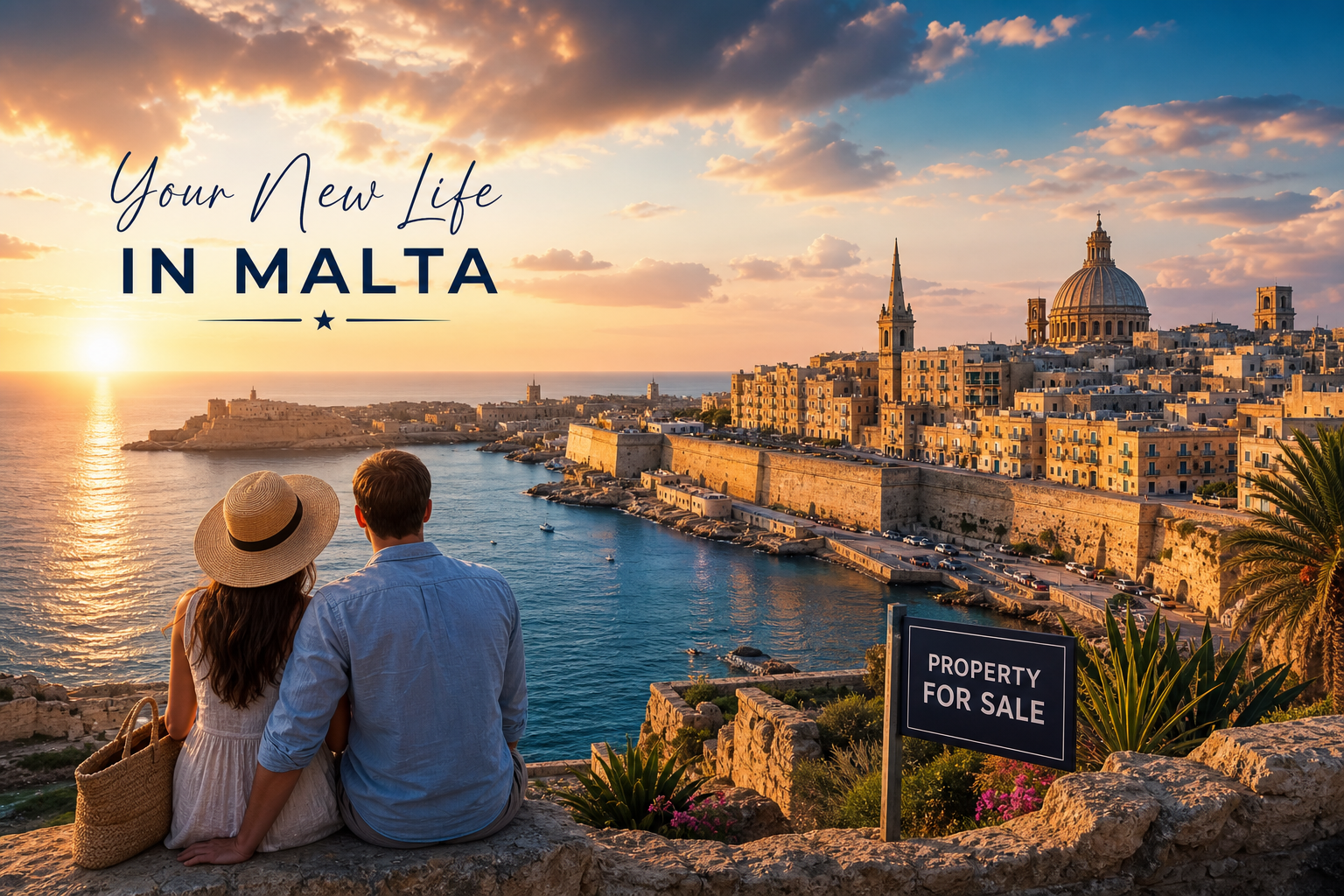
Buying a house in Malta checks a lot of boxes for foreign property buyers: EU membership, English as an official language, a Mediterranean climate, and a property market that still offers genuine value compared to Western European capitals. The expat community is established, the infrastructure works, and the legal system is familiar. But buying property in Malta as a foreigner isn't as simple as finding a listing you like and making an offer. The rules change based on your nationality, where on the island you want to buy, and what you plan to do with the property once you own it.
This guide covers everything you need to make a confident, informed decision: who qualifies to buy, what the AIP permit actually requires, what you'll pay in total (not just the asking price), where to look depending on your lifestyle goals, and how the purchase process works from first viewing to signed deed. Whether you're relocating permanently, buying a retirement base, or adding a buy-to-let to your portfolio, the rules are the same. Here's how they actually work.
Who can buy property in Malta and what the law requires
Your nationality determines how much freedom you have in the Maltese property market. EU nationals who are already resident in Malta can buy property freely with no restrictions. EU nationals who haven't yet established residency face a single limitation: one property for personal use, purchased outside a Special Designated Area. Non-EU nationals, also called third-country nationals, face the strictest rules and generally need an Acquisition of Immovable Property permit, known as an AIP permit, before completing a purchase outside designated zones.
The AIP permit comes with clear constraints. Non-EU buyers are limited to one residential property in their lifetime (one purchase and one permitted resale), the property must be for personal use only with no rental activity allowed, and minimum value thresholds apply. The thresholds currently set under the AIP framework sit at approximately €174,000 for apartments and €300,000 for houses, though these figures are indexed and updated periodically, verify the current numbers with a notary before you commit. You can also run an AIP calculator to get a quick estimate of whether a given property meets the threshold for non‑EU buyers. The application fee is €233 and processing takes roughly 35 days. Your notary handles the application alongside the purchase, so it doesn't create a separate administrative burden for you.
The SDA route most buyers overlook
Special Designated Areas change the picture entirely. These are high-end, purpose-built developments, typically gated communities with pools and concierge services, where non-EU buyers can purchase freely with no AIP permit required. In an SDA, you can own multiple properties, rent them out, and face none of the restrictions that apply elsewhere on the island. Portomaso in St Julian's and Tigné Point in Sliema are the most prominent examples. For non-EU investors or buyers who want maximum flexibility, SDAs are the practical route into the Maltese property market without the AIP constraints.
Buying a House in Malta: What It Actually Costs in 2026
Island-wide, the median asking price for residential property sits around €317,000, while actual contract prices close closer to €266,000. Recent analysis of Malta housing prices supports these values and the observed gap between asking and transacted prices. That gap matters: sales typically close around 15% below asking price on average, which gives you real room to work with. The headline average across all property types is around €415,000 for apartments, but that figure is heavily skewed by premium coastal and heritage areas.
Valletta commands some of the highest prices in the country. Apartments in the capital range from €575,000 to over €1,000,000, driven by heritage architecture and the city's UNESCO World Heritage status. Sliema and St Julian's carry a roughly 36% premium over the island median, with apartments averaging €430,000 and up. These are the areas with the strongest rental demand and the most liquid resale market. At the other end, Mellieħa in the north and Gozo offer more accessible entry points, particularly for larger homes, with prices sitting closer to or below the island average. Gozo is worth noting for buyers who want an AIP-free option: purchasing in an SDA development there qualifies under the Malta Permanent Residence Programme's lower threshold of €220,000 to €275,000.
Year-on-year price growth has tracked around 5%, driven mainly by location. Coastal and heritage areas continue to outpace the rest of the island, while inland towns offer better value per square metre for buyers prioritising space over address. The practical takeaway: the asking price is a starting point, not a floor.
Buying a House in Malta: Taxes, Fees, and the Total Bill at Closing
Stamp duty is the biggest cost to plan for. The standard rate is 5% of the purchase price, paid in two stages: 20% of the total duty is due when you sign the promise of sale agreement, and the balance is settled on the final deed. First-time buyers benefit from an exemption on the first €200,000, which makes a significant difference. On a €300,000 purchase, a qualifying first-time buyer pays roughly €5,000 in stamp duty instead of €15,000. Non-EU buyers purchasing a secondary residence or investment property pay the full 5% with no reduction. One useful exception: properties vacant for seven or more years, located in Urban Conservation Areas, or featuring traditional Maltese architecture qualify for an exemption on the first €750,000, valid through the end of 2026. For a clear summary of the legal framework and obligations, see the laws when buying a property in Malta.
Notary fees run between 1% and 2.5% of the purchase price, typically falling in the €3,000 to €7,500 range for a mid-market property. Registration fees are tiered by value but modest in total, adding a few hundred euros at most. Estate agent fees in Malta are generally paid by the seller, not the buyer, a meaningful difference from many other European markets.
For a €300,000 purchase, a foreign buyer should budget 7% to 9% on top of the purchase price to cover all closing costs: full 5% stamp duty, notary fees of around €5,000, registration fees, the AIP permit application if applicable, and an optional building survey ranging from €300 to €800. That works out to an additional €21,000 to €27,000 on a €300,000 property, know this figure before you make an offer.
Getting a mortgage as a non-resident buyer
Non-resident buyers can access mortgages from major Maltese banks including HSBC Malta, Bank of Valletta, and APS Bank, though the terms are stricter than for residents. Where residents can access loan-to-value ratios of 75% to 90%, non-residents typically qualify for 65% to 80% LTV, meaning a minimum deposit of 20% to 35% is the standard expectation. Specialist lenders and expat mortgage advisors can sometimes secure higher LTV ratios, particularly for applicants with strong income profiles.
Interest rates sit in the 1.8% to 3% range, which is competitive by European standards. HSBC has offered fixed promotions as low as 1.5% for qualifying loan sizes in 2026, though those rates are tied to specific conditions. Banks will require payslips or tax returns from the past two years, a valid passport, proof of funds, and the property purchase agreement. Debt-to-income ratios are typically capped at 35% of gross monthly income, and Central Bank of Malta permission may be required for some non-resident applicants. The practical move: approach specialist lenders or expat mortgage advisors before you start seriously viewing properties. Getting a decision in principle early avoids delays once you've found the right place. For a focused walkthrough on lending options and documents, see this guide to navigating mortgages in Malta.
Best areas to buy based on how you actually want to live
Families consistently gravitate toward Naxxar, Swieqi, and Attard for the combination of good schools, parks, and a quieter residential feel without the price premium of the harbour areas. Mellieħa is the standout for families who want direct beach access, hiking trails, and a relaxed northern atmosphere. These areas offer better value per square metre for larger homes, and the northern coast's accessibility to both the beach and the main urban centres makes the trade-off on commute time worthwhile.
Retirees tend to find their best fit in the Three Cities (Vittoriosa, Senglea, and Cospicua) or in Żurrieq. The Three Cities offer Grand Harbour views, waterfront restaurants, and characterful architecture at lower prices than Valletta with none of the tourist density. Żurrieq sits at the quieter southern end of the island with dramatic coastal scenery at the Blue Grotto and easy access to the rest of Malta. Both areas deliver the village-scale community feel that many retirees are looking for.
Buy-to-let investors should be looking at Sliema and St Julian's first. These areas dominate rental demand driven by expats, digital nomads, corporate tenants, and short-stay visitors. Valletta commands premium rents for boutique apartments. Sliema property investment data highlights the strong rental yields and high occupancy that make the town attractive to landlords. Both areas contain SDA developments that allow non-EU buyers to rent freely, making them the natural starting point for anyone building yield into their purchase decision alongside lifestyle factors.
Buying a House in Malta: The Step-by-Step Process from Search to Signed Deed
Start with licensed estate agents or established Maltese property portals, Quicklets, Frank Salt, and Dhalia are among the most widely used, which cover current listings across the island. Offers are made verbally first, then confirmed in writing. Sales typically close around 15% below asking: treat the listed price as an opening position, not a floor.
Once an offer is accepted, both parties sign a preliminary agreement called the konvenju before a notary. At this stage, you pay a 10% deposit and 20% of the total stamp duty is also due. The konvenju is legally binding for both buyer and seller and sets a fixed timeline for completion, typically 90 days but negotiable.
If an AIP permit is required, your notary submits the application at this stage. Processing takes roughly 35 days. While the permit is being processed, the notary conducts title searches and confirms there are no liens, encumbrances, or third-party claims on the property. Once AIP approval arrives and due diligence is complete, both parties sign the final deed before the notary. The remaining stamp duty, notary fees, and registration fees are settled at closing. Keys change hands, and the purchase is registered with the Public Registry.
Engaging a local property lawyer separately from your notary is worth the cost, particularly if you're navigating the process from abroad while managing a relocation in parallel. A lawyer focuses solely on your interests; the notary is a neutral officer of the transaction. The two roles complement each other and can meaningfully reduce the risk of delays or oversights.
Making the decision with confidence
Buying a house in Malta as a foreigner is genuinely achievable for most buyers, but it rewards preparation over speed. Know your AIP status before you start viewing properties. Budget for the full 7% to 9% in closing costs, not just the purchase price. Choose your area based on how you actually plan to live there, not just on proximity to a beach or a low asking price.
Malta's buying process is structured and notary-led, which protects both parties and keeps the transaction moving through defined stages. Interest rates remain competitive, prices in the right areas still offer real value compared to comparable European markets, and the lifestyle case is well-established and well-documented. The framework is solid; you just need to enter it prepared.
- Work with a licensed notary from day one.
- Get your AIP situation clear before you make an offer.
- Commission a building survey even if the property looks immaculate.
Do those three things and you'll close without surprises.
Frequently asked questions about buying a house in Malta
Can a non-EU citizen buy a house in Malta?
Yes. Non-EU nationals can buy property in Malta, but outside Special Designated Areas they need an AIP permit, are limited to one residential property for personal use, and must meet minimum purchase price thresholds. Inside SDAs, non-EU buyers can purchase freely with no permit required.
How long does buying a house in Malta take?
From accepted offer to signed final deed, the process typically takes 90 to 120 days. AIP permit processing adds roughly 35 days, which usually runs in parallel with title searches rather than extending the overall timeline.
What is the AIP permit in Malta?
The Acquisition of Immovable Property permit is a government authorisation required for most non-EU buyers purchasing outside Special Designated Areas. Your notary submits the application on your behalf after the preliminary agreement is signed. The fee is €233 and processing takes approximately 35 days.
What are the total costs when buying property in Malta as a foreigner?
Budget 7% to 9% on top of the purchase price. This covers stamp duty (5%), notary fees (1% to 2.5%), registration fees, the AIP permit fee if applicable, and a building survey. On a €300,000 property, that adds up to approximately €21,000 to €27,000 in closing costs.
Do I need a lawyer as well as a notary when buying a house in Malta?
A notary is legally required and handles the transaction as a neutral party. Engaging a separate property lawyer to represent your interests is not mandatory but is strongly advisable, particularly for non-resident buyers managing the process from abroad.


